



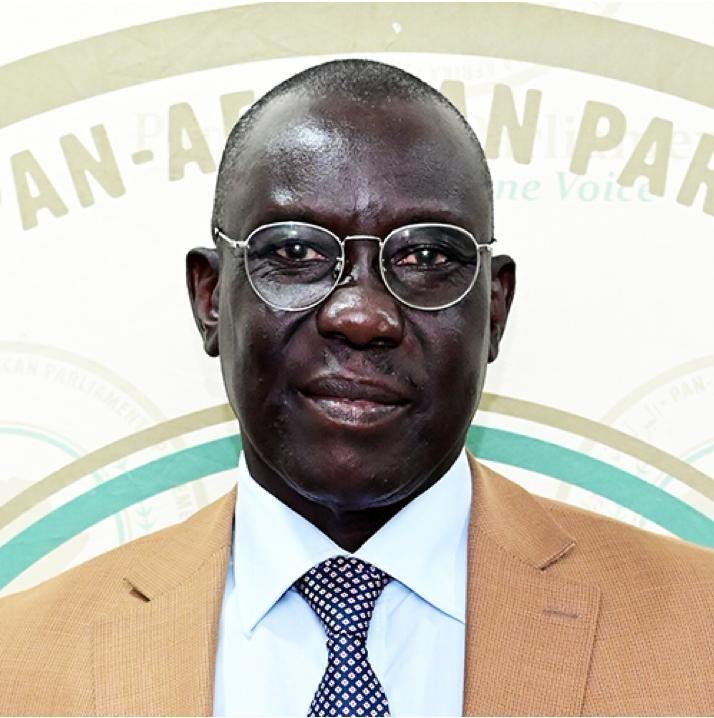
By Emmanuel LoWilla*, President of the East Africa Caucus of the Pan-African Parliament
Rio Tinto left Bougainville unrepaired for thirty-seven years. The same pattern is unfolding in Madagascar and may now threaten Guinea and Mozambique as well.
In 1989, a mine on the island of Bougainville in Papua New Guinea stopped work. Rio Tinto had been extracting copper and gold there for seventeen years, and close to a billion tonnes of waste had entered the rivers. The landowners rose against it. What followed was a civil war that killed thousands.
Rio Tinto never returned. In 2016 it handed over its shareholding for nothing at all and walked away. It agreed to fund an independent assessment of what it had left behind only in 2021, and only after sustained pressure. That assessment, published at the end of 2024, found serious harm in every area studied. Thirty-seven years after the mine closed, there is still no fund to repair any of it.
I begin there, and not in Africa, because Bougainville is not an accident in this company’s history. It is a precedent, and we should read it as one.
Fort Dauphin: the same sequence
Now consider Fort Dauphin, in the Anosy region of Madagascar.
QIT Madagascar Minerals (QMM), 80 per cent owned by Rio Tinto, has mined ilmenite from the coastal sands there since 2009. That same year it built a weir that altered the chemistry of the surrounding lakes, and the fish stocks on which local families depended fell sharply. The company has also removed thousands of hectares of indigenous littoral forest and displaced hundreds of households.
In 2014, the mine breached an environmental buffer zone in a manner that campaigners say broke at least two Malagasy laws, and raised the first serious questions about radioactivity and heavy metals in the lakes. Then, in 2022, two tailings dam failures forced QMM to release around a million cubic metres of mine basin water into the surrounding environment. Hundreds of fish died in an adjoining lake.
Rio Tinto denied that it was responsible and promised an independent study to settle the matter. Four years later, no such study has been published. One report was withheld in 2023 on the grounds that it was inconclusive. A second, promised for 2025, has never appeared. Meanwhile, analysis commissioned by civil society has found uranium and lead in the waters downstream at up to fifty and forty times World Health Organization drinking water guidelines. Fifteen thousand people drink from those waters.
The company rejects those findings and points to studies of its own. Very well. Then let someone independent look. That is precisely what it has refused, repeatedly, to Malagasy civil society, to international organisations and to its own shareholders. I invite the reader to name another circumstance in which a party insists it has nothing to conceal while declining, for four years, to open the door.
On the social side, the record also speaks for itself. This March, villagers gathered outside the town hall over a Malagasy tribunal’s award of some 1.8 million euros to twenty-eight farmworkers for land taken from them. The company has not paid it. It did not attend the dialogue. It sent a press release.
A court in Madagascar gave judgment, and a company headquartered in London decided it need not comply. Every African reading this understands exactly what that means, and how old it is.
In October 2023, three members of a local association, Mr Damy, Ms Francia Rasolonirina and Mr Andriamamonjy Jean Salomon, were shot dead during a protest against the mine. There has been no inquiry. There has been almost no international press coverage. Three Africans were killed protesting against the operations of a company listed in London and Sydney, and the world did not consider it news.
Six thousand villagers living near QMM’s mine are preparing to sue Rio Tinto in London, because they can find no remedy at home. That fact should trouble every legislator on this continent more than anything else I have written here. The claim began in April 2024 with just sixty-four residents. Blood tests had found lead in their bodies above the level at which the World Health Organization recommends treatment. Lead causes permanent brain damage in young children.
And Rio Tinto is now quietly weighing its exit from Madagascar.
Richards Bay, or proof that the company knows how to negotiate
Set beside that, consider Richards Bay in South Africa, where the same company mines the same mineral sands.
For six years it was Rio Tinto’s difficult asset. Protests halted it. It closed altogether in 2021 after the murder of its general manager. Then the company settled with the surrounding communities, released more than 7 million euros into community trusts, and this March committed over 400 million euros to keep mining there until 2050.
So the company can settle. It settles when it must.
The difference between Richards Bay and Fort Dauphin is not the merit of the grievances. It is power. The host communities at Richards Bay own 24 per cent of that mine. They are shareholders, backed by courts that function, a labour movement that organises and a state prepared to use its regulatory teeth. The communities of Anosy own nothing.
Let no one draw the wrong lesson from South Africa. It was structure, not violence, that settled Richards Bay. South Africa built such structures precisely so that no community is ever driven to the point Richards Bay reached.
Simandou, Mutamba: the cycle begins again
Which brings me to Guinea and to Mozambique, and to why this concerns them most of all.
In Guinea, Rio Tinto is driving Simandou, a massive iron ore mining project. In Mozambique, it holds the Mutamba mineral sands, still undeveloped. These are the beginnings of the same cycle whose end we are watching in Madagascar, and whose consequences we can still read in Bougainville.
The contracts governing them are still being drafted. Everything Anosy has learned can be written into them: community equity rather than discretionary charity, trusts with legal standing, independent environmental assessment as a condition of licence rather than a favour to be requested, and above all, obligations that survive a change of ownership.
That last point is the one that should keep us awake, because it is the loophole through which everything else escapes. A mine can be sold. Its liabilities, as matters stand, need not go with it. That is how Bougainville was left unrepaired for thirty-seven years, and it is the mechanism by which Madagascar may be left the same way.
What we can do now
This is unacceptable, and that’s why Africa must change how it deals with these companies. No corporation should walk away from one part of our continent leaving poisoned water, unpaid compensation and shattered lives, while banking profits in another. This is not an isolated failure. It is a pattern, and it is time we ended it.
Rio Tinto still owns the Madagascar mine today. Publish the studies. Pay what the court awarded. Accept an independent assessment. Support an inquiry into three deaths. Every item on that list is trivial for a company of this size.
The Pan-African Parliament cannot summon Rio Tinto’s executives. But every one of us can act at home. We can scrutinise the agreements our governments have signed, use our regulatory and legislative powers, and make it a condition of doing business here that a company meets every obligation to affected communities before it is permitted to move on. A licence renewal, a permit, a port concession, an export authorisation. Each of these is leverage, and each sits in African hands.
We should also stop negotiating one country at a time, as though what happens in Madagascar has nothing to do with Guinea, Mozambique or South Africa. We have signed these contracts nation by nation for sixty years and been outmatched every time. Not because our negotiators lacked skill, but because they stood alone. These companies operate across our continent. Our answer must be continental too.
Bougainville was a warning that nobody in Africa was asked to read. Madagascar is the same warning, written in our own languages. Read that chapter before you sign your own.
Hon. Ambassador Emmanuel LoWilla is Chairperson of the East African Caucus of the Pan-African Parliament. Previously he served as South Sudan’s Minister in the Office of the President, and as country’s Ambassador to the European Union.

