



The French high school mobilization fascinates far beyond the Hexagon. One can condemn without reservation the damage to public property, the violence and the clashes with law enforcement. But how can one not shudder at contemplating this democracy still capable of producing dissent, confrontation and debate. How beautiful it is, this freedom to approve, to challenge, to doubt! How beautiful democracy is, when the living people stand up, sovereign, masters of their words and their destiny.
A youth rises. It refuses silence. It demands more resources for schools, but also the right to speak about the world as they see it: inequalities, downward mobility, discrimination, climate, Gaza, police, power.
Certainly, the France of 2026 is not the France of 1968. But the driving forces of History, those that Marx and Engels saw at work in social contradictions, seem to be in motion again. A generation becomes aware of itself. The street becomes political. And the elites begin to look with concern at what they had first taken for a passing movement.
In this uproar, La France Insoumise (LFI) has chosen its side: that of breaking with the establishment. Jean-Luc Mélenchon tries to accompany this energy without losing control. His opponents denounce a takeover. His supporters speak of listening and support. And, in the midst of the noise, controversies and anathemas, a face emerges: that of Bally Bagayoko.
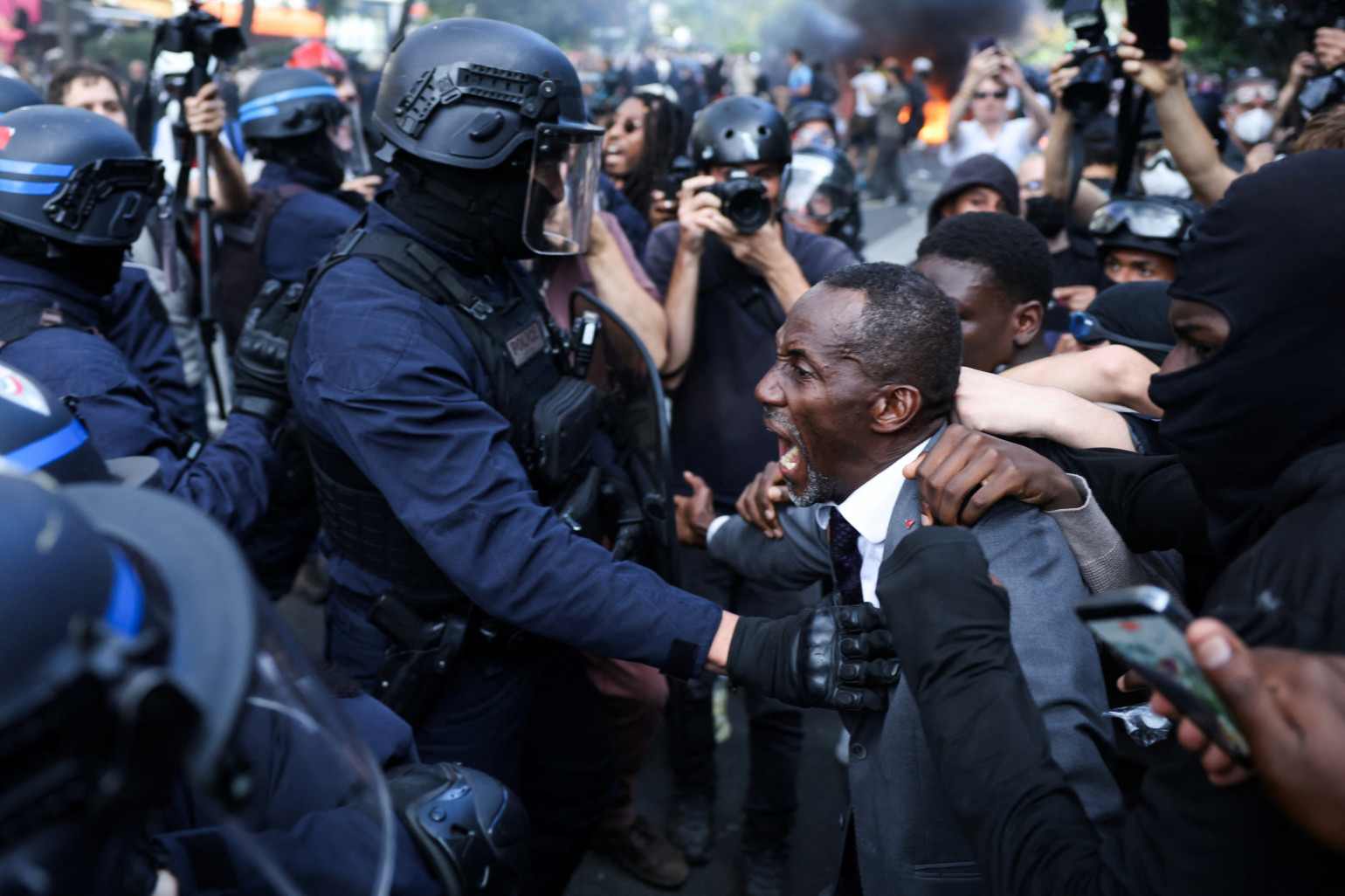
The mayor of Saint-Denis has become, in a few days, much more than a local official. An image has installed him in the political imagination: that of a man standing between young protesters and law enforcement, refusing to watch the scene from a distance, choosing to physically enter the turmoil. “An icon of student revolt,” describes El Mundo.
For its part, Financial Afrik does not discover Bally Bagayoko today. The day after his emergence on the political scene, we dared a formula: “the French Obama”. This mayor of immigrant origin symbolizes a living France, enriched from generation to generation by new waves. Yes, despite Éric Zemmour’s displeasure, the waters are always new: one does not bathe twice in the same France.
It is clear that Bally Bagayoko is not Barack Obama. But the two characters share something in a world increasingly bunkerized, crossed by Trumpist discourses, by unashamed Islamophobia and by an anti-Semitism that the post-war politically correct conventions have sometimes concealed rather than eradicated.
Bally Bagayoko embodies a new France, capable of mixing races, origins and diverse stories, as one could have expected for a long time from a country that taught the French Revolution to entire generations as a true political catechism.
Saint-Denis is no longer just a territory that Paris observes from its center. Saint-Denis speaks to France and the world. Bally Bagayoko thus becomes, little by little, an icon of the living people and, whether he wants it or not, of the oppressed masses and the underprivileged. The living people are those who demonstrate, who work, who doubt, who vote, who abstain, who are outraged, who disturb and who fear unemployment, retirement and the disappointing tomorrows. Disillusioned by those who promised “work more, earn more,” the living people do not ask to be sanctified. They ask to be heard.

