



By Diallo Safayiou
And since everyone is talking about it, let’s not give Mr. Everybody’s answer.
For us, it is important that our country, through the Central Bank of the Republic of Guinea (BCRG), manages to respect the commitments made at the level of the West African sub-region, with a view to a possible monetary union. But meeting convergence criteria does not mean blindly adhering to a project whose implications for the Guinean economy are largely underestimated in public discourse.
A lesson not to forget: the previous CFA franc
In our humble opinion, this monetary integration project should be publicly discussed, in order to seriously identify the future opportunity costs for Guinea — without reproducing the mistake made by our colleagues in the UEMOA and the CEMAC. They abandoned the French franc in favor of the euro without any State, or parliament in the franc zone being truly consulted, while in France itself, the transition from the French franc to the euro had been the subject of a wide public and parliamentary debate. Such an imbalance — a national debate on one side, a technocratic decision on the other — should not be repeated on the scale of ECOWAS.
A troubling precedent: the CFA franc, a union born without convergence criteria
It is useful to recall a historical fact too often forgotten in this debate: the CFA franc itself did not originate from a prior process of economic convergence. It was created by a simple decree from General de Gaulle, signed on December 25, 1945, and published in the French Official Journal the following day, establishing the “franc of the French colonies of Africa.” No evaluation of the economies concerned, no negotiation among peers, no common macroeconomic criteria preceded this decision: the colonized territories were simply attached to a single currency decreed from Paris.
In other words, unlike the logic now defended by ECOWAS — which requires the satisfaction of convergence criteria (budget deficit, inflation, public debt, foreign exchange reserves) before the launch of the single currency Eco — the monetary union of the franc zone operated in reverse: the common currency preceded any form of economic convergence among the member territories, which was only truly sought decades later, notably after the devaluation of 1994.
And the result of this monetary union imposed without prior convergence is clear: 80 years after its creation, intra-zone trade remains marginal, even between countries sharing the same currency. In the UEMOA, considered the most integrated area of the franc zone, intra-community trade represented only 14% of the Union’s total foreign trade in 2019 — a figure down from the 19% recorded in 2007. In the CEMAC, the situation is even more concerning: intra-zone trade remains below 5% of total trade, despite decades of common currency. A single currency shared since 1945 has not been enough, on its own, to create true commercial integration between the countries concerned. This precedent should urge us to be cautious: a forced or rushed monetary union, without real convergence of the economies involved, does not guarantee stability, commercial integration, or the development of member countries — the history of the franc zone is the best illustration.
Renouncing sovereign monetary policy
By engaging in a single currency project, the monetary authorities of a country inherently give up sovereign use of monetary and exchange rate policy as a tool to combat exogenous shocks. For an economy like Guinea’s — heavily dependent on global commodity prices and exposed to external shocks — this loss of maneuvering room is not a technical detail: it is a structural choice that deserves to be weighed against the expected benefits.
Structurally marginal intra-ECOWAS trade
This is precisely where the issue lies. We do not see the advantage Guinea could gain from its integration into a monetary zone where intra-zone trade remains weak — and the numbers confirm this without ambiguity.
In 2024, Guinean exports to ECOWAS countries reached 2,270 billion GNF, up from 1,997 billion GNF in 2023, a 13.6% increase. This rebound follows a sharp decline observed between 2022 and 2023, and reflects at most a gradual and modest reorientation of commercial flows towards regional partners.
But in relation to Guinea’s total African exports — amounting to 8,507 billion GNF — the ECOWAS share represents only 26.7%. This figure is actually significantly down: in 2022, ECOWAS still accounted for 72% of Guinea’s exports to the African continent. In other words, the more Guinea develops its trade with Africa as a whole, the less it does so with its immediate neighbors in the sub-region. Mali remains, by far, Guinea’s top customer within ECOWAS, illustrating a strong and undiversified geographical concentration of regional outlets.
China and Asia, key partners of the Guinean economy
Conversely, most Guinean products are currently oriented towards extra-regional markets, primarily China (for bauxite) and India (for gold).
Regarding imports, Guinean foreign trade statistics are clear: China alone represents 86.2% of certain strategic product flows, far ahead of Belgium (8.9%) and Côte d’Ivoire (1.2%) — these three partners accounting for 96.2% of the total.
The imbalance is equally pronounced in the trade surpluses generated by Guinea’s main partners (cumulative data from January to July 2025):
• China: +2,593.2 billion GNF
• United Arab Emirates: +1,533.6 billion GNF
• South Africa: +347.4 billion GNF
• India: +229.4 billion GNF
• Mali (top ECOWAS partner): +163.7 billion GNF
Mali, the best performer in ECOWAS in this ranking, thus weighs nearly sixteen times less than China. The Guinean government itself acknowledges that nearly 80% of the country’s exports are currently directed towards Asian markets — a fact that the authorities explicitly highlight to justify their caution towards a rushed regional monetary integration.
Unless otherwise stated, we have reasons to believe that our dear Guinea could only sell essential foodstuffs to its sub-regional colleagues in the context of an ECOWAS monetary union — of which national production remains relatively low.
An imbalance expected to worsen
Far from diminishing, this dependence on Asia is expected to strengthen in the years to come. Guinean bauxite production surged by 25% in 2025, reaching 182 million tons, driven by a continuously growing Chinese demand for aluminum — Guinea being the world’s top bauxite producer. This dynamic is expected to continue in 2026, in a favorable global aluminum demand context.
In addition, the launch of iron ore exports from the Simandou deposit, one of the world’s largest untapped iron ore deposits, began in October 2025, with production gradually reaching 120 million tons per year. The project is led by two consortia with predominantly Asian capital: the Winning Consortium Simandou (Sino-Singaporean) and Simfer (Rio Tinto and Chinalco, the latter being a Chinese state-owned enterprise). The 650 km Trans-Guinean railway connecting the mining sites to the port of Morébaya was fully funded by the operators themselves.
On the macroeconomic front, this mining trajectory is driving an already strong growth: after 5.7% in 2023 and an estimated 7.2% in 2025 according to the IMF, Guinean growth is expected to exceed 10.5% over the period 2026-2027. The current account deficit, which stood at -14% of GDP in 2024, is expected to decrease to -9.7% in 2025 and, according to some observers’ optimistic forecasts, to -2.3% in 2026. Nothing in this economic trajectory driven by mineral exports to Asia points towards a natural deepening of intra-ECOWAS trade.
The authorities’ position: between dialogue and caution
Recent events illustrate well this tension between participation in regional bodies and the preservation of monetary sovereignty. On July 19, 2026, during the 69th ordinary session of the ECOWAS Conference of Heads of State and Government held in Freetown, Guinea’s request to join the Presidential Task Force responsible for steering the single currency program (the Eco) was approved.
A few days later, on July 30, 2026, during the Council of Ministers, the transitional president, General Mamadi Doumbouya, reaffirmed Guinea’s commitment to its monetary sovereignty. He recalled that the Guinean franc — in circulation for over 65 years — remains a pillar of the country’s development strategy, enabling Guinea to freely define its economic orientations without depending on external decisions.
This position aims to be nuanced rather than contradictory: participating in the Task Force’s work to influence the architecture of the future regional monetary project, without committing to an accession schedule. New directions are expected before the next ordinary ECOWAS summit, scheduled for December 2026, in a West African monetary landscape that remains, to this day, very diversified: in addition to the Guinean franc, the region includes the Nigerian naira, Ghanaian cedi, Gambian dalasi, Sierra Leonean leone, Liberian dollar, Cape Verdean escudo, as well as the CFA franc used by the eight UEMOA countries. The gradual launch of the Eco remains scheduled from 2027, only for countries that have met the required macroeconomic criteria.
For a gradual rather than rushed integration
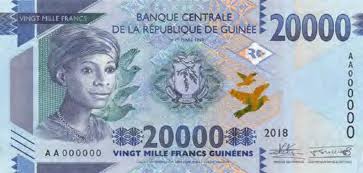
In our view, instead of hastening, ECOWAS countries outside the CFA zone should first favor a gradual approach: each country, through its central bank, should continue to manage its own national currency. These currencies could then be linked by a common unit of account, used to settle exchanges between the different countries in the zone. Foreign exchange reserves could be managed jointly, so that the currencies support each other in case of shock — without each State giving up its sovereign monetary policy from day one.
Conclusion
The figures confirm what economic analysis already suggested: Guinea’s external trade structure is currently oriented towards Asia — primarily China and India — much more than towards its envisioned regional monetary zone. Based on this observation, the analysis presented here and the official position of the Guinean authorities largely converge. As long as this commercial imbalance persists, the expected benefits of an ECOWAS monetary union will remain, at best, hypothetical — arguing for a public, informed, and non-rushed debate, rather than a principled accession.
Sources: National Institute of Statistics of Guinea (foreign trade analysis notes), Presidency of the Republic of Guinea, ECOWAS press releases, Coface, France Diplomatie, Bpifrance Assurance Export, IMF.

