



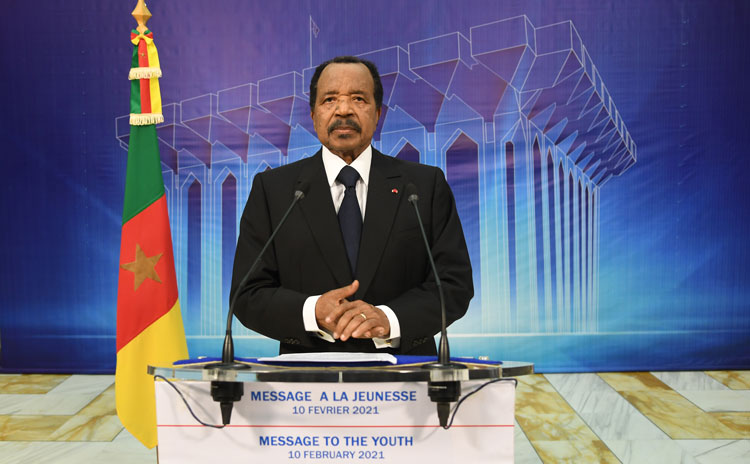
Cameroon has just reached a major institutional milestone. Meeting in Congress on April 4, 2026, Parliament adopted a constitutional reform establishing a vice-presidential position, fundamentally changing the executive architecture. Presented as a tool for stability and continuity of the State, this political innovation is not without economic and financial consequences, in a context marked by strong cash flow tensions and reinforced budget discipline.
According to Cameroonian economist Marc Ombé, “a vice president is an important lever in improving the quality of institutions in a country given his role in supervising certain departments and strategic projects. His role in good governance and flexibility in decision-making is essential in a developing state facing multiple projects and organizational changes to manage.” Our interlocutor also indicates that “the quality of institutions in a state is an element that allows investors to consider investing in that country. The current heaviness and depreciation of certain institutional quality indicators suggested the urgent need for a vice-presidential position.”
On a strictly budgetary level, highlights Laurice Serge Eteki Eloundou, another Cameroonian economist based in Maroua, “the creation of the vice presidency implies immediate and recurring costs.” Thus, he argues, “the vice president’s remuneration, aligned with the highest standards of the executive, adds to an already constrained payroll. Not to mention the costs related to setting up a dedicated office (advisors, mission managers, administrative staff) as well as security, logistical and representational expenses.” In addition, official vehicles, residences, communication equipment, and national and international travel constitute new budget lines for the State.
These expenses come at a time when Cameroonian public finances face a dual imperative. On the one hand, the need to respect budget consolidation commitments made to technical and financial partners, particularly within the framework of macroeconomic reform programs. On the other hand, the necessity to address pressing social needs in an environment characterized by still fragile growth and limited fiscal maneuvering room.
According to sources close to public finances, “the direct impact of the vice presidency could amount to several billion CFA francs per year, a modest sum in the context of the State budget, but significant in a context of expenditure compression.” The central question then becomes one of arbitration: how to finance this new institution without compromising priority investments, particularly in infrastructure, health, or education?
Beyond immediate costs, analysts also highlight “the risk of institutional escalation.” The creation of a new center of power can generate, in the medium term, demands for increased resources, or even an inflation of administrative structures, if strict oversight is not put in place. Conversely, its defenders believe that the vice presidency could contribute to better coordination of government action and, ultimately, greater effectiveness of public policies.
For markets and investors, this reform is being observed cautiously. If it strengthens institutional clarity and political stability, it can be perceived as positive. However, any uncontrolled budgetary drift would reignite concerns about the sustainability of public finances.
Within the Cameroonian public opinion, the creation of the vice-presidential position in Cameroon opens a new political sequence. It also poses a clear challenge to the authorities who should reconcile institutional ambition and budgetary rigor, in an economic environment where every public franc counts.

