



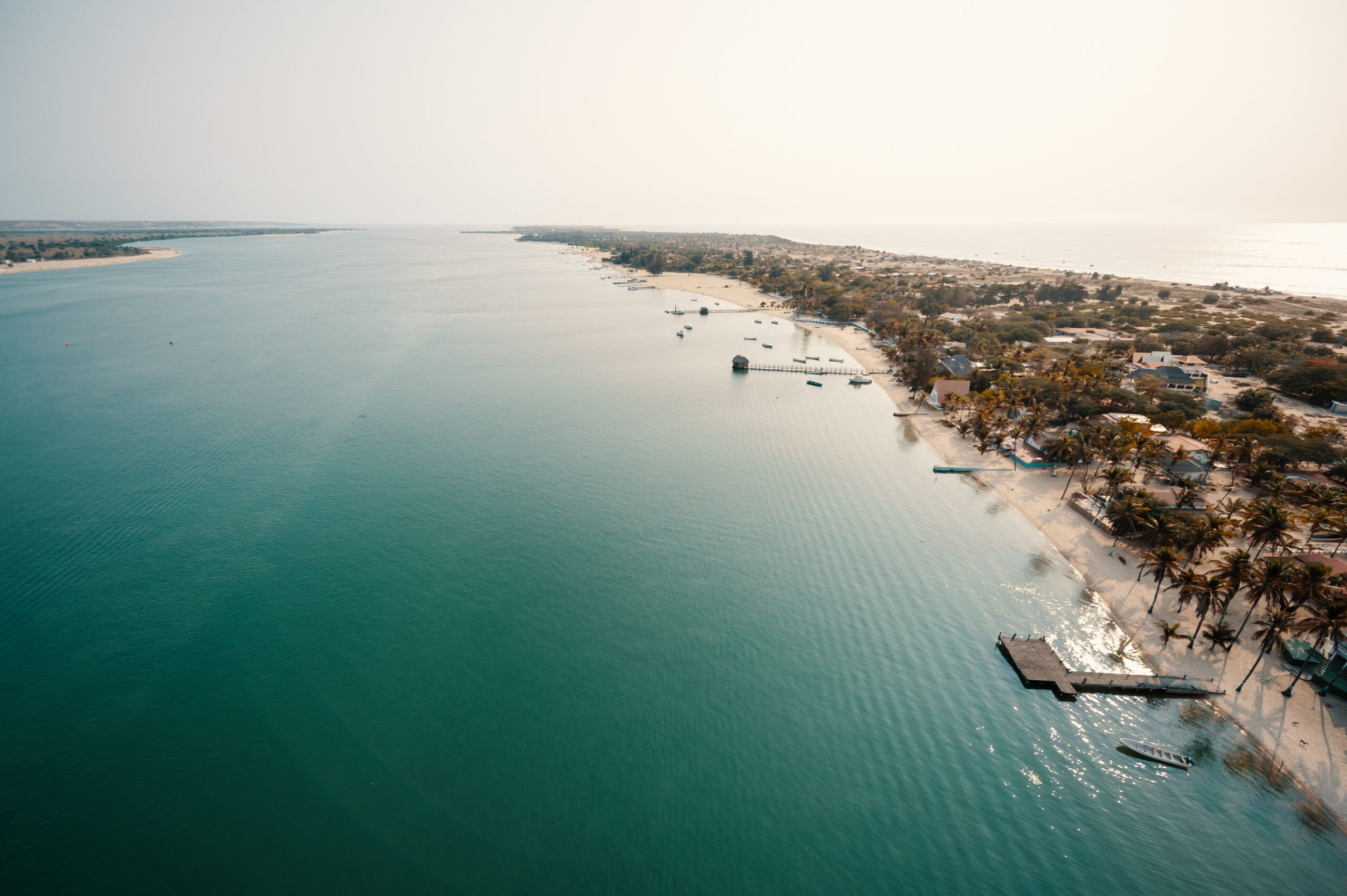
Angola has approved an investment of 166.7 million dollars for the development of the road leading to the municipality of Mussulo, in the province of Luanda. The project, which is 39 kilometers long, represents an average cost of around 4.27 million dollars per kilometer. The objective is twofold: to improve territorial continuity with this tourist area and to create better conditions for local economic activity.
Under Presidential Decree No. 100/26 of March 25, the operation is part of the National Development Plan 2023-2027, which makes the modernization of transport infrastructure a lever for economic diversification. Beyond the accessibility issue, Luanda seeks to reduce logistical constraints that still hinder the movement of people, the supply of businesses, and the upgrading of the tourist offer. In the Angolan context, improving land transport remains a prerequisite for the valorization of non-oil assets.
So far, Mussulo remains largely dependent on maritime transport, a configuration that lengthens delays, increases transportation costs, and limits the fluidity of exchanges. For a locality identified as a tourist hub, this dependence constitutes a structural barrier: it weighs on local consumption, services, and the ability to attract private investments in hospitality, leisure, and related activities.
The project also includes 7.5 million dollars allocated to technical supervision. Authorities have opted for a simplified procurement procedure to accelerate the start of work. This choice reflects a desire for rapid execution, but it also places the question of technical monitoring, costs, and deadlines at the center of the project evaluation.
On a pan-African scale, this operation illustrates a broader trend: the competitiveness of African tourist destinations increasingly depends less on their natural potential alone and more on the quality of their access infrastructure. By investing in the road to open up Mussulo, Angola is seeking to convert a geographical asset into an economic asset, with the diversification of its growth drivers beyond hydrocarbons in the background.

