



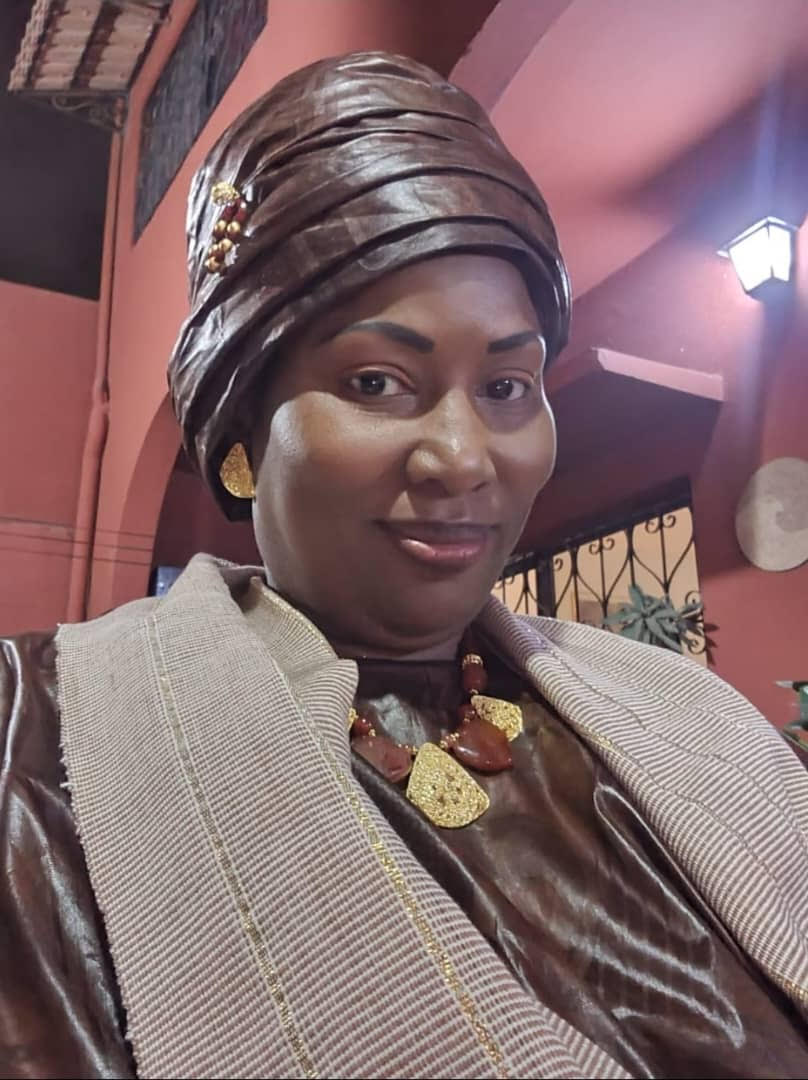
On the occasion of March 8, International Women’s Rights Day, Aïssata LY WANE publishes “The Colors of Marriage,” a book of reflection and awareness dedicated to one of the oldest and most complex social institutions: marriage.
Often idealized, marriage is nevertheless crossed by multiple, sometimes contradictory realities. Through this book, the author offers a lucid and deeply human exploration of married life. Far from simplistic discourses, she invites the reader to look at what really happens behind the doors of households: the joys, tensions, misunderstandings, but also the capacities for resilience and reconstruction.
The book is based on a hundred stories of women, collected in various cultural and religious contexts. These testimonies reveal the diversity of marital experiences and show that each union has its own trajectory. Some stories are bright, others marked by trials, but all illustrate an essential truth: marriage is never a uniform reality, it always has its own color.
The book is structured in ten chapters that approach marriage from different angles. It first examines the historical and social foundations of the matrimonial institution before exploring the transformations of contemporary marriage in a world marked by profound cultural, economic, and social changes.
The central chapters give voice to women and analyze the difficulties that weaken couples: communication problems, power imbalances, family pressures, or silent violence. Other sections highlight the foundations of a strong marital bond, based on mutual respect, trust, and shared responsibility.
Beyond observation, the book also offers reflections and solutions to prevent or overcome marital crises. It emphasizes the role of families, institutions, educators, and spiritual guides in supporting couples, while reminding that marital tensions can have profound consequences on psychological, family, and social balance.
The final chapter lucidly addresses the issue of separation when the relationship cannot be preserved, offering guidance to navigate this stage with dignity and responsibility.
To enrich this reflection, “The Colors of Marriage” relies on the analysis of several recognized experts, including:
– Pr Penda Mbow, historian and former Minister of Culture of Senegal
– Pr Aïda Sylla, psychiatrist and professor at Cheikh Anta Diop University
– Fatou Sow, sociologist specializing in gender issues
– Aly Anta Sow, Islamologist and president of the Islamic Solidarity Action
– Abbé Paul Macodou Sène, national secretary of the Bishops’ Commission for the Family
– Ndigue Diouf, chamber president at the Court of Appeal of Dakar
– Ousmane Ndiaye, psychosociologist
– Amy Rose Konaté, coach and leader of the Equator firm
– Jean-Jacques Faye, CEO of the Mikado school group
– Aminata Ly Ndiaye, magistrate and member of the Constitutional Council of Senegal
The book opens with a preface by Raymonde Fadhila Mbow, widow of the former Director-General of UNESCO Amadou-Matar Mbow, who shares the wisdom of seventy-three years of marriage experience. It concludes with a postface by Professor Fatimata Ly, a teacher at Cheikh Anta Diop University in Dakar, emphasizing the importance of this collective reflection for the new generations.
Neither an academic treatise nor a moral manual, “The Colors of Marriage” aims to be above all an accessible book, intended to nourish dialogue within couples, families, and society. Its ambition is to encourage a clearer understanding of marital relationships and to promote unions based on respect, balance, and shared responsibility.
Certified coach and engaged in the fields of social reflection and personal development, Aïssata LY WANE has devoted her research for several years to human dynamics and relationships within couples and families. The result of numerous readings, observations, and testimonies collected from women, this book constitutes an original contribution to the reflection on the evolution of marriage in contemporary societies.
Because, as the author reminds us, marriage is never monochrome: it is a palette of colors that each couple learns to compose.

