



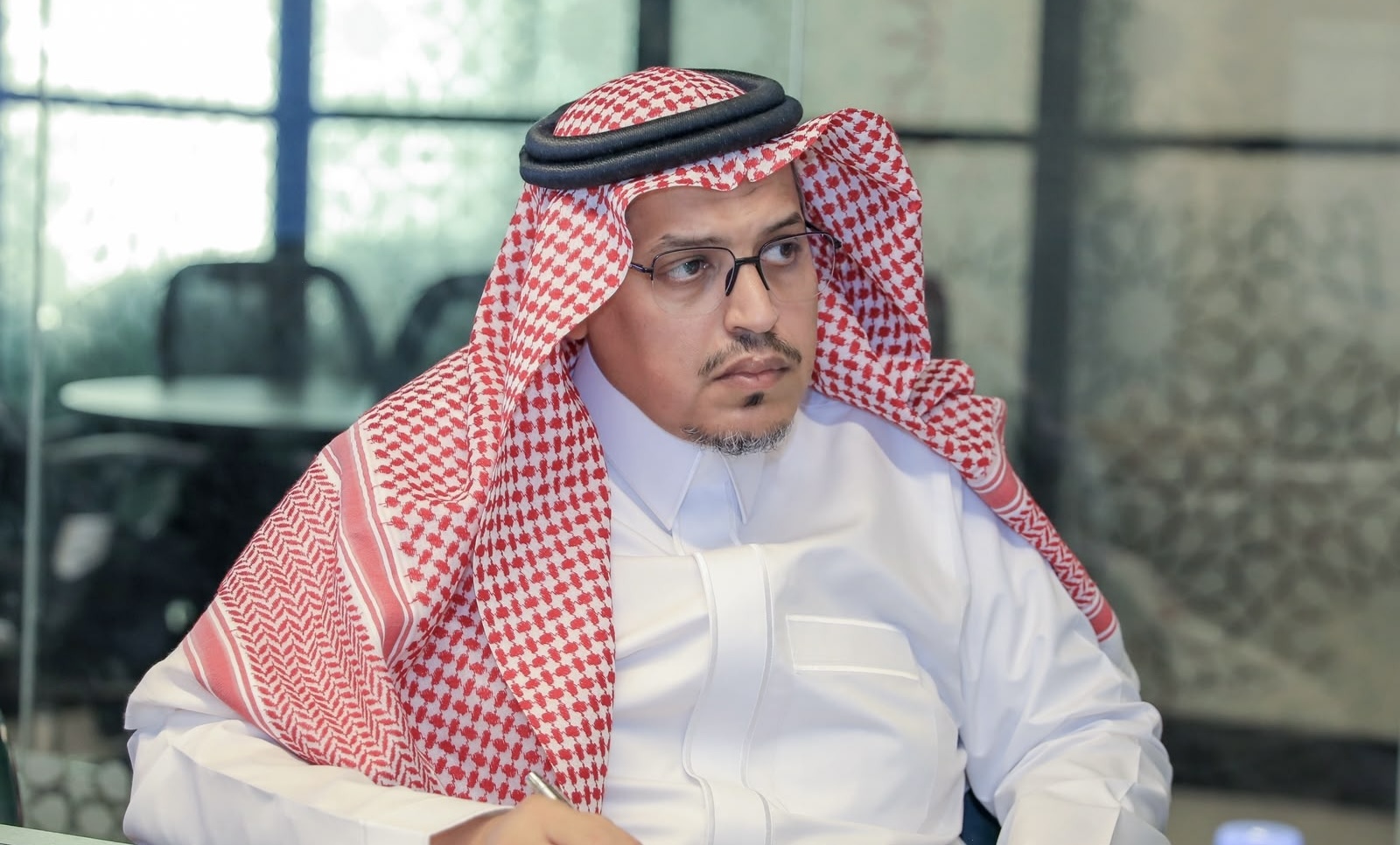
Financial Afrik spoke with Dr Salah ZAHRANI, a doctoral researcher specializing in digital waqf and an expert in governance and the management of large-scale waqf projects.
Interview conducted by Amina Ben Messaoud
Sukuk are well known within the Islamic finance ecosystem. But what exactly are social sukuk, and how do they differ from conventional sukuk?
Sukuk are financial instruments that comply with the principles of Islamic finance. They enable capital to be raised from investors to finance specific assets, projects, or investment activities. Their distinctive feature is that they are backed by real assets or transactions and rely on risk- and return-sharing mechanisms.
Social sukuk follow the same principles but pursue an additional objective: addressing measurable social challenges. They therefore seek to mobilize private capital to finance programs with a clearly identified social impact.
They thus stand at the intersection of three dimensions: Islamic finance, responsible investment, and social impact.
Why are social sukuk attracting growing interest today?
The 2008 financial crisis and, more recently, the COVID-19 pandemic highlighted the scale of social needs that governments and traditional stakeholders cannot always address on their own. Social impact bonds emerged precisely as a mechanism for mobilizing private capital around predefined and measurable social outcomes.
In this context, social sukuk can provide a particularly promising solution in markets where Islamic finance already plays a significant role. They make it possible to combine capital mobilization with objectives such as poverty reduction, employment, education, healthcare, and support for vulnerable populations.
What, then, distinguishes a social sukuk from a conventional social bond?
The fundamental difference lies in the financial and legal structure. A conventional social bond is based on a traditional debt instrument. A sukuk, on the other hand, must comply with Sharia principles and be backed by a structure consistent with those principles.
This means that, beyond the social objective, it is necessary to identify the underlying asset, the appropriate Islamic contract, investors’ rights, and the remuneration mechanism.
The challenge, therefore, is to design an instrument that is economically viable, socially beneficial, and Sharia-compliant.
Could cash waqf serve as a foundation for social sukuk?
This is one of the most interesting avenues identified by the research.
Cash waqf involves setting aside monetary capital and allocating the income it generates to a specific purpose. It has the advantage of being much more accessible than real estate waqf: individuals can participate with relatively modest contributions.
Combining cash waqf with social sukuk could therefore make it possible to pool contributions from numerous donors and investors, creating greater financial capacity to support social projects.
This is precisely where a collective or pooled waqf model could emerge, allowing multiple contributors to participate in achieving a common objective.
You distinguish between temporary cash waqf and perpetual cash waqf. Why is this distinction important?
It significantly broadens financing possibilities. Under a perpetual waqf, the capital is permanently endowed, and the income it generates is allocated to the purpose defined by the founder.
Under a temporary waqf, the capital is committed for a specified period. At the end of that period, it may be returned to its owner in accordance with the agreed conditions.
This temporary arrangement can make the mechanism more attractive to contributors who wish to support a social initiative without permanently committing their capital.
It can therefore help create new bridges between philanthropy, investment, and social impact.
What types of social challenges could be financed through this mechanism?
The scope is very broad. The research specifically identifies poverty, illiteracy, unemployment, drug addiction, crime, humanitarian needs, and certain interventions related to crises and disasters.
However, the model’s main strength lies in its ability to finance programs whose outcomes can be defined, monitored, and evaluated.
This represents an important shift: the objective is no longer simply to mobilize resources for a cause, but also to demonstrate what those resources actually achieve.
How, specifically, can the social impact of a sukuk be measured?
Impact measurement is fundamental.
The model examined in the research is based on establishing social objectives and indicators in advance to determine whether the expected outcomes have been achieved.
An independent evaluator may be appointed to assess the results.
This dimension is essential for strengthening confidence among investors, public institutions, and beneficiaries. It also helps prevent the term “social” from becoming merely a marketing argument.
For a sukuk to be genuinely social, its impact must be demonstrable.
Who would be the main stakeholders in such a mechanism?
Several stakeholders may be involved: investors, the issuer or special-purpose vehicle responsible for the issuance, service providers implementing social programs, intermediaries, independent evaluators, and, of course, beneficiaries.
Public authorities can also play an important role, particularly when they commit to making payments based on the outcomes achieved.
The success of the model therefore depends heavily on the ability to build an ecosystem of trust in which every stakeholder clearly understands their role, responsibilities, and expected results.
Islamic finance is often described as an alternative form of finance. Can social sukuk help it go further?
Yes. Islamic finance should not be reduced solely to the prohibition of interest.
It also embodies an important ethical and social dimension. Social sukuk can help bring Islamic finance closer to these underlying values.
In particular, they can contribute to the development of the third sector by facilitating the mobilization of private resources for projects that serve the public good.
The real challenge, therefore, is to move beyond finance that is merely compliant with religious principles toward finance that can also demonstrate its economic value and social impact.
Which existing experiences could inspire the development of social sukuk?
The research focuses in particular on countries that have developed innovative Islamic finance instruments, notably Malaysia and Indonesia.
The experiences of the Islamic Development Bank and the World Bank Group also demonstrate that financial markets can be mobilized to address social challenges.
Sukuk issuances designed to finance vaccination programs, as well as Malaysia’s Sukuk Al-Ihsan, also provide valuable examples for developing new models.
The objective, however, is not to replicate these experiences mechanically, but to understand the mechanisms that enabled their development and adapt them to the realities of each market.
In your view, what are the main challenges to the widespread adoption of social sukuk?
The first challenge is structuring: suitable models must be developed that comply with legal, financial, and religious requirements. The second concerns impact measurement. A social project must be able to define credible and verifiable indicators.
The third relates to governance and transparency. Investors need to know how their money is being used and what results are being achieved.
Finally, it is essential to foster a genuine culture of impact investing and establish a regulatory environment that enables these instruments to develop.
What role could the African continent play in this evolution?
Africa has considerable potential. The continent faces substantial needs in education, healthcare, employment, financial inclusion, SME financing, and social infrastructure. At the same time, several African countries already have an environment conducive to Islamic finance or are showing growing interest in sukuk.
The development of social sukuk could therefore help mobilize capital to address concrete African challenges by bringing together investors, public institutions, foundations, charitable organizations, and private-sector stakeholders.
The real potential may lie in the ability to transform a conventional financing approach into one that combines financing, impact, and measurable outcomes.
In one sentence, how would you summarize your vision of cash waqf combined with social sukuk?
I would say that cash waqf can become the foundation of a new generation of social financing, while social sukuk can serve as one of the instruments through which individual savings and generosity are transformed into measurable and sustainable collective projects.

