



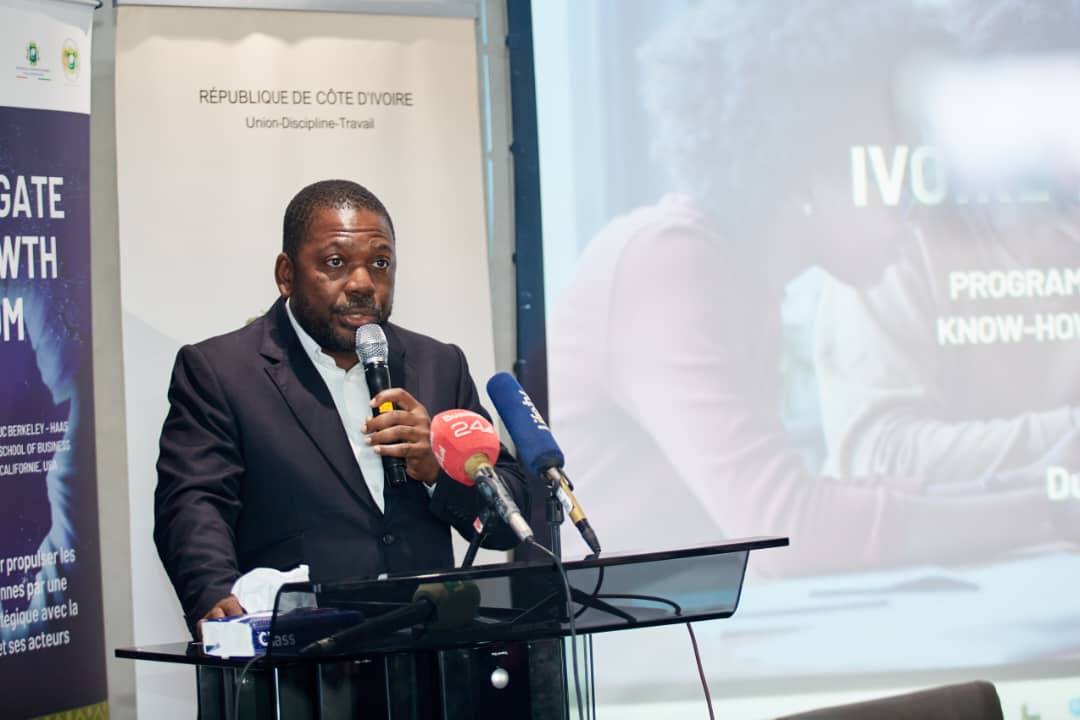
The Ivorian Fintech Association (CIFA) held a sectoral meeting on March 26, 2026 in Abidjan, bringing together several key players in the digital financial sector. Chaired by Alex Sea, the session included the Financial Inclusion Promotion Agency (APIF) as well as companies in the sector such as Julaya, Hub2, and S-Cash. The event served as a platform for the presentation of the association’s action plan for the current year.
An action plan centered around three axes
CIFA’s 2026 plan is structured around market structuring, strengthening user trust, and promoting local solutions. These directions aim to consolidate Côte d’Ivoire’s positioning within the UEMOA space, where fintech dynamics have been steadily growing for several years.
To strengthen the regional dimension of its action, CIFA intends to rely on the “Allianz Fintech UEMOA” project, an initiative aimed at harmonizing development frameworks among member countries and promoting cooperation between startups in the Union. The association also sees this as a lever to improve the visibility of the Ivorian ecosystem among foreign investors.
Rental real estate, a new testing ground for digital innovation
Beyond traditional finance, the meeting highlighted the emergence of fintech solutions applied to real estate management. The startup Locatys, for example, offers a platform for automating rent collection through digital payment channels – Mobile Money and bank cards – by interconnecting landlords, tenants, banks, and public administrations.
According to Silué Siaka, CEO of Locatys, the Ivorian rental market represents approximately 170 billion CFA francs in monthly flows, based on an estimated average rent of 85,000 CFA francs. These figures, provided by the company, illustrate the magnitude of flows currently outside formal channels. The digitalization of this segment is seen as a potential lever for financial traceability and the expansion of banking services.
An ecosystem in search of maturity and regional influence
The trajectory of Ivorian fintech is part of a broader West African context, where several UEMOA countries – Senegal, Mali, Burkina Faso – are also seeking to structure their digital ecosystems. The ability of Côte d’Ivoire to unite these initiatives under a coherent regional architecture is seen by meeting participants as a crucial challenge for the next phase of sector development.
The digital transformation of financial services in West Africa is not just about technological modernization: it requires coordination between regulation, user trust, and system interoperability – conditions that CIFA aims to help bring together in the months ahead.

