



:**
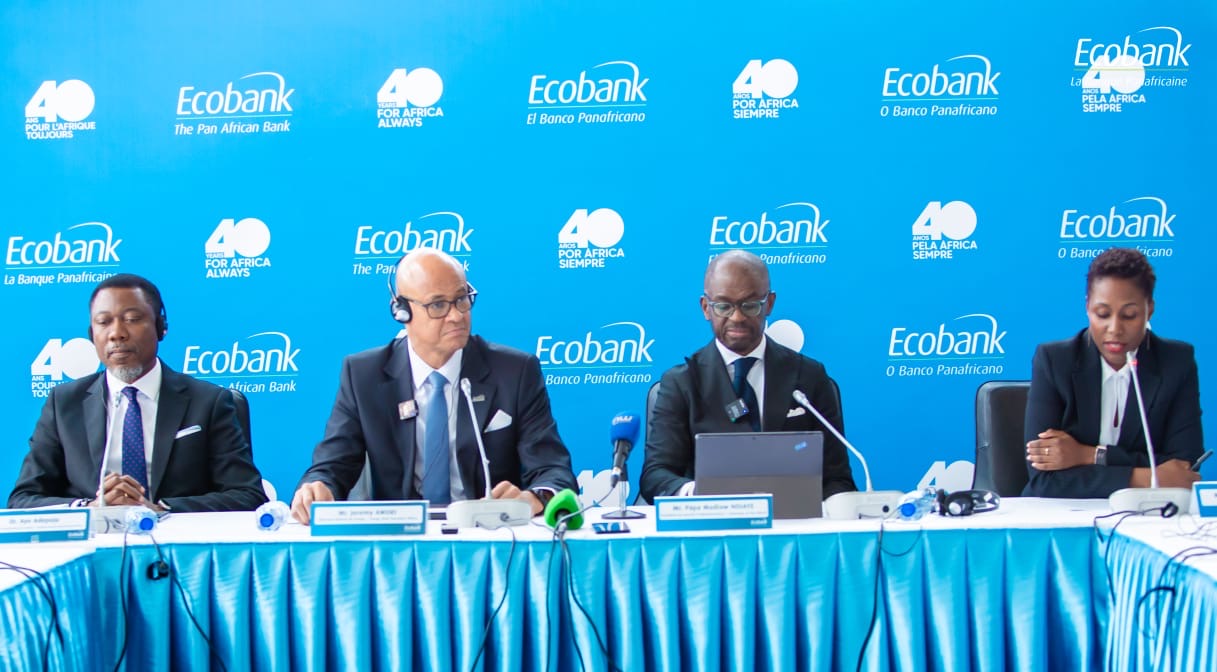
More than ten years after the battle that forced its then Chairman and CEO to resign amid high-profile lawsuits and record settlements, Ecobank Transnational Incorporated is once again at the center of internal conflicts. On October 26, a general assembly intended to “revoke directors” was indefinitely canceled by the West African Monetary Union Banking Commission. This is a reprieve for the Chairman, Papa Madiaw Ndiaye, who has become “persona non grata” in the eyes of three shareholders, according to reports.
Accused of blatant conflicts of interest, the Senegalese national, who until now enjoyed a controversy-free career, defends himself. Sources close to the three dominant shareholders confirm a desire to rid themselves of the Chairman. “There’s nothing dramatic. The shareholders have lost confidence, that’s all. It is still a basic prerogative of shareholders to appoint and revoke directors, to refresh the statutes…” the same sources opine.
At its core, there is a desire for effective control from a certain bloc of shareholders. However, the West African institution was designed with a pan-African vision and a balance of power. The founding fathers, diluted over time by crises and capital increases, had structured a bank where no shareholder, no matter how powerful, could take control at the expense of the collective interest.
Is this independence threatened by Bosquet Investments? The fund controlled by Cameroonian brothers Alain and Cyrille Nkontchou is the latest major investor to enter Ecobank’s shareholding. Allied with the Qatari bank QNB and the European investment fund Arise, Bosquet aims to reshape the Group’s governance. Facing this trio, minority shareholders are attempting to resist, such as representatives from the BIDC (Investment Bank of ECOWAS) and some independent directors.
The issue is further complicated by the fact that Bosquet’s acquisition of Nedbank’s shares (for a valuation that left many observers puzzled) did not pass smoothly with the supervisory authorities. Yet once the file was no longer pending (see below), there was an acceleration of initiatives aimed, according to our analysis and various opinions, at modifying Ecobank’s governance balances.
**An Acquisition That Raised Regulatory Concerns**
For reference, in August 2025, Ecobank announced the conclusion of an agreement for Bosquet Investment to acquire a 21.22% stake in ETI, previously held by Nedbank. This operation, like all such transactions, is normally subject to the usual regulatory approvals.
During the first half of 2026, the UMOA Banking Commission, according to information gathered by the editorial team, expressed serious concerns regarding the terms of the ownership transfer, particularly the lack of transparency surrounding the financial structure used by Bosquet to finance its acquisition and the arrival of an investment fund as the largest shareholder of a systemic bank in the UMOA zone.
Measures taken by the supervisor reportedly prevented Bosquet from fully exercising its shareholder prerogatives until necessary clarifications were obtained. This regulatory decision, even if it was not its intention, coincidentally ended Alain Nkontchou’s attempts to return as Chairman of Ecobank, replacing the current Chairman Papa Madiaw Ndiaye. Indeed, after serving as a director of ETI for 9 years, Mr. Nkontchou could no longer sit on its Board according to Ecobank’s governance charter. The measures taken by the Banking Commission were reportedly lifted in May 2026 and were certainly interpreted by the market as a warning from the supervisory authority regarding the seriousness of its oversight of the Banking Group.
This point is fundamental. It shows that questions about the conditions of the acquisition did not simply arise in the context of the current conflict at the Board. They are part of a prudential supervision process concerning a significant financial operation involving a systemic bank.
The details of the financing structure, the sources of funds, and any financial relationships with Ecobank itself in connection with this acquisition deserve to be documented and examined rigorously if necessary. This is not to presume an irregularity but to emphasize that a significant acquisition in the banking sector must meet the transparency and prudence requirements expected by supervisory authorities.
**Acceleration of Governance Changes**
After the lifting of regulatory measures in May, initiatives aimed at modifying Ecobank’s governance multiplied, but this time, the Nkontchou brothers are no longer alone in their efforts, allying with QNB and Arise to push for successive requests for shareholder meetings, repeated convening of the Board of Directors, often in urgency, proposals for major statutory amendments, and now, the intention to revoke the mandates of independent directors.
The extraordinary general assembly on August 13, 2026, was the culmination of all these initiatives as it approved several significant amendments to the statutes, despite a Togolese court order prohibiting the holding of this assembly at the request of the BIDC and the Ghanaian pension fund SSNIT. Presented by the bank as measures intended to improve governance efficiency, these include reducing the maximum size of the Board, the duration of non-executive directors’ mandates, and the quorum required during general assemblies.
Each of these amendments can be legally defended in isolation. However, it is their combination and context that deserve examination. Indeed, these measures would lead to the effective control of Ecobank by these three shareholders acting together, which is precisely what the company’s statutes prohibit.
The maximum number of directors has been reduced from 15 to 12, thereby reducing the number of independent directors. The term limit for non-executive directors has been removed, while maintaining the mandatory retirement age at 70. Finally, the quorum required for the effective holding of general assemblies has been modified: instead of requiring the presence of at least 20 shareholders, it now relies on the representation of at least 25% of the paid-up capital.
This last modification means that the required participation now depends on the represented capital rather than the number of shareholders present. In a concentrated shareholding structure, this difference can have significant consequences on the balance of power. “In other words, any combination of two of the three largest shareholders behind this change can allow these two shareholders alone to constitute a quorum for deliberation,” points out a lawyer experienced in business law.
Thus, the question must be asked: do these changes sought and supported by the bloc of three major shareholders genuinely enhance the independence of governance, or do they facilitate, under current circumstances, a greater capacity for influence by the main shareholders?
**Four Departures Considered at the Heart of the Control Mechanism**
The question becomes even more concerning when examining the changes currently contemplated in the composition of the Board. The initiatives targeting the Chairman of the Board, Papa Madiaw Ndiaye, as well as the chairs of the governance, audit, and finance and risk committees concern four essential functions for the institutional balance of a bank.
These are not just four interchangeable directors. These responsibilities constitute the main pillars of the Board of Directors’ supervision of any bank: quality of governance, integrity of controls, reliability of audits, and risk management.
Their simultaneous replacement would profoundly alter the balance of supervision. The replacement of independent directors with new directors likely chosen by the major shareholders raises questions about the independence of the newly renewed Board. In fact, this would be a way to gain control of the Board of Directors that could not be obtained through the amendment of the statutes blocked by the courts. Furthermore, the implementation of these changes by these three shareholders would send a strong message to the two remaining independent directors and future ones.
“Shareholders have the right to challenge directors and propose their revocation according to the applicable procedures. However, this revocation must be based on real grounds and follow a serious internal process, given the role of independent directors in the quality of governance of a listed company,” we are told. To date, no grounds have been provided in communications made to the various markets regarding the revocation of the Chairman and the three independent directors, and no Board procedure has been cited in this regard by the various public statements.
A takeover is not solely defined by holding the majority of capital. It can also result from the ability to impose the composition of a Board and weaken the counter-powers that should preserve its independence.
**A Performing Bank Benefiting Its Shareholders**
This desire to disrupt governance comes at a time when Ecobank has recorded remarkable financial performance. Since the arrival of the current tandem at the helm (the CEO and the Chairman), the Group has achieved two consecutive years of record results, returned to dividend payments, and continued its transformation.
The stock performance figures reported for the period from 2024 to the end of 2025 also indicate a considerable increase in the stock price. These indicators highlight an essential point: shareholders have benefited from the value created by the institution and its teams.
Why, under these conditions, initiate such a profound restructuring of the Board without clearly exposing the reasons that would justify it?
The absence of a sufficiently precise public explanation does not, on its own, prove a desire for takeover. Nevertheless, it makes a careful examination of the coherence between the stated motives, the proposed changes, and their effects on the Board’s independence essential.
**Suspicion of Conflicts of Interest Targeting the Chairman: Professional Activities Prior to His Appointment?**
The accusations of conflict of interest against Papa Madiaw Ndiaye, due to his responsibilities within AFIG Funds and the fund’s investments in the African financial sector, must be examined based on the facts.
His professional activities and investments were certainly subject to due diligence before his appointment. Reported elements indicate that they had been presented as part of his arrival on the Board. His experience as an investor in African financial institutions was precisely an element of his profile likely to interest Ecobank.
Naturally, these activities must be subject to disclosure obligations, conflict of interest management rules, and any applicable restrictions in the various jurisdictions. Any regulatory approval invoked must be documented.
However, it is important to distinguish between an established conflict of interest and an accusation that remains to be proven. And it is legitimate to question the timing of the challenge against the Chairman, as initiatives to modify the composition of the Board multiply.
“The defense of the Board’s independence should not be confused with the personal protection of its Chairman. On the contrary, it requires that the same rules be applied to all directors and all shareholders,” explains our business lawyer.
**In West Africa, Banking Supervision Cannot Be Circumvented**
The origin of investors does not determine their legitimacy or the conformity of their actions. Bosquet Investments, an investment company registered in Mauritius, linked to Alain and Cyrille Nkontchou, is associated with Cameroonian investors; QNB is a Qatari banking group; Arise is an investor funded by European development institutions like Norfund and the Dutch FMO. All have the right to defend their interests in compliance with applicable rules.
But does acquiring a significant stake in a pan-African bank of Ecobank’s caliber grant the right to modify the institutional balances that protect this bank and ensure the stability of the banking sector in the UMOA?
The whistle from the West African supervisory authorities against the holding of the general assembly on October 26 is a sufficiently rare occurrence to be highlighted. For reference, on October 23, 2026, Ecobank announced the cancellation of the ordinary general assembly scheduled for October 26 at the urgent request of the UMOA Banking Commission. This decision constitutes a major institutional fact.
Concerns regarding the maintenance of the resolutions adopted in August must also be addressed with precision, distinguishing the formal instructions from the supervisory authority, their legal scope, and any suspension measures effectively notified. The Nigerian financial market regulator, the Securities and Exchange Commission, has also echoed the concerns of the UMOA Banking Commission.
**Should Ecobank Remain Greater Than the Interests of Its Shareholders?**
The stakes now go beyond the person of the Chairman and his alleged conflicts of interest, which must be thoroughly clarified. The essence of the current crisis concerns a pan-African bank’s ability to maintain independent governance to international standards despite pressures from its major shareholders. “In this regard, it should be noted that all corporate governance codes in major financial markets like the United Kingdom, France, and South Africa recommend that, in the case of publicly traded companies, the Board of Directors should be composed mainly of independent directors,” we are told. According to minority shareholders, a takeover by Bosquet Investments, QNB, and Arise, if successful, would represent a major regression in the quality of Ecobank’s governance.
If a coalition of investors can, through its economic weight and successive statutory changes, reduce the counter-powers of the Board and then impose its restructuring, then the question of the institution’s real independence arises.
“This is why the authorities must examine the conditions of the acquisition, the transparency of its financing, any agreements between shareholders, and the cumulative consequences of the proposed statutory changes and revocations.”
Certainly, Bosquet, QNB, and Arise have the right to defend their legitimate interests. However, if these interests lead to an increased concentration of power, the independence of the Board and the safeguards designed to protect all shareholders will be compromised. It remains to be seen what would happen to the Group if the three aforementioned shareholders managed to impose the desired changes. What about the counter-powers then? Clearly, this new episode of Ecobank, which raises more questions than it provides answers, has not yet revealed all its secrets and, consequently, its epilogue.

