



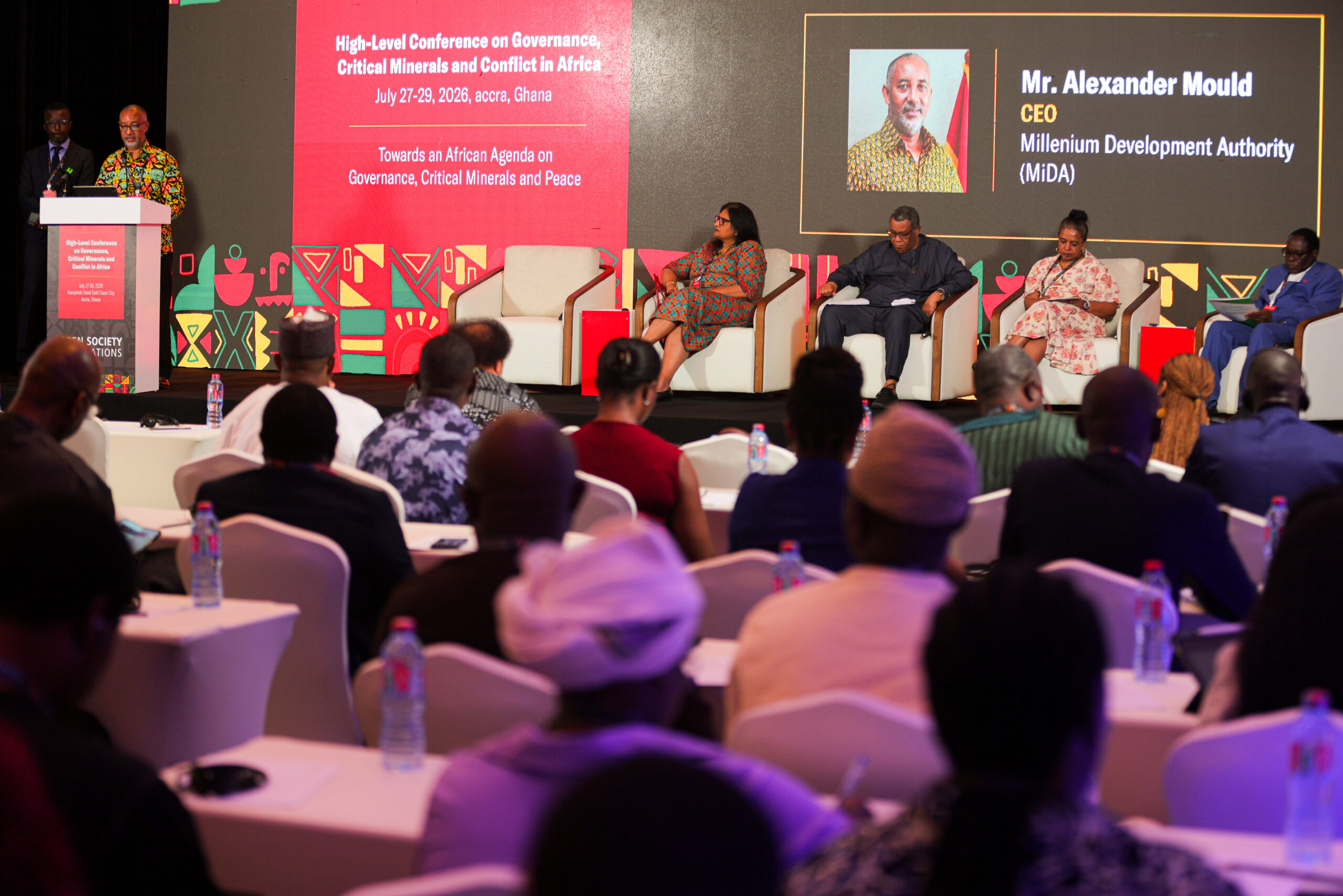
Accra (Ghana), July 29, 2026 – The regional high-level conference on governance, critical minerals, and conflicts in Africa concluded today by calling for a new continental approach to governance of Africa’s critical minerals. It places democratic governance, accountability, industrialization, peace consolidation, and citizen participation at the heart of the continent’s response to the growing global demand for strategic mineral resources.
Organized by Open Society Foundations, this three-day conference brought together senior government officials, representatives of the African Union and Regional Economic Communities, parliamentarians, civil society organizations, traditional leaders, mining communities, academics, development partners, philanthropic organizations, and private sector actors to examine the governance choices necessary to ensure that Africa’s mineral wealth contributes to inclusive development, democratic resilience, and sustainable peace.
Participants agreed that the issue of critical minerals in Africa is primarily a governance issue that goes beyond the scope of mining and resource extraction alone. Discussions concluded that decisions regarding the management of critical minerals will shape democratic accountability, economic sovereignty, industrial development, environmental management, and social cohesion across the continent.
The conference called for a new continental governance pact based on democratic accountability and the rule of law, transparent and equitable governance of resources, conflict prevention and social cohesion strengthening, value addition and industrialization, as well as enhanced regional cooperation through existing African institutions and frameworks.
One of the key outcomes of the conference was the call for African countries to move beyond the export of raw minerals and accelerate investments in processing, refining, manufacturing, research, innovation, and skills development to build competitive regional value chains. Participants emphasized that Africa’s mineral resources must generate more value at the national level, quality jobs, and sustainable economic transformation.
The conference also agreed that communities living in mining areas must be recognized as full partners in mining governance. Participants called for meaningful participation of women, youth, indigenous peoples, traditional authorities, and artisanal mining communities in decisions regarding land, livelihoods, environmental protection, and benefit sharing.
Recognizing the intensification of geopolitical competition around critical minerals, participants emphasized the importance of increased coordination through the African Union, Regional Economic Communities, and the African Continental Free Trade Area (AfCFTA) to strengthen Africa’s collective voice in international negotiations and promote consistent continental approaches to mining governance.
The conference also reaffirmed that transparent institutions remain essential for responsible mining governance. Participants called for strengthening public accountability through transparent licensing and contracting procedures, disclosure of ultimate beneficiaries, independent regulatory institutions, enhanced parliamentary oversight, and improved public access to information throughout the mining value chain.
Implementation Commitments
The conference adopted an implementation and accountability framework to guide the action of governments, regional institutions, and other stakeholders.
Prioritized commitments include supporting countries in developing integrated national strategies on critical minerals; strengthening transparency, revenue governance, and parliamentary oversight; protecting the rights of mining communities; promoting the participation of women and youth in mining governance; integrating conflict prevention into mining resource governance frameworks; combating illicit mineral flows; accelerating investments in mineral beneficiation and regional industrialization; and enhancing continental cooperation within the AfCFTA framework.
Participants also committed to strengthening partnerships between governments, regional organizations, civil society, research institutions, development partners, and the private sector to support policy reforms, institutional capacity building, and responsible investments.
Perspectives
Participants agreed that this conference marks the beginning of a sustainable continental program aimed at translating its outcomes into policy reforms and coordinated actions.
Immediate priorities include establishing a continental monitoring and accountability mechanism, engaging with the African Union, the African Minerals Development Centre, the AfCFTA Secretariat, and Regional Economic Communities, identifying priority countries and mining corridors for concerted action, and strengthening the evidence base through political economy analysis and conflict risk assessments.
The conference concluded with a shared commitment to ensure that Africa’s critical minerals are governed in a way that strengthens democratic institutions, promotes economic sovereignty, supports industrial transformation, prevents conflicts, and generates sustainable benefits for African citizens. Participants affirmed that sustained political leadership, enhanced regional cooperation, and responsible governance will be essential to achieving this goal.

