



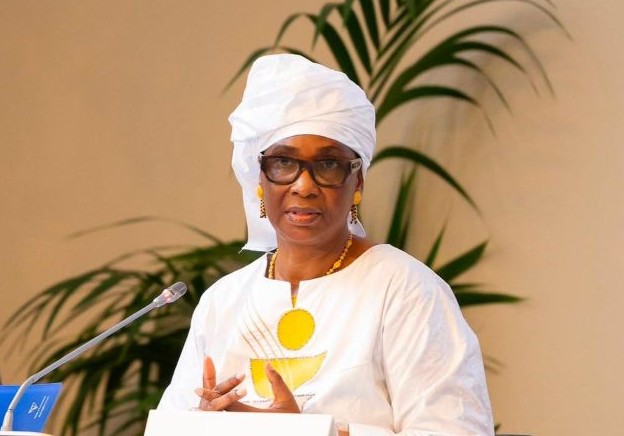
A few months before the Francophonie Summit in Phnom Penh, the campaign led by Mauritania for the position of Secretary General is reaching a new milestone. After widely noted hearings with member states and governments, Dr. Coumba Bâ’s candidacy seems to be entering a new, more offensive phase, while still methodical, marked by a strong diplomatic presence well beyond the African continent.
The recent tour in Cambodia, Vietnam, and Laos was not just a protocol sequence. It followed a specific political logic, reminding that the election of the next Secretary General of the Francophonie should not be reduced to a confrontation of blocs or a strictly regional reading. It concerns the entire Francophone community.
This approach resonates particularly in Southeast Asia, where the Francophonie has a historically underestimated presence. Cambodia, Vietnam, and Laos remain pillars of the Asian Francophone space and are currently hosting a debate that goes far beyond African balances alone.
The Mauritanian delegation’s visit also builds on a longer history. Relations between Mauritania and the countries of Indochina date back to the early decades following independence. They were built around a shared conception of international relations, nourished by principles of dialogue, state sovereignty, mutual respect, and the non-aligned doctrine that deeply influenced Southern diplomacy. This common memory continues to provide a favorable foundation for political dialogue today.
A Francophonie built on a culture of results
In each visited capital, Dr. Coumba Bâ’s message remained consistent. The Mauritanian candidate advocates for a vision of a Francophonie more focused on results, solidarity among states, knowledge sharing, youth, talent, innovation, and economic opportunities, while strengthening ties between Africa and Asia. This approach, already developed during the hearings, was adapted to the specific priorities of each interlocutor without losing its coherence.
In Cambodia, the future host of the Francophonie Summit, the emphasis was on a more supportive Francophonie, capable of concretely supporting states in times of tension, as well as the need to better promote the cultural heritage of member countries in the digital age and give a more tangible content to economic Francophonie.
In Vietnam, discussions focused on the ability of the Francophonie to become a true network of collective intelligence, fostering talent mobility, university cooperation, scientific partnerships, and technological innovation. Vietnam, known for its economic transformation, appears in this vision as one of the future drivers of Asian Francophonie.
In Laos, a country with a long-standing attachment to the Francophonie, the Mauritanian delegation emphasized that Francophone Asia should no longer be seen as a periphery of the organization but as one of its main future spaces. Once again, the message is based on a simple idea: an international organization is judged as much by its ability to act as by the strength of its principles.
Beyond the content of the exchanges, the evolving political climate is now attracting the attention of many observers. Several interlocutors met during this tour have shown a marked interest in a candidacy that could preserve the unity of the Francophone family in a particularly sensitive international context.
The stakes go beyond the mere designation of the next Secretary General. Many, especially in Asian countries, hope that the Phnom Penh Summit will remain a moment of gathering for the Francophonie and not the stage for a lasting confrontation between different influence blocs. In this perspective, the qualities traditionally associated with Mauritanian diplomacy (balance, dialogue, moderation, and the ability to maintain trust with partners of diverse sensitivities) resonate particularly today.
A diplomacy of proximity based on listening
The Mauritanian campaign seems to have taken note of this evolution. Far from a polarization logic, it favors a diplomacy of proximity, based on listening, political dialogue, and the search for convergences. This method, patiently built since the early hearings, now appears as one of the main strengths of the candidacy.
The general impression from this Asian tour is that the campaign continues to gain momentum. After attracting favorable attention during the hearings, Dr. Coumba Bâ’s candidacy is taking a new step by demonstrating its ability to unite interlocutors from very different geographical, historical, and political spaces.
As the Phnom Penh deadline approaches, a movement seems to be emerging. More than a candidacy supported by a single country or region, the Mauritanian proposal gradually appears as that of a Francophonie that seeks less to arbitrate power relations than to recreate the conditions for dialogue, trust, and unity.
In an organization preparing to open a new chapter in its history, this ability to build bridges could be one of the decisive criteria for the choice ultimately made by member states and governments.

