



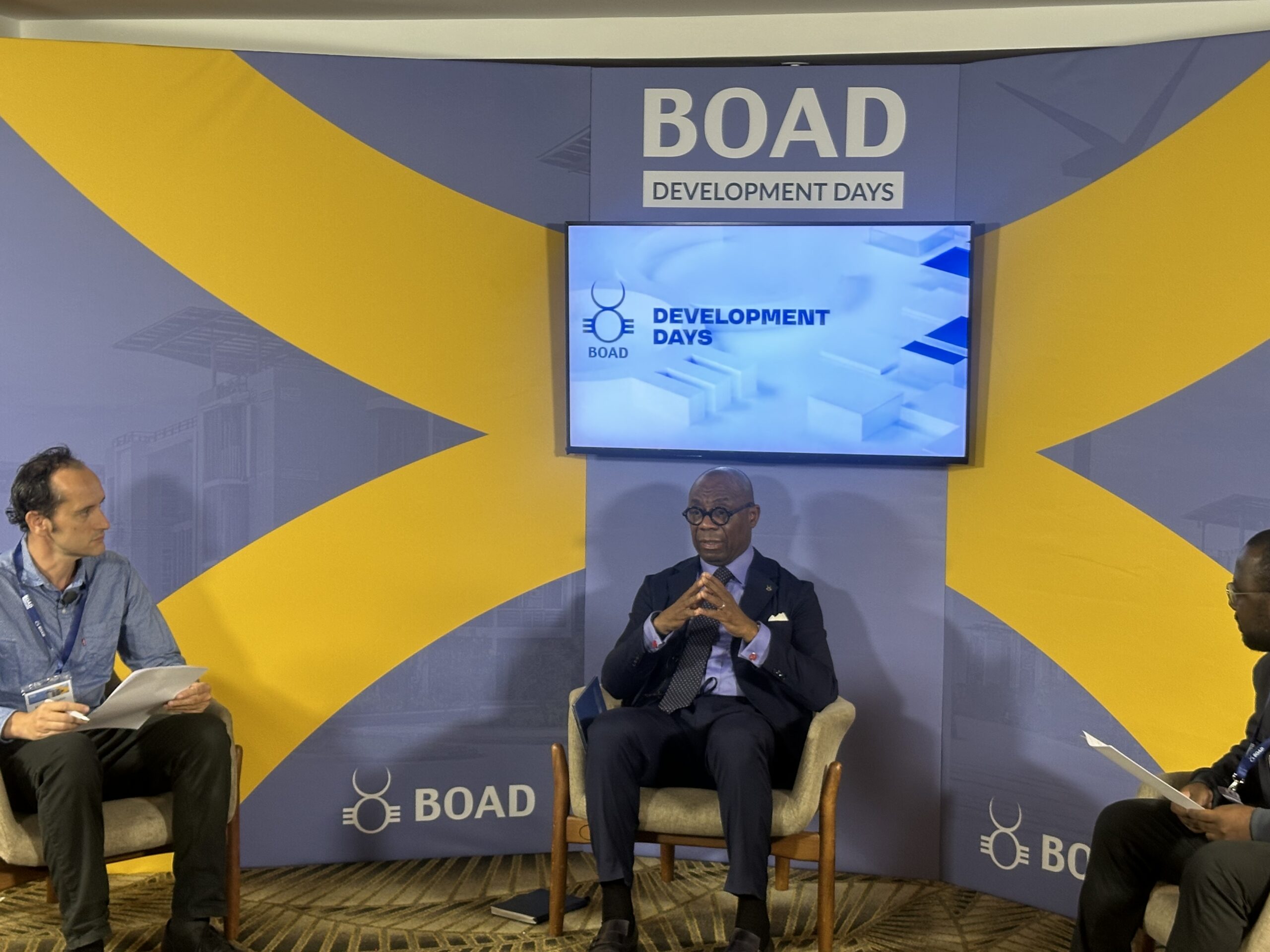
In a West African Economic and Monetary Union (UEMOA) facing a deficit of an estimated 3.5 million housing units and an annual demand for 800,000 additional units, financing housing emerges as one of the main development challenges. It is around this conviction that the second edition of the BOAD Development Days opens in Lomé this year, focusing on sustainable housing.
On the eve of the event, the President of the West African Development Bank (BOAD), Serge Ekué, defended an ambitious vision of housing, considering it not just as a banking product but as a true instrument of macroeconomic policy.
“Housing is an instrument of macroeconomic policy,” he bluntly stated in an interview with the media. Behind this statement lies a concerning reality: banks in the Union grant only about 15,000 mortgage loans per year, which is insignificant compared to the needs of a population expected to exceed 300 million inhabitants by 2050.
For Serge Ekué, the nearly 3% annual population growth represents not so much a threat as a tremendous economic opportunity. However, it is essential to be able to finance the necessary infrastructure, cities, and housing for this demographic transition. This is precisely the mission that the BOAD has undertaken over the past four years.
Under the leadership of the former executive of Natixis, the BOAD has significantly strengthened its financial structure. Equity has doubled since 2021 and further increased by 28% in 2025. This massive recapitalization has allowed the institution to significantly increase its intervention capacity while maintaining one of the best financial ratings on the continent. The BOAD currently holds an A- rating with a stable outlook from the Japanese agency JCR, Baa1 from Moody’s, and BBB from Fitch Ratings.
This financial strength is not an end in itself, clarifies Serge Ekué. “This is primarily aimed at supporting a rapid expansion of the balance sheet.” The bank has invested nearly 10 trillion CFA francs since its creation, with about 6 trillion in the last five years alone. In other words, nearly two-thirds of the institution’s historical activity has been carried out in the last five years.
“The capital is no longer free,”
This acceleration reflects a deeper transformation of the role of African development banks. For a long time, these institutions operated in an environment where capital was mainly provided by states and international donors. This model is now being questioned. “Capital is no longer free,” summarizes the President of the BOAD. The budget constraints of developed countries and the questioning of multilateralism now require development banks to mobilize the resources necessary for their growth.
In this new configuration, the BOAD has embarked on a strategy focused on financial markets. Hybrid securities, securitization, international issuances, future warrant programs: all instruments are mobilized to optimize capital utilization, explained by someone who has spent most of his career exploiting advanced financial instruments in European and Asian markets.
One of the most striking examples concerns securitization. Through this technique, the bank claims to have regenerated 200 billion CFA francs of equity in 2025. Given its leverage effect, this operation allows it to finance up to 800 billion CFA francs of new projects. This mechanism illustrates the evolution of development banks towards increasingly sophisticated models, closer to international market standards.
This increased financial power comes at a time when UEMOA states are gradually approaching the limits of sustainability of their public debt. For Serge Ekué, the next step is to rebalance activity towards the private sector. Currently, two-thirds of the BOAD’s portfolio consists of public operations. The stated goal is to eventually achieve a balanced split between the public and private sectors.
Towards a vehicle dedicated to the private sector
This strategy will soon materialize in the creation of a vehicle dedicated exclusively to financing private enterprises. The challenge is to develop new financing schemes, particularly in infrastructure, public-private partnerships, and real estate.
Housing appears as the ideal laboratory for this new approach. According to Serge Ekué, the main obstacle is not so much the lack of financial resources as the inadequacy of traditional credit models to the African economic reality. In economies where nearly 90% of the population operates in the informal sector, the systematic use of pay stubs as an eligibility criterion mechanically excludes a majority of households.
The reflection initiated by the BOAD aims to explore new models based on reputation, payment regularity, or community integration, similar to certain schemes already used in India or the UK. This approach also recalls the trust mechanisms at work in African rotating savings and credit associations.
Beyond financing itself, the bank advocates for an integrated vision of housing. Building homes is not enough. It is also necessary to finance roads, electricity, schools, local services, and energy efficiency. Housing then becomes a lever for social stabilization, controlled urbanization, and economic growth.
In this perspective, the issue of energy occupies a central place. While nearly 700 million Africans still lack access to electricity and a significant portion of other users experience unstable supply, the energy performance of future real estate programs is a major concern.
Through this new edition of the BOAD Development Days, the institution based in Lomé seeks to open a much broader debate than just real estate financing. A strategic question emerges: how to transform the African demographic explosion into a growth engine in a resolutely anti-Malthusian perspective?
For Serge Ekué, the answer lies in a combination of capital, financial innovation, and new risk approaches. This ambition is part of the broader framework of the New African Financial Architecture (NAFAD) promoted by the African Development Bank and supported by the continent’s institutions. The goal is to mobilize more African savings for development.
Housing could thus become one of the most concrete arenas for this transformation.

