



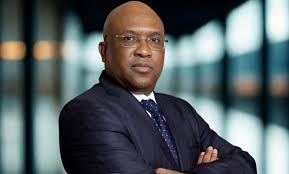
By Thierno Seydou Nourou SY, President and Founder of Nourou Financial Consulting
The latest report on recent economic developments and prospects in Senegal highlights a paradox that deserves to be at the heart of public debate: the country is improving its major macroeconomic balances, but at the cost of a gradual weakening of its real economy. At first glance, the results are solid. Growth is estimated at 6.7% in 2025, inflation remains contained, the budget deficit is greatly reduced, and external accounts improve significantly. But a closer look shows that this performance is mainly based on the production of hydrocarbons, while activity outside of hydrocarbons and agriculture slows to 1.6%. In other words, growth is accelerating, but its productive base is narrowing.
This tension is not unique to Senegal. It is currently present in parts of Africa. The continent is expected to continue growing, but in a more uncertain and less supportive global environment. The IMF has lowered its growth forecast for sub-Saharan Africa to 3.8% in 2025, citing global uncertainty, possible tightening of financial conditions, and the vulnerability of countries heavily exposed to external shocks. The World Bank also projects a only gradual recovery in sub-Saharan Africa, from 3.3% in 2024 to 3.5% in 2025, with significant disparities between commodity-exporting countries and more diversified economies.
In this landscape, Senegal stands out with a growth rate above the regional average. But this advancement must be interpreted with caution. The experience of other African countries shows that growth driven mainly by natural resources can quickly improve aggregates, without fundamentally transforming the economy. Nigeria and Angola are useful reminders: their trajectories have long been dependent on oil cycles, with periods of prosperity followed by budgetary, monetary, or external tensions when prices turn. Conversely, countries like Cote d’Ivoire have relied more on a diversified productive base, combining export agriculture, services, logistics, and light industry, which tends to spread growth more broadly in the domestic economy. The African Development Bank also points out that in 2025, several fast-growing African economies owe their resilience not only to commodities or rent effects, but also to progress in reforms and diversification.
Therefore, the Senegalese challenge lies in a growth rate above the regional average. But this advancement must be interpreted with caution. The experience of other African countries shows that growth driven mainly by natural resources can quickly improve aggregates, without fundamentally transforming the economy. Nigeria and Angola are useful reminders: their trajectories have long been dependent on oil cycles, with periods of prosperity followed by budgetary, monetary, or external tensions when prices turn. Conversely, countries like Cote d’Ivoire have relied more on a diversified productive base, combining export agriculture, services, logistics, and light industry, which tends to spread growth more broadly in the domestic economy. The African Development Bank also points out that in 2025, several fast-growing African economies owe their resilience not only to commodities or rent effects, but also to progress in reforms and diversification.
This is precisely where the Senegalese challenge lies. The report shows that the improvement in public accounts in 2025 was based on a strong compression of expenses, especially public investment, while non-hydrocarbon dynamics are weakening. From an accounting perspective, the adjustment is impressive. From an economic perspective, it raises a more delicate question: can macroeconomic credibility be restored sustainably by compressing one of the main levers supporting activity, when the private sector has not yet fully taken over?
This question becomes even more pressing in the current international context. International institutions are already warning of a global economy weakened by geopolitical uncertainty, trade tensions, and financial volatility. The IMF recently indicated that if oil prices remained high due to prolonged conflict in the Middle East, it could increase risks to global financial stability. The World Bank, on the other hand, emphasizes that a re-escalation of conflicts in the MENA region (Middle East and North Africa) could further increase oil price volatility and weaken prospects.
For African economies, and particularly for Senegal, such a scenario would have ambivalent effects. In the short term, high energy prices can increase revenues for a country now producing hydrocarbons. But this apparent advantage can be neutralized, or even surpassed, through other channels: higher transport and input costs, imported inflation, tensions on logistic chains, increased risk premium on financial markets, and tightening of financing conditions. The experience of disruptions in the Red Sea has already shown how economies dependent on foreign trade remain sensitive to the disruption of maritime routes: the IMF observed that these attacks had reduced traffic through the Suez Canal and extended delivery times by about ten days on average for many commercial flows.
Therefore, the question is no longer just whether Senegal benefits from oil, but whether it will avoid the classic trap of extractive economies. Nigeria has often seen periods of rising oil prices temporarily improve its revenues without solving its industrial weaknesses, currency shortages, or fragility of its productive fabric. Angola has experienced similar sequences, where oil dependence has increased the economy’s vulnerability to external reversals. Senegal still has the opportunity to take a different path: using extractive revenue not to mask its imbalances, but to finance a strengthening of the non-extractive economy. This comparative lesson is essential.
The comparison with Cote d’Ivoire is particularly enlightening. Without idealizing its trajectory, this country illustrates more a logic of growth driven by several engines at once, which better absorbs shocks. When an economy is based on the combination of several pillars – agriculture, agro-industry, services, construction, transport, logistics – it is generally more resilient than an economy whose growth mainly depends on an extractive sector. This productive depth is still lacking in Senegal, as evidenced by the slowdown in activity outside of hydrocarbons and agriculture highlighted in the report.
Therefore, the issue is not to question the need for budget discipline. In an unstable global environment, it is even essential. But it cannot alone constitute a development strategy. Consolidation is sustainable only if it preserves future production, employment, and export capacities. In other words, it is necessary to distinguish between adjustment that corrects imbalances and adjustment that erodes growth potential.
Senegal is at a decisive moment. Hydrocarbons offer it unprecedented leeway, even as the global economy becomes more turbulent and Africa enters a phase where resilience will count as much as growth. The African Development Bank reminds us that the most robust African countries will be those that can turn external shocks into accelerators of structural transformation, instead of relying on a conjunctural improvement in their terms of trade.
Therefore, the challenge for Senegal is clear: to make the improvement of balances not an end, but a means. A means to reinvest in the productive apparatus, increase the quality of public spending, strengthen the private sector, support non-hydrocarbon export sectors, and cushion future external shocks. Because if the conflict involving Iran, the United States, and Israel were to persist, the world would enter more deeply into an era of volatile prices, more expensive financing, and uncertain trade. In such a world, the strength of an economy will not only be measured by the reduction of its deficit, but by its ability to produce, transform, export, and employ beyond rent.
This is the condition under which Senegal can avoid the paradox that currently runs through its economic report : displaying better balances, without weakening the productive reality that should be its foundation.

