



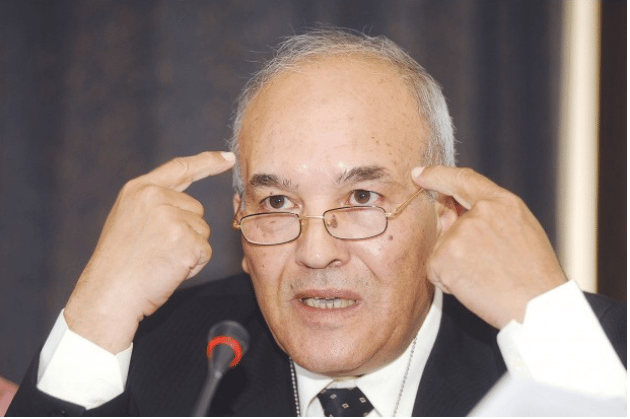
By Abderrahmane MEBTOUL, University Professor and International Expert with a Doctorate in Strategic Management.
The USA-Israel-Iran conflict has a global economic impact, especially through the Strait of Hormuz where 20-25% of hydrocarbon flows transit, not to mention tensions in the Red Sea leading to fluctuating oil prices between $100-120 per barrel for Brent and $50-70 per megawatt-hour for gas (gas prices in Asia increased by over 140% after strikes on infrastructure in Qatar), affecting production and transportation costs. The OECD predicts that global inflation will be reignited, potentially reaching 4.2% in the United States (compared to the initially forecasted 2.6%) and significantly increasing in the eurozone, impacting all developing countries, particularly Africa. Stock markets have been shaky but not collapsed, with vulnerability less than in 2022 according to some analysts. The rise in inflation due to the war has led to an increase in interest rates, reducing the capacity for mortgage borrowing. For the three zones that account for over 80% of the global economy, we have: in the Eurozone, growth could slow to just 0.5% in the second half of 2026; US growth, after slowing to around 2.2% in 2025, is expected to stagnate around 1.5% to 1.8% in 2026; for Asia, which is expected to maintain robust growth at around 4.5% in 2026, solidifying its role as a global economic engine. However, China, a key pivot in Asia, could see growth fall below 3% due to its heavy dependence on energy imports from the Middle East. Gulf countries like Kuwait or Qatar could see their GDP drop by 14% in 2026 if hostilities persist, with the UN estimating the cost for Arab countries at $186 billion, highlighting the fragility of their rent-based economies.
1.- Financial Cost for the USA:
The financial costs for the USA must be considered within their geostrategic objectives of remaining the world’s leading economic and military power, with their main competitor being China. In 2025, out of a global GDP of $113 trillion, the USA represents $30.6 trillion with a population of 342 million, compared to China’s $20 trillion GDP with a population of 1.4 billion. The USA focuses on maintaining the dollar as the international currency, supporting strategic companies, and asserting global hegemony against China, securing energy resources, and controlling key areas like the Middle East and the Arctic. This posture involves increased militarization, with the Pentagon anticipating Arctic militarization due to melting ice crucial for maritime routes and resources. Long-term estimates suggest total costs, including debt and veteran care, ranging from $1-3 trillion. The Pentagon has requested an additional budget of over $200 billion to submit to Congress. By the end of March 2026, US military expenses skyrocketed to an estimated $800 million to $1 billion per day on average, with over $11.3 billion spent in the first six days alone. The total budget cost for the USA could reach between $65-115 billion depending on the duration of engagement. If the conflict lasts more than three months, the total cost could exceed that of the 2003 Iraq war.
2.- Financial Cost for Iran:
Despite possessing massive energy resources, Iran’s ability to sustain a prolonged war effort is seriously challenged by a systemic financial crisis, with foreign exchange reserves below $35 billion by the end of 2025. The economy, already under sanctions, is projected to contract severely (estimated at 10% for 2026), with infrastructure destruction and a drastic drop in revenues. The Iranian government has announced a 200% increase in its military budget for 1404 (March 2025 – March 2026), followed by a nominal increase of 145% for the following year (2026-2027). The cost of military operations is estimated at hundreds of millions of dollars per day, a massive burden for a national budget estimated at around $65.7 billion in 2024. The collapse of the Iranian currency, the rial, has reached historic lows, reflecting the contraction of the Iranian economy in 2025 and 2026, with overall inflation approaching 60% and food inflation alone exceeding 70%, fueling social discontent that weakens the regime’s internal stability. Iran, while resilient due to its resources and alliances with Russia and China, faces significant economic challenges and risks a regional conflagration.
3.- Financial Cost for Israel:
The economic cost of wars is colossal, with Israel losing the equivalent of 8.5% of GDP growth since October 7th, amounting to 177 billion shekels. The daily cost of IDF operations is around $500 million. Israel is heavily financially supported by the USA and the West through various networks. The Israeli military expenses in the first 20 days of the war against Iran reached around $6.4 billion, with the government approving an emergency budget allocation of $825 million for the purchase of “urgent security supplies.” The total budget allocated for war management is approximately 39 billion shekels, with the current spending rate indicating the potential duration of the conflict.
Perspectives:
The evolution of the conflict faces unexpected Iranian resistance, shifting the nature of the war. Military objectives now target health centers, power plants, oil and gas fields, and desalination facilities across the region, essential for their economies and populations. President Trump recently announced that the conflict is expected to continue with equal intensity over the next few weeks, with potential developments in the medium term to find a resolution. The potential US ground operation in Iran aims to apply military and diplomatic pressure for possible direct negotiations, with time constraints and diverging interests posing challenges.
In conclusion, the Middle East’s landscape will be significantly altered by this conflict, signaling a broader geostrategic transformation. Africa must learn from this conflict to safeguard its interests and develop adaptation strategies based on social cohesion.

