



By Professor Amath Ndiaye, FASEG – UCAD.
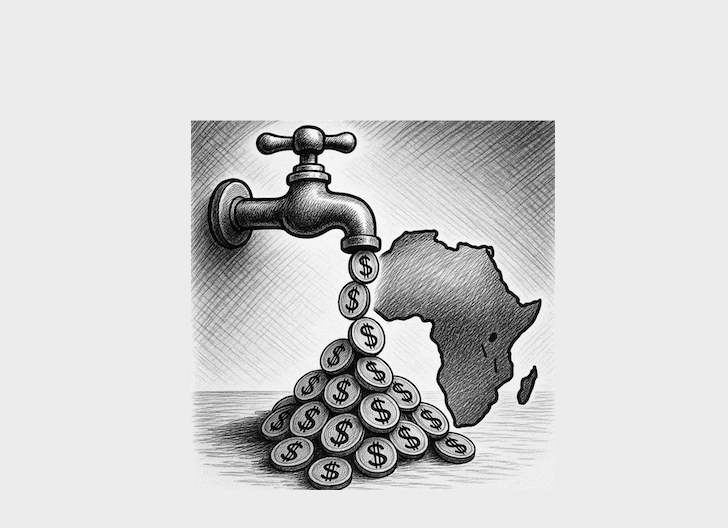
Africans are often told that all they need is a national currency and to “open it like a tap” to finance schools, build roads, or pay civil servants. But this is an illusion. A currency is not a magical source: if too much is created without a link to real wealth, it causes inflation and, ultimately, an economic crisis. Many believe that wealthy countries, such as the United States, Japan, or France, freely resort to printing money. In reality:
- The United States is heavily indebted, but their expenses are financed by investors from around the world because the dollar inspires confidence.
- Japan is even more indebted, but the debt is bought by the Japanese themselves: once again, it is confidence that sustains the system.
- France, with the euro, still faces significant budgetary difficulties. If “printing money” were enough, it would have no problem funding pensions or hospitals.
Conclusion: even wealthy countries have not found a miracle in unlimited money creation.
Why not in Africa?
If the “money tap” was a solution, countries like Mauritania, Gambia, or Guinea, which have their own currency, would have already used it. However:
- In Guinea, the liquidity crisis is so severe that there is a shortage of banknotes in banks.
- In Gambia or Mauritania, the national currency has not ended poverty or unemployment.
Zimbabwe tried the experiment: printing massively to finance the state. Disastrous results:
- Uncontrollable hyperinflation.
- Prices doubling sometimes in a few hours.
- Million-dollar bills that were not even worth the price of a loaf of bread.
In the end, the economy collapsed, and the country had to abandon its national currency in favor of foreign currencies.
The real lesson
Currency does not rely on patriotism or political slogans. It relies on trust:
- Trust that the bill will retain its value tomorrow.
- Trust that it can be used everywhere for payment.
- Trust that the Central Bank will not flood the country with banknotes at the expense of households.
Printing money does not create wealth. It is work, production, innovation, and good management that produce real prosperity. Currency is just a tool used to measure and circulate these riches.
Abusively injecting money creates inflation, and inflation impoverishes the people. The state should not unjustly live off the citizens by manipulating money at will. This would be taking advantage of their work without giving anything in return. The right stance for the state is to collect taxes and offer public goods and services in return.
About Prof. Amath Ndiaye, FASEG – UCAD
Prof. Amath Ndiaye is a prominent Senegalese economist, holding a State Doctorate in Economics from Cheikh Anta Diop University in Dakar (2001) and a 3rd cycle Doctorate in Development Economics from the University of Grenoble, France (1987). Since 1987, he has been teaching at the Faculty of Economics and Management Sciences at Cheikh Anta Diop University in Dakar. A recognized expert, he has collaborated with prestigious institutions such as the African Development Bank, the World Bank, and the IMF, specializing in areas such as exchange rates, economic growth, and institutional development. He was an expert member of the steering committee of the African Union Commission for the Creation of the African Central Bank. Prof. Ndiaye is the author of numerous influential publications, particularly on exchange rate regimes and economic growth in West Africa. Fluent in Wolof, French, and English.

