



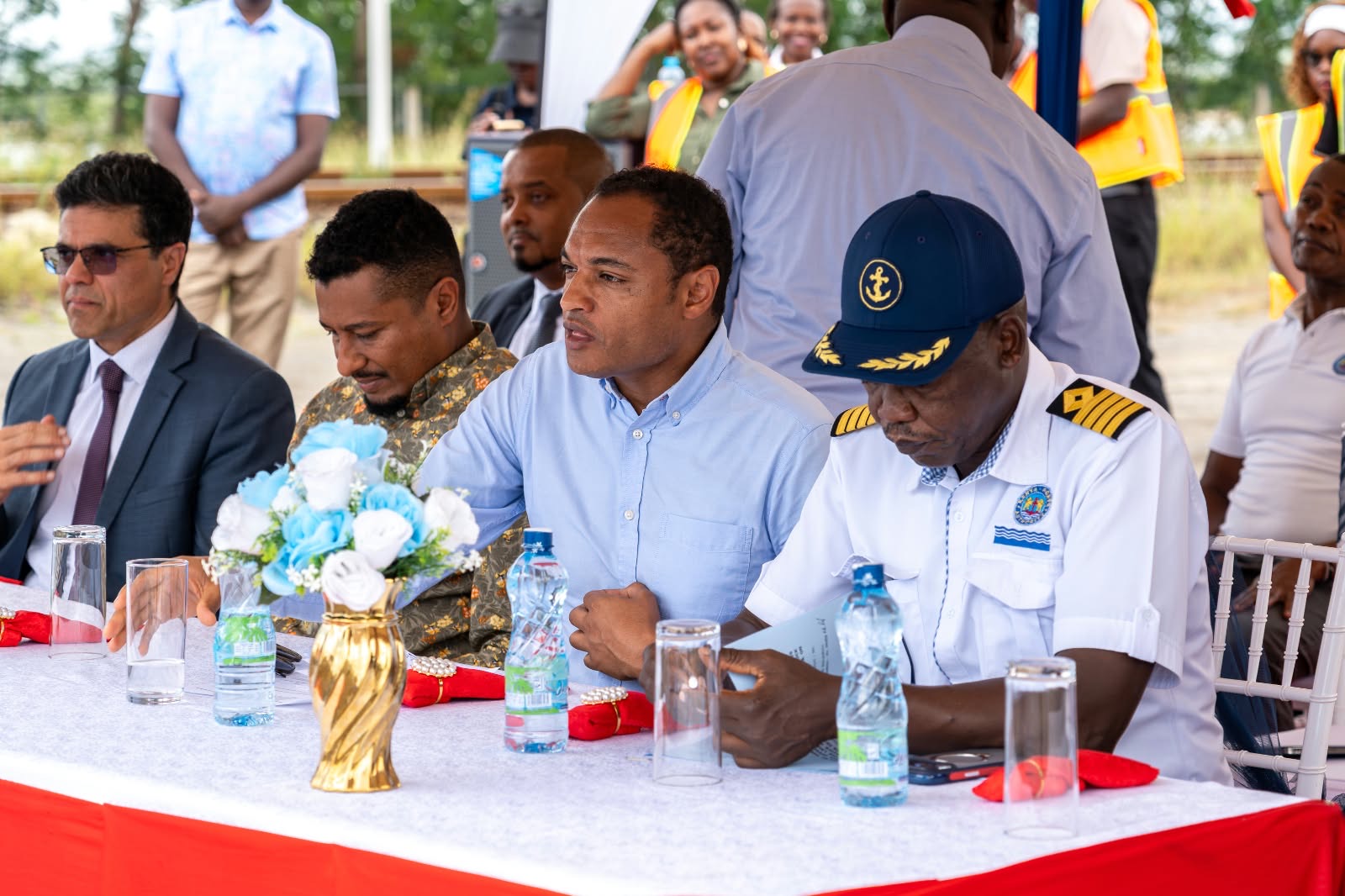
:**
CMA CGM inaugurated a rail service on October 28, connecting the port of Mombasa to the inland container terminal in Nairobi-Embakasi. With a capacity of 108 TEUs (Twenty-foot Equivalent Units) per departure, it complements the logistics offering of the maritime and port operator in Kenya, where it has been present since 2005.
CMA CGM has launched a new rail freight service in Kenya between the port of Mombasa and the inland container terminal in Nairobi-Embakasi. Comprising 54 wagons, the convoy can transport 108 TEUs, the standard unit for container transport. The service starts with one departure per week, initially to transport imported goods from Mombasa to Nairobi.
Developed in partnership with the Kenya Ports Authority (KPA), the port authority, and Kenya Railways Corporation (KRC), the national rail operator, this initiative aims to strengthen the coordination between maritime transport and land services. It allows CMA CGM to offer its customers a solution that integrates the transport of containers by ship and their delivery by rail to the Kenyan capital.
“The launch of this service marks an important milestone for CMA CGM in Kenya,” emphasizes Naveen Prabhu, Deputy Regional Director for the group in East Africa. He sees it as a way to “enhance connectivity between maritime transport, ports, and the economies of the interior,” particularly through cooperation with Kenyan authorities and the group’s customers.
The rail link between Mombasa and Nairobi already existed. The new service builds on the existing infrastructure and adds capacity reserved for CMA CGM containers. Its implementation requires coordination between the unloading of containers from ships, their transfer to rail, scheduling departures, and unloading at the Embakasi terminal.
The service is first intended to assess customer demand. The group is then considering studying an increase in the frequency of departures and establishing return services to Mombasa, which could be used to transport goods intended for export. No timeline has been announced for these developments.
**A Broader Commitment in Kenya**
This launch is part of CMA CGM’s long-term commitment to Kenya and East Africa. At the Africa Forward summit held in Nairobi in May 2026, the group’s CEO, Rodolphe Saadé, signed a framework agreement for strategic partnership with Kenyan authorities dedicated to the development of transport and logistics infrastructure. The announcement was associated with a €700 million investment project in the port infrastructure of Mombasa.
For Mohamed Daghar, Principal Secretary for Transport at the Kenyan Ministry of Roads and Transport, the efficiency of links between Mombasa and the economic centers of the interior is “essential to strengthen Kenya’s logistics chain.” He also emphasizes the role of partnerships between public and private actors to better connect infrastructures, businesses, and markets.
The train launch ceremony also highlighted the group’s activities in maritime transport. Attendees visited the *CMA CGM PALMYRE*, a container ship powered by liquefied natural gas (LNG), showcased by the group as part of its efforts to reduce the environmental footprint of its operations.
Beyond infrastructure, CMA CGM is developing partnerships dedicated to training professionals in the sector. The group has renewed its collaboration with the Bandari Maritime Academy to contribute to the training of future Kenyan professionals in maritime and logistics activities.
**Training and Local Initiatives**
Since 2023, the CMA CGM Foundation has supported the I.O.Me001 innovation center in Mombasa, in partnership with the Kenyan Red Cross. The center offers activities related to entrepreneurship and coding in spaces adapted from shipping containers. In 2025, it hosted over 1,200 students from 15 institutions. In partnership with the French Embassy in Kenya, the Foundation plans to provide seven additional containers to enhance its capacity.
In Nairobi, the CMA CGM Foundation is also participating, along with the University of Nairobi and the French Development Agency (AFD), in the renovation of the university’s football field. The project plans to include adaptations to address climate change constraints and is expected to benefit nearly 50,000 students.

