



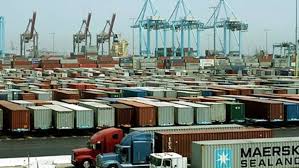
According to the BEAC, the central bank of the CEMAC countries, in its note on the evolution of inflation in the region as of the end of March 2026, the blocking of scanning activities of goods at the Port of Douala affected prices in Cameroon, the Central African Republic, and Chad. The central bank specifies that this disruption of the logistics chain contributed to slowing down the expected decline in inflation in the first quarter.
The BEAC indicates that scanning activities were blocked for a month and a half, from January 1 to February 18, 2026, before resuming on February 18. It links this situation to a legal dispute between the operators SGS and Transatlantic, in a context of blockage of port activities concerning imports destined for Cameroon, Chad, and the Central African Republic.
At the heart of this dispute, the Port of Douala announced that as of January 1, 2026, scanning operations would be carried out by Transatlantic D SA, replacing the Société Générale de Surveillance (SGS), which had been in charge of this activity since 2015. This decision was contested by the Cameroonian Ministry of Finance, which requested the maintenance of the existing contractual framework with SGS.
The disagreement stemmed from a difference in interpretation of the applicable legal framework. The Port of Douala considered that the contract between SGS and the Cameroonian government had expired on December 31, 2025, while the Ministry of Finance believed that the contract remained valid beyond that date. This discrepancy led to a period of uncertainty and reorganization for port users.
In its report, the BEAC highlights that the inflationary impact was not uniform in the sub-region. In year-on-year terms as of the end of March 2026, Cameroon, which accounts for 52% of total consumption in the CEMAC, remained the main contributor to regional inflation, with 110.8 points. In contrast, Chad continued to restrain regional inflation, with a negative contribution of 47.1 points. Equatorial Guinea, the Central African Republic, Congo, and Gabon also showed positive but more limited contributions.
The central bank explains Chad’s situation by the decrease in prices of some products imported from Libya, facilitated by the weakening of the Libyan dinar, as well as by good local harvests that supported food supply. Across the CEMAC, the average annual inflation rate returned to 1.4% as of the end of March 2026, compared to 4.0% a year earlier.

