



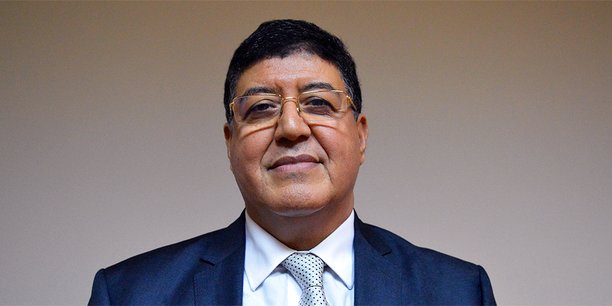
By Dr Mohamed H’MIDOUCHE
| As the World Bank reopens the door to responsible nuclear energy financing, Africa must not remain on the sidelines of the new geopolitics of dispatchable low-carbon power. Small Modular Reactors could become a strategic option for industrialization, digital sovereignty and energy security — provided they are financed, regulated and secured with the highest standards. |
In a previous article published by Financial Afrik on 22 March 2026, I argued that Small Modular Reactors — SMRs — could become one of the strategic instruments of Africa’s new geopolitics of dispatchable energy. That analysis now carries renewed relevance.
After more than six decades of caution toward nuclear financing, the World Bank has opened a new chapter. Through its partnership with the International Atomic Energy Agency — IAEA — signed in June 2025, the Bretton Woods institution is now prepared to support the safe, secure and responsible use of nuclear energy in developing countries, including in Africa.
This is more than a technical adjustment. It is a doctrinal shift. It recognizes that no credible energy transition can be built on a false opposition between renewables and dispatchable power. Africa needs solar, wind, hydropower, geothermal energy, natural gas as a transition fuel, modern grids and storage. But it also needs reliable, affordable and low-carbon baseload power to sustain industrialization.
Africa’s need for firm power
Africa’s energy challenge is no longer only about household access to electricity. It is also about powering industries, mines, ports, railways, special economic zones, cold chains, desalination plants, agro-processing units and regional value chains.
A new source of demand is now emerging: data centers and artificial intelligence infrastructure. AI is not only a technological revolution. It is also an energy revolution. Cloud platforms, sovereign data centers, cybersecurity systems, digital public services, fintech infrastructures and industrial AI applications require continuous, reliable and low-carbon electricity.
If Africa wants to participate meaningfully in the global data economy, it cannot rely on fragile grids and intermittent supply alone. Digital sovereignty will require energy sovereignty. In this context, SMRs deserve strategic attention.
Their smaller size, modular design and potential for phased deployment may make them more suitable than large conventional nuclear plants for certain African power systems, provided that countries meet the required institutional, financial, regulatory and security conditions.
Why SMRs matter
SMRs are not a magic solution. They will not replace grid reform, energy efficiency, renewables or regional power pools. They also require long-term planning, strong institutions, independent regulators, transparent governance, skilled human capital and strict safety standards.
But they change the terms of the debate in three important ways.
First, they address the need for dispatchable low-carbon energy. Solar and wind are essential, but they cannot alone guarantee 24/7 power for heavy industry, critical infrastructure and digital platforms.
Second, they may offer a more progressive investment model than traditional large-scale nuclear projects. If commercially proven and properly structured, SMRs could allow phased deployment, better alignment with demand growth and more manageable financing packages.
Third, they have become part of a new geopolitical competition. Nuclear technology, fuel supply, regulation, standards, training and financing are again at the center of global strategic positioning. Africa must avoid becoming merely a passive market for imported technologies. It should prepare to become a responsible, informed and sovereign actor in the civil nuclear debate.
A call to development financiers
The World Bank’s policy shift should trigger a broader movement. Other bilateral, regional and multilateral development financiers should now review their own doctrines toward responsible civil nuclear energy and SMRs.
This call concerns, first, the multilateral development banks: the African Development Bank, the Islamic Development Bank, the European Investment Bank, the Asian Development Bank, the EBRD, the Inter-American Development Bank and the New Development Bank. Their role should not necessarily begin with reactor financing. It should start with upstream preparation: energy planning, feasibility studies, regulatory frameworks, nuclear safety institutions, grid readiness, human capital and financial structuring.
It also concerns African regional finance institutions such as Afreximbank, Africa Finance Corporation, BOAD, BDEAC, TDB, DBSA, sovereign wealth funds and guarantee mechanisms. These institutions can support the enabling infrastructure: power transmission, regional interconnections, industrial corridors, logistics platforms and risk-sharing mechanisms.
Bilateral agencies should also engage. Responsible civil nuclear energy should not be left only to the strategic influence of a few major powers. It must be addressed through transparent, competitive and internationally supervised frameworks, consistent with safety, security and non-proliferation standards.
Project preparation facilities for SMRs
One of the main obstacles to SMR development in Africa will not only be technological. It will be financial and institutional. Many interested countries do not yet have the resources to fund early-stage assessments, site studies, grid analysis, regulatory design, financial models, public consultations and risk assessments.
This is why Africa needs dedicated SMR project preparation facilities. These facilities could be supported by the World Bank, the African Development Bank, Afreximbank, Africa Finance Corporation, the Islamic Development Bank, BADEA, climate funds, regional banks and bilateral partners.
Their purpose would not be to rush countries into nuclear projects. It would be to help them move from political interest to disciplined preparation, from preparation to bankability, and from bankability to safe, transparent and sustainable pilot projects.
Such facilities should finance feasibility studies, grid readiness assessments, environmental and social impact studies, regulatory strengthening, legal frameworks, project finance models, payment guarantees, insurance instruments and capacity building.
In nuclear energy, bankability begins with institutional credibility.
Toward an African Summit on Civil Nuclear Energy
Africa also needs a continental platform for structured dialogue. Under the auspices of the African Union, NEPAD and the Regional Economic Communities, the continent should consider launching an African Summit on Civil Nuclear Energy.
This summit would not be an exercise in blind promotion of nuclear power. It should be a platform for sober assessment, technical dialogue and strategic coordination. It could bring together governments, regulators, the IAEA, the World Bank, the African Development Bank, regional finance institutions, universities, research centers, industry, investors and civil society.
Such a forum would help answer essential questions: Which African countries actually need a civil nuclear option? Which grids can host SMRs? What regional approaches are possible? What skills must be developed? Which safety and security standards should be harmonized? How can financing be structured? How can nuclear energy complement renewables, hydropower, gas and regional interconnections?
The outcome could be an African roadmap for SMRs, aligned with Agenda 2063, national industrial strategies, climate commitments and regional integration priorities.
Security and cybersecurity: a non-negotiable condition
Any future deployment of SMRs in Africa must also be examined through the lens of today’s security threats. Civil nuclear energy can only be credible if it rests on a robust architecture of nuclear safety, physical protection, access control, emergency preparedness, prevention of malicious acts, protection against illicit trafficking of sensitive materials and cybersecurity.
This is even more important because SMRs will operate in an increasingly digital environment. Control systems, monitoring platforms, communication networks, predictive maintenance tools and software supply chains may become targets for cyberattacks.
For this reason, every SMR project in Africa should integrate security by design from the outset. Physical protection, cybersecurity, nuclear safety, safeguards, crisis exercises, regulator training and cooperation with national cybersecurity agencies should be treated as core components of project preparation — not as afterthoughts.
Financiers should support these dimensions upstream. Security is not a secondary cost. It is a condition of bankability, public trust and technological sovereignty.
A responsible and sovereign African approach
Africa should not import nuclear solutions passively. It needs its own doctrine for responsible civil nuclear energy, built on six principles: energy sovereignty, safety, transparency, financial sustainability, regional cooperation and climate alignment.
The issue is not to oppose nuclear energy to renewables. The real task is to build a smart African energy mix in which each source plays its role: solar for competitiveness, hydropower for flexibility, gas for transition, interconnections for regional pooling, storage for stability and SMRs for low-carbon dispatchable power.
Africa must avoid two traps. The first is ideological rejection based on outdated perceptions of nuclear technology. The second is excessive enthusiasm that ignores governance, financing, safety, security and public acceptance.
The right path is strategic realism.
Conclusion: nuclear energy must not remain a privilege of major powers
The World Bank’s new position does not mean that every African country should adopt nuclear energy. It means that countries willing to assess this option responsibly should no longer be excluded from financing by principle.
Africa is not asking for an exception. It is asking for access to all technologies compatible with its energy security, industrialization, digital sovereignty and climate objectives.
SMRs will not solve Africa’s energy deficit alone. But they could become one of the instruments of a better governed, better financed and more sovereign energy future.
After the World Bank’s turnaround, it is time for other development financiers to follow. Not out of fashion, but out of strategic clarity.
Africa cannot industrialize with scarce, unstable and expensive electricity. It cannot build competitive data centers, develop artificial intelligence capabilities or secure its digital sovereignty without reliable, abundant and sustainable power.
Responsible civil nuclear energy should not remain a privilege reserved for major powers. It should be within reach of all countries that need it, prepare for it seriously and comply with the highest international standards.
The central question is therefore no longer whether Africa has the right to discuss civil nuclear energy. It unquestionably does. The real question is whether the international financial community will recognize that access to dispatchable low-carbon power is also a matter of technological justice, energy sovereignty and equity in development.
Dr Mohamed H’MIDOUCHE
Author, Former International Banker & Expert in Development Finance and Energy Infrastructure
Sources:
- H’MIDOUCHE, Mohamed, “Small Modular Reactors (SMR): l’Afrique face à la nouvelle géopolitique de l’énergie pilotable,” Financial Afrik, 22 March 2026. URL: https://www.financialafrik.com/2026/03/22/small-modular-reactors-smr-lafrique-face-a-la-nouvelle-geopolitique-de-lenergie-pilotable/
- World Bank Group, “Nuclear Energy,” institutional page on the World Bank–IAEA partnership and the World Bank’s approach to nuclear energy, 2025. URL: https://www.worldbank.org/ext/en/topic/energy/nuclear-energy
See also: IAEA, “World Bank Group and IAEA Sign Partnership,” 27 June 2025. URL: https://www.iaea.org/newscenter/multimedia/videos/world-bank-group-and-iaea-sign-partnership
- International Atomic Energy Agency — IAEA, Outlook for Nuclear Energy in Africa, 2025. URL: https://www.iaea.org/publications/15896/outlook-for-nuclear-energy-in-africa
- International Energy Agency — IEA, Energy and AI, 2025/2026. URL: https://www.iea.org/reports/energy-and-ai/energy-demand-from-ai
- International Atomic Energy Agency — IAEA, Computer Security for Nuclear Security, Nuclear Security Series. URL: https://www.iaea.org/publications/13629/computer-security-for-nuclear-security

