



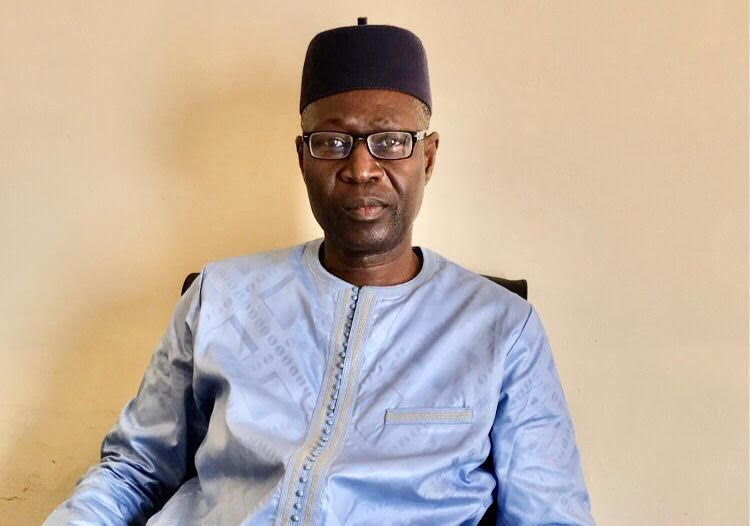
By Professor Amath Ndiaye, FASEG-Cheikh Anta Diop.
By refusing to adjust domestic energy prices despite a sustained oil shock, Senegal is choosing a short-term social cushion. But this choice, politically rational, is becoming increasingly costly economically. As the barrel approaches $100, the budget bill explodes and dangerously reduces the state’s room for maneuver.
A social cushion… at the cost of budget drift
In a context of geopolitical tensions in the Middle East, maintaining administered energy prices helps contain inflation and preserve household purchasing power. This choice is all the more understandable as energy is a transversal good, the effects of which spread throughout the economy.
But this policy amounts to transferring the external shock to public finances.
The figures are clear. Based on recent budget assumptions:
– At a barrel price of around $64, energy subsidies are estimated at 250 billion CFA francs;
– At $77, they already reach nearly 408 billion CFA francs.
The implicit relationship is clear: each $1 increase in the barrel price represents about 12 billion CFA francs in additional charges for the state.
Under these conditions, a barrel at $100 would raise subsidies to nearly 680 billion CFA francs, almost tripling the initial level.
A scissor effect on public finances
At this level, Senegal is facing a real budget scissor effect:
– On one side, an explosion of subsidy expenses;
– On the other, revenues constrained by economic slowdown.
An envelope of around 650 to 700 billion CFA francs represents a major shock:
– It is equivalent to a significant part of annual public investment;
– It mechanically increases the budget deficit, potentially adding 2 to 3 percentage points to GDP in the absence of adjustment;
– It increases financing needs in a context already marked by difficult borrowing conditions.
Above all, this dynamic produces a crowding-out effect: resources mobilized to finance subsidies can no longer be directed towards productive expenses, particularly infrastructure or activity support.
An economically unsustainable medium-term strategy
Beyond the budget constraint, the non-adjustment of energy prices leads to significant economic distortions. By artificially keeping prices low, the state:
– Encourages energy overconsumption;
– Delays necessary adjustments by economic agents;
– Subsidizes wealthier households and energy-intensive companies even more.
This policy also weakens the country’s macroeconomic credibility. In a context of high debt and increased scrutiny from technical and financial partners, it can be perceived as a signal of budgetary rigidity, potentially increasing the risk premium.
In reality, Senegal does not eliminate the cost of the oil shock: it shifts it to the state budget.
The choice is now clear: either a gradual adjustment of prices, accompanied by targeted social protection measures, or an accelerated deterioration of macroeconomic balances.
About Prof. Amath Ndiaye:
Prof. Amath Ndiaye is a prominent Senegalese economist, holding a State Doctorate in Economics from Cheikh Anta Diop University in Dakar (2001) and a 3rd cycle Doctorate in Development Economics from the University of Grenoble, France (1987). Since 1987, he has been teaching at the Faculty of Economics and Management Sciences at Cheikh Anta Diop University in Dakar. A recognized expert, he has collaborated with prestigious institutions such as the African Development Bank, the World Bank, and the IMF, specializing in exchange rates, economic growth, and institutional development. He was an expert member of the steering committee of the African Union Commission for the Creation of the African Central Bank. Prof. Ndiaye is the author of numerous influential publications, particularly on exchange rate regimes and economic growth in West Africa. Trilingual, he is fluent in Wolof, French, and English.

