



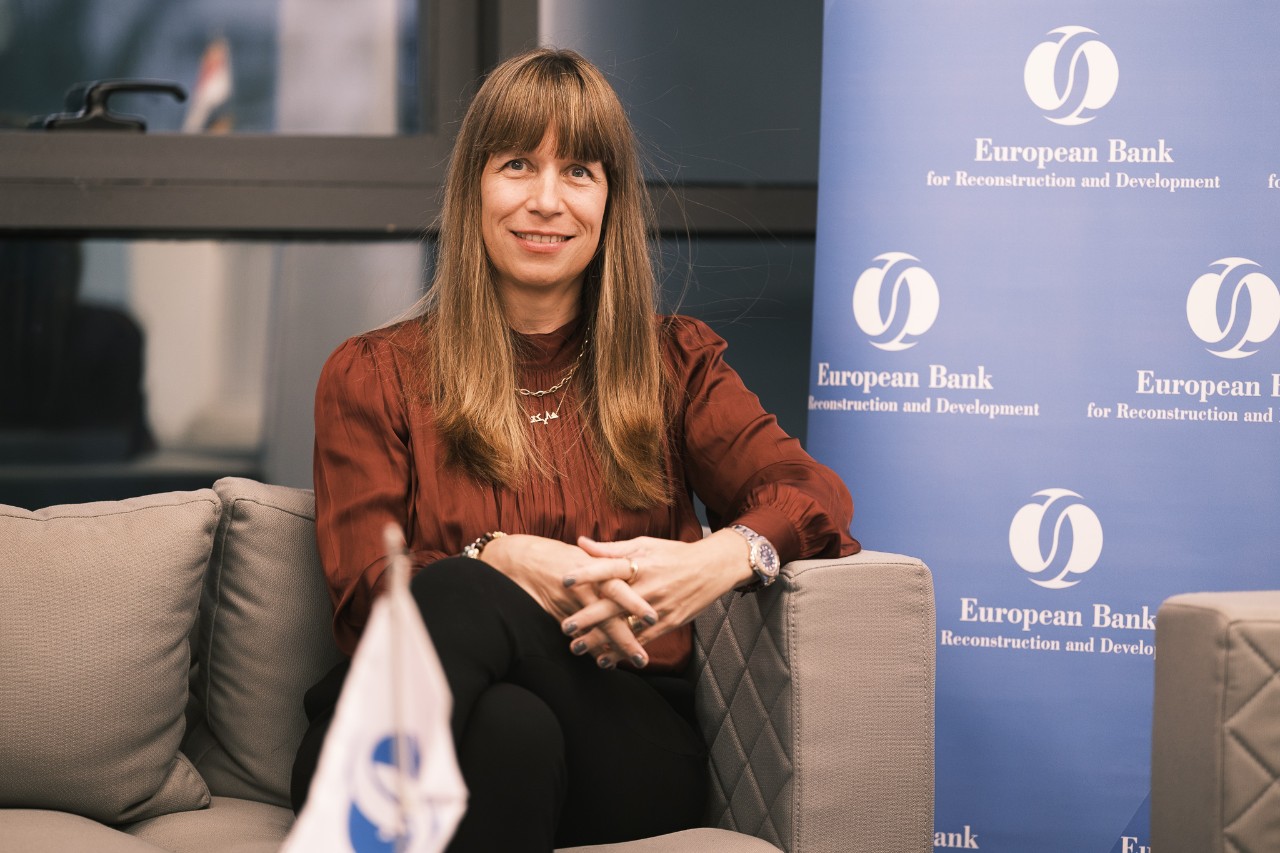
With nearly €800 million invested in less than a year, the European Bank for Reconstruction and Development (EBRD) is building its presence in sub-Saharan Africa. In an interview with Financial Afrik, Heike Harmgart, the Bank’s Managing Director for the region, discusses its first investments, support for small businesses and ambitions for private sector growth.
By Szymon Jagiello
What prompted the EBRD to expand into sub-Saharan Africa?
Heike Harmgart: Our expansion builds on more than a decade of experience in North Africa, where we now invest around €2 billion a year. That experience demonstrated the strength of our model: supporting private enterprise through a strong local presence. As we followed Egyptian, Moroccan and Tunisian companies expanding across the continent, we saw significant investment opportunities in sub-Saharan Africa.
How did those opportunities translate into a decision to expand?
Recognising the opportunities was only the beginning of a lengthy process of deliberation and consultation. We needed the backing of our shareholder countries. In 2023, their finance ministers approved the expansion of our activities into sub-Saharan Africa. Since then, we have established operations in five countries: Benin, Côte d’Ivoire, Kenya, Nigeria and Senegal. We have opened offices and recruited more than 100 professionals with a strong understanding of these markets and local business conditions.
What have you achieved so far, and which investments best illustrate the impact you want to make?
In less than a year, we have invested nearly €800 million across these five markets. We see opportunities in a wide range of sectors, including in Kenya, Nigeria and Benin. In telecommunications, for example, we have arranged a financing package of up to €270 million for AXIAN Telecom to support the rollout of 4G and 5G mobile networks and fibre infrastructure in Senegal, alongside the modernisation and expansion of its fibre network in Kenya. In Senegal, we have also invested in an energy project intended to improve access to electricity in the north of the country.
These investments reflect our commitment to building a lasting presence in the region and meeting tangible economic needs.
What sets the EBRD apart from development finance institutions already active on the continent, such as the European Investment Bank and the African Development Bank?
Our defining feature is our focus on the private sector. That makes us complementary to other institutions working on the continent. The African Development Bank, for example, allocates around 80 per cent of its financing to the public sector and 20 per cent to the private sector. Our proportions are the reverse.
Together, these different approaches allow us to address a broader range of financing needs across Africa.
Small and medium-sized enterprises are central to sub-Saharan Africa’s economies. What role do they play in your strategy?
We see SMEs as the backbone of the region’s economy. They are essential to job creation and the growth of local businesses. Supporting them means helping them innovate and develop solutions that meet the needs of their markets.
One example is our $10 million financing for Beacon, whose technology helps tackle challenges in Nigeria’s electricity distribution sector by reducing losses and improving revenue collection.
How can an SME access your support in practice?
We work through two complementary channels. First, we provide financing to banks, microfinance institutions and investment funds, which in turn finance SMEs. Businesses apply through these partners and are assessed against their lending or investment criteria.
We also set targets for the use of our financing. For example, at least 35 per cent of the $100 million provided to KCB Bank Kenya must benefit businesses led by women or young people.
Second, we support SMEs directly through our small business advisory programme, with teams in our countries of operation. We connect businesses with experts and local consultants who can help them strengthen financial management, access credit, adopt new technologies or enter new markets.
What are the main barriers to private investment in sub-Saharan Africa?
Despite significant progress, complex administrative procedures and lengthy business registration processes remain obstacles. They can delay projects and deter domestic and international investors alike. These challenges are not unique to sub-Saharan Africa. We encounter similar difficulties in other regions, including Central Asia.
What are your priorities for the next three to five years?
We want to help domestic private businesses grow while encouraging investment from across the region and beyond. Our aim is to broaden our presence and deepen our impact in our countries of operation. Mining and minerals offer significant potential. We have signed a €99.1 million financing agreement with Mota-Engil Africa to support its mining services operations in Senegal and Côte d’Ivoire, including the purchase of modern equipment.
But our approach extends beyond financing. We combine support for businesses and infrastructure with policy dialogue to improve the investment environment, including health and safety standards in mining. We also want to share expertise across our countries of operation—for example, by drawing on Morocco’s mining experience to support Côte d’Ivoire. Ultimately, our ambition goes beyond the volume of financing we provide: we want to make a lasting contribution to private sector development.

