



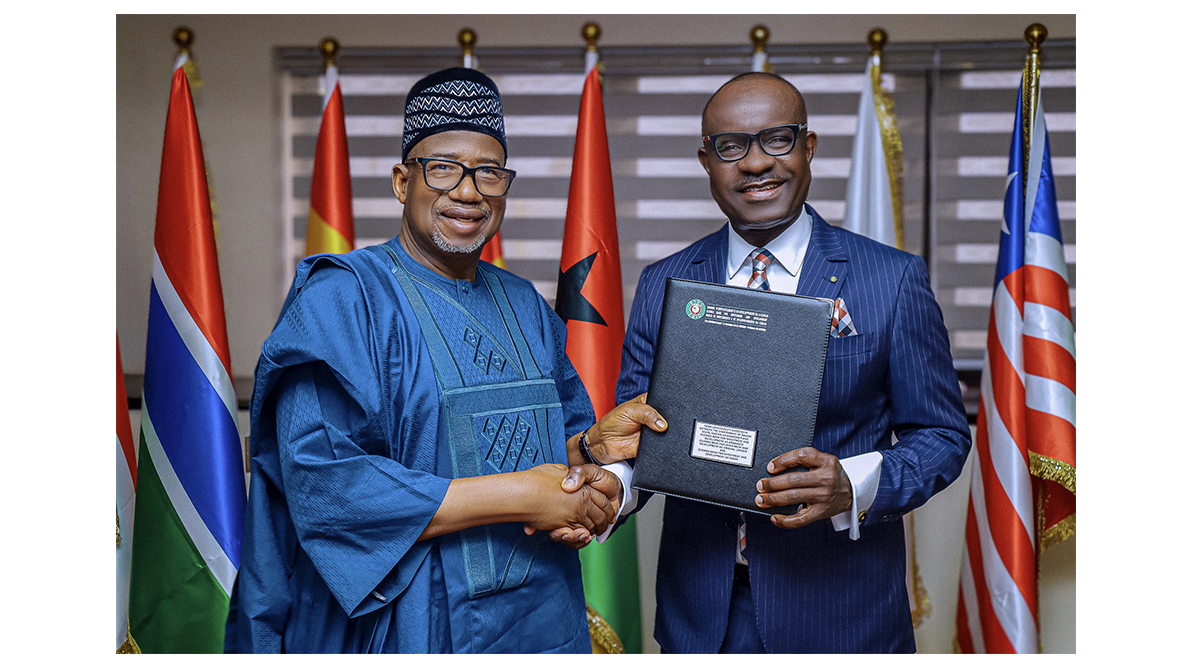
The ECOWAS Bank for Investment and Development (BIDC) and the government of Bauchi State officially signed a financing agreement of $91.63 million on July 29, 2026 in Lomé, aimed at the construction and completion of 24 strategic road projects and infrastructure. Beyond the financial amount, the operation reflects a broader ambition: to enhance territorial connectivity, open up production areas, facilitate trade, and support more inclusive growth in northeastern Nigeria.
The ECOWAS Bank for Investment and Development (BIDC) and the government of Bauchi State in the Federal Republic of Nigeria have taken a new step in their cooperation with the signing of a financing agreement for transport infrastructure. Signed at the BIDC headquarters in Lomé by the President of the institution, Dr. George Agyekum Donkor, and the Executive Governor of Bauchi State, Senator Bala Abdulkadir Mohammed, this agreement specifically covers $91.63 million for the construction and completion of 24 road projects and strategic infrastructure throughout the State.
However, the stakes go beyond just completing construction projects. According to the BIDC, the program aims to enhance connectivity between urban and rural communities, improve access to markets and essential social services, while reducing logistical costs. The goal is to make transport infrastructure a direct driver of economic transformation in a State where the movement of people, goods, and local production strongly influences the dynamism of the productive fabric.
A lever for competitiveness for Bauchi State
Furthermore, the project aligns with local and national public priorities. A statement from the BIDC highlights that this program is aligned with both the Bauchi State Development Plan and Nigeria’s national development priorities. Its objective is to contribute to the modernization of transport infrastructure, enhance regional competitiveness, and strengthen agricultural and commercial value chains. This latter dimension is crucial: in a territorial economy where agriculture and trade are major drivers, the quality of the road network directly influences productivity, crop circulation, and access to markets.
The expected impact on employment is also significant. The BIDC estimates that the program should generate around 5,000 jobs during the construction phase and 2,000 permanent jobs after completion. This dual impact, immediate and structural, enhances the socio-economic scope of the project: in the short term through construction activity, and in the long term through sustainable improvement in mobility, trade, and economic attractiveness of the State.
During the ceremony, BIDC President Dr. George Agyekum Donkor emphasized the transformative dimension of the investment. “This investment reflects BIDC’s commitment to financing transformative infrastructure that creates jobs, stimulates investments, and improves the living conditions of the population,” he said. He added that enhancing transport connectivity in Bauchi State should reduce logistical costs, improve market access, and open up new opportunities for sustainable economic growth and increased regional integration. This statement sheds light on the bank’s intervention philosophy: financing infrastructure not as an end in itself, but as a development multiplier.
BIDC strengthens its role as a regional financier
Governor Bala Abdulkadir Mohammed, on his part, presented this agreement as a turning point for his State. “This collaboration with BIDC represents a major step towards achieving our vision of a more competitive and resilient economy,” he stated. The Nigerian official emphasized that transport infrastructure remains a crucial driver of investment, private sector growth, and improvement in the standard of living, while welcoming financial support expected to accelerate the implementation of projects with high economic and social impact.
Beyond the Bauchi case, the operation illustrates BIDC’s commitment to strengthening its role as a strategic partner of member states in financing sustainable investments. The statement specifies that this intervention fully aligns with the bank’s GRO strategy – for Growth, Resilience, and Optimization – a doctrine aimed at promoting sustainable growth, enhancing the resilience of West African economies, and maximizing the impact of financing on development. By supporting transport infrastructure in one of Nigeria’s key States, the regional bank confirms its positioning: catalyzing regional integration through tangible, visible, and structuring investments.

