



When words replace action and discourse serves as economic strategy
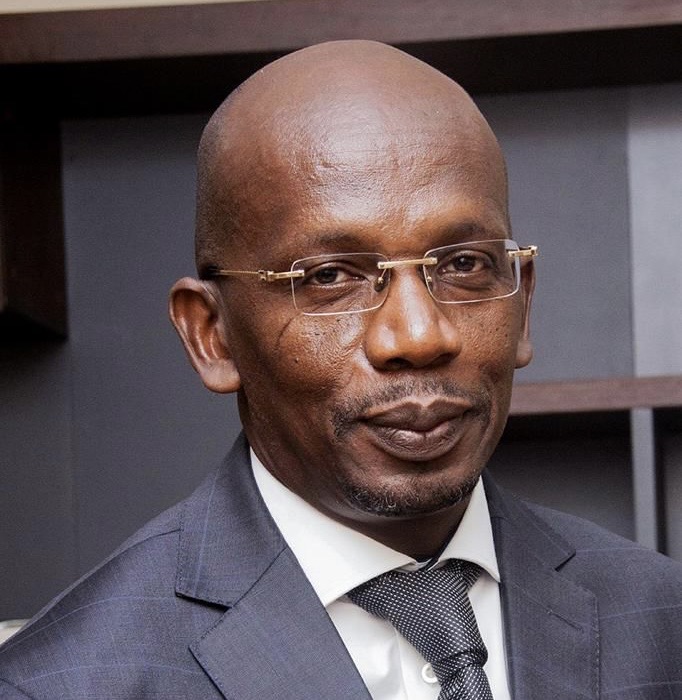
By Lansana Gagny SAKHO Adm.A, C.M.C,
As I participate in Senegalese economic debates, I often observe a phenomenon that twenty years of institutional experience have not made commonplace: the moment when some academics, rich in theoretical knowledge but disconnected from economic realities, utter the words sovereignty or patriotism, and the audience rises, applauds, approves without ever questioning what these words actually mean in a country with a public debt approaching 26,000 billion FCFA, a suspended IMF program, and a struggling private sector.
These words have an immediate, almost physiological effect. They reassure. They unite. They give the illusion of progress. And that is precisely why they have become, in our national context, dangerous words: not because the values they represent are false – they are legitimate and necessary – but because their constant invocation has ended up replacing the strategy they claim to serve.
I write this article from the conviction forged by experience: I spent nearly a decade at the heart of the Senegalese state, leading public institutions, arbitrating real budget constraints. And this experience taught me a truth that revolutionary speeches systematically sugarcoat: sovereignty is not a word, it is a demonstration. It is not displayed, it is proven. It is not proclaimed, it is built.
The anatomy of a Senegalese rhetorical trap
We must name the mechanism to measure its danger in our national context. Senegalese sovereignist rhetoric operates according to a well-identifiable structure. It identifies an external enemy – the IMF, French multinationals, Western partners – and presents resistance to this enemy as an act of national power. It has provided arguments to block or delay agreements with the IMF in the name of sovereignty. It has justified keeping the deficit-ridden Air Senegal in the name of national pride. It has protected underperforming public enterprises in the name of economic patriotism.
In doing so, it has deprived decision-makers of a fundamental question, the only one that truly matters in the current situation: what are we producing, at what cost, and how will we honor 14,870 billion FCFA in debt service between 2026 and 2028?
Senegalese economic patriotism follows the same logic. Buying Senegalese, producing Senegalese – these injunctions are noble in their intention. They become pernicious when they are used to justify protecting deficit-ridden public enterprises, maintaining monopolies that increase the cost of living for the most vulnerable households, or refusing external partnerships that the country precisely needs to upgrade its industrial capacity.
Three Senegalese sectors where words have replaced actions
First, energy. SENELEC, presented for decades as the cornerstone of national energy sovereignty, faces structural difficulties despite massive public investments. Power outages have plagued businesses and households for years. Industrialists faced with unreliable and costly energy have often refrained from establishing themselves or have invested in generators that further increase their production costs. Proclaimed energy sovereignty has resulted in real industrial dependence. And while offshore hydrocarbons now offer new opportunities, their development will require precisely the technical and financial partnerships that sovereignist discourse tends to distrust.
Next, agriculture – the symbolic heart of Senegalese food sovereignty. The peanut sector, a historical pillar of the national economy, perfectly illustrates the paradox. SONACOS, responsible for valorizing this strategic resource, remains under-financed and underperforming compared to better-endowed private operators. Administered prices have kept costs so high that Senegal massively imports what it should produce. The proclaimed food sovereignty coexists with increasing food dependence, a contradiction that speeches do not address.
Lastly, air transport. Air Senegal has been accumulating losses since its creation, absorbing repeated injections of public capital and has never achieved operational balance. In the name of national pride, it is maintained. Meanwhile, Senegalese passengers pay among the highest fares in the sub-region. This policy penalizes the connection between Dakar and regional markets – a key infrastructure for attractiveness. Aviation patriotism comes at a cost, literally, with every ticket.
What South Korea and Vietnam teach Senegal
I often refer in my writings to these two Asian trajectories. Not out of exotic fascination, but because they respond with stark clarity to the question Senegal must ask itself now, at this pivotal moment in its economic history: how do we build real sovereignty when resources exist but room for maneuver is shrinking?
In 1960, South Korea was poorer than Senegal. It had no phosphates. No zircon. No hydrocarbons. Its state defined priority industrial sectors, concentrated public resources on them, evaluated them rigorously, and opened them up to foreign technological partnerships – not out of weakness, but as a strategy. By 2024, it exports 684 billion dollars of manufactured products. Its sovereignty is not heard in conferences – it is seen in export figures.
In 1986, Vietnam did what Senegal still struggles to fully embrace: to look lucidly at its situation and decide to open up intelligently instead of symbolically closing off. By 2024, Vietnam’s foreign trade reaches 786 billion dollars, 165% of its GDP. Senegal has its hydrocarbons, its Atlantic coast, its strategic geographical position, the ZLECAf. What Vietnam had in addition was method and consistency.
The real cost of words in Senegal
Senegalese figures do not lie. According to the Forvis Mazars report (2024), Senegal’s consolidated public debt now stands at 25,583 billion FCFA, representing 128.6% of the GDP, an unprecedented level reflecting the commitments accumulated between 2019 and 2024. Debt service, estimated at 5,498 billion FCFA in 2026, illustrates the increasing budgetary pressure on the state and the need for rigorous financial governance.
Debt service between 2026 and 2028 represents nearly 98% of expected budget revenues. Yields on regional markets hover around 8%, a risk premium that Senegalese collectively pay, directly resulting from the erosion of confidence caused by years of opaque management and conflicting signals.
These figures are not the result of an external curse. They are largely the result of a confusion between two radically different realities: sovereignty as a posture – what is displayed – and sovereignty as construction – what is built. For years, Senegal has displayed its sovereignty by delaying painful reforms, maintaining deficit entities, avoiding courageous decisions. And during this time, debt has accumulated.
The word sovereignty brandished every time a reform is proposed does not solve any concrete Senegalese problems. It does not repay the debt. It does not create jobs. It does not transform phosphates into high value-added fertilizers. It does not reduce energy costs. It does not guarantee children’s education. Actions do all of that. Words do not.
Let’s prove rather than proclaim
Clear-sightedness demands recognizing that in Senegal’s current situation – record debt, overwhelming budget service, fragile market confidence – words build nothing. Structural reforms, courageous actions, and consistency over time can change everything. South Korea did not proclaim its sovereignty, it proved it. Vietnam did not invoke rupture, it methodically organized it. Senegal now has a rare window of opportunity: hydrocarbons that produce, a functioning democracy, a new governance with the ambition to break with past practices.
In this context, a new element deserves to be named with lucidity and responsibility: the President of the Republic has chosen to rebuild national credibility not through slogans, but through work, method, and transparency. This direction is our best promise for the future, especially as it paves the way for the expected conclusion of the program with the IMF, which would not only be an act of financial governance, but also the essential prelude to the economic recovery, lower interest rates, restored confidence, and the reopening of international financing.
Lansana Gagny SAKHO Adm.A, C.M.C, President of the Circle of Public Administrators
BIO EXPRESS
Expert in public governance and institutional performance, Lansana Gagny SAKHO presides over the Circle of Public Administrators (CAP). A senior consultant and committed author at the African Center for Monitoring and Economic Intelligence (CAVIE), he works to strengthen state credibility through institutional rigor and transparency.

