



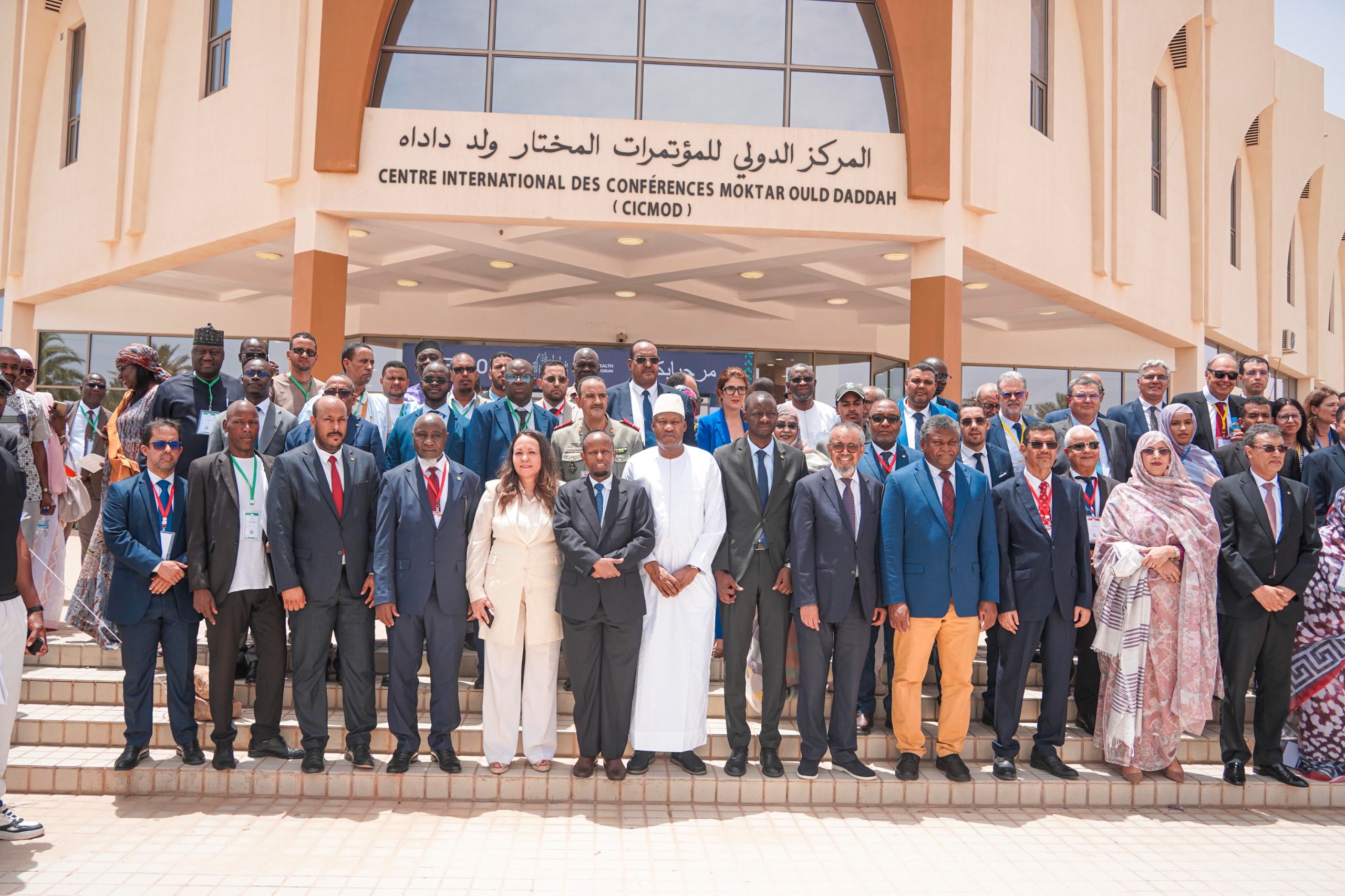
First day of the Regional Health Investment Forum: Mauritania calls on the international private sector
Nouakchott, July 13, 2026. Mauritania aims to position itself as a new destination for health service investments in Africa. This strong message was delivered at the opening of the Regional Health Investment Forum, organized by the Islamic Centre for the Development of Trade (ICDT), in partnership with the Mauritanian Ministry of Health and the Promotion Agency for Investments in Mauritania (APIM). Bringing together governments, international institutions, investors, hospital groups, pharmaceutical industries, and development partners, this first day emphasized public-private partnerships and investment at the heart of the continent’s health sovereignty.
Opening the proceedings, Dr Tah Ahmed Meouloud, Director General of APIM, set the tone by calling on international investors, hospital operators, medical service providers, pharmaceutical manufacturers, and health technology companies to make Mauritania a regional investment platform. According to him, the future of African healthcare systems relies on increased mobilization of private capital, capable of accelerating infrastructure modernization, specialized facility development, pharmaceutical production, and health services. His intervention was an explicit invitation to partnership between governments, investors, and healthcare professionals to build a competitive medical ecosystem for Africa.
In her address, Latifa El Bouabdellaoui, Director General of the Islamic Centre for the Development of Trade (ICDT), emphasized that this meeting aims to bring states, the private sector, investors, and technical partners together around a common ambition: reducing the health dependency of member countries of the Organization of Islamic Cooperation and developing regional value chains in the healthcare industries.
Dr Ahmad Kawesa Sengendo, Deputy Secretary-General for Economic Affairs of the Organization of Islamic Cooperation (OIC), shared the same conviction. Presenting ICDT as a platform to achieve the Organization’s economic goals, he stressed the importance of strengthening collective capacities, building sustainable health security, and investing in human capital. He notably mentioned that the halal pharmaceutical market represents nearly $75 billion, with the majority of these products still being imported outside the OIC space, highlighting the importance of developing a regional pharmaceutical industry.
As the guest of honor at the Forum, the Director-General of the World Health Organization, Dr Tedros Adhanom Ghebreyesus, stated that “this forum could not have come at a better time”, a few years after the Covid-19 pandemic that profoundly highlighted the vulnerabilities of healthcare systems. He emphasized that “one dollar invested in health generates several dollars in return on investment”, making this sector not only a social imperative but also a powerful driver of economic growth.
According to the WHO chief, the answer lies in partnership. No country can achieve global health security alone. Solutions involve technology transfer, industrial investments, local production of vaccines and medicines, as well as the development of regional research and innovation capacities.
In a statement intended to leave an impression, he declared: “We must remember Nouakchott as the capital where we decided to invest differently. Let’s move from strategy to implementation.”
The Mauritanian Minister of Health, Pr Thiam Tidjani, reaffirmed the authorities’ commitment to sustainably strengthen the national healthcare system through strong partnerships with investors and international institutions. Dr Thiam Samba, an itinerant ambassador, advocated for increased mobilization of partners around African health priorities.
The session “Invest in Mauritania” highlighted the opportunities offered by the country. The Director General of APIM recalled that health is now among the strategic sectors eligible for benefits under the new Investment Code, offering an attractive environment for national and international investors wishing to develop hospital, pharmaceutical, or medical technology projects.
National health institution leaders provided a straightforward diagnosis. The Director-General of CNASS emphasized that the demand for care is indeed present, but it is hindered by an insufficient supply, hence the need for massive investments in infrastructure, equipment, human resources, and specialized services.
Present at the event, Zine El Abidine Cheikh Ahmed, President of the Mauritanian National Employers’ Union (UNPM), reaffirmed the readiness of the Mauritanian private sector to support this new dynamic and contribute to the development of a true healthcare economy.
African Health Ministers also shared their national experiences. Dr Ahmadou Lamin Samateh, Minister of Health of The Gambia, called for increased harmonization of African health policies, regretting that more than sixty years after independence, the continent’s dependency remains particularly high.
His Senegalese counterpart, Dr Ibrahima Sy, emphasized the necessary conditions for sustainable investments: a long-term vision, a stable and predictable regulatory environment, and sustained investment in human capital.
The Somali Minister of Health, Dr Ali Haji Adam Abubakar, highlighted regional cooperation as an essential lever to strengthen health system resilience and promote skills sharing.
The first day concluded with the signing of a memorandum of understanding between the World Health Organization and the Promotion Agency for Investments in Mauritania (APIM), aimed at promoting investments in the healthcare sector, facilitating partnerships, and supporting structuring projects.
At the end of this inaugural day, a consensus emerged: health is no longer just a social sector. It now stands as a strategic economic sector, an industrialization lever, and a factor of sovereignty. By hosting this Forum, Mauritania clearly shows its ambition to become one of the leading African platforms for investment in healthcare.

