



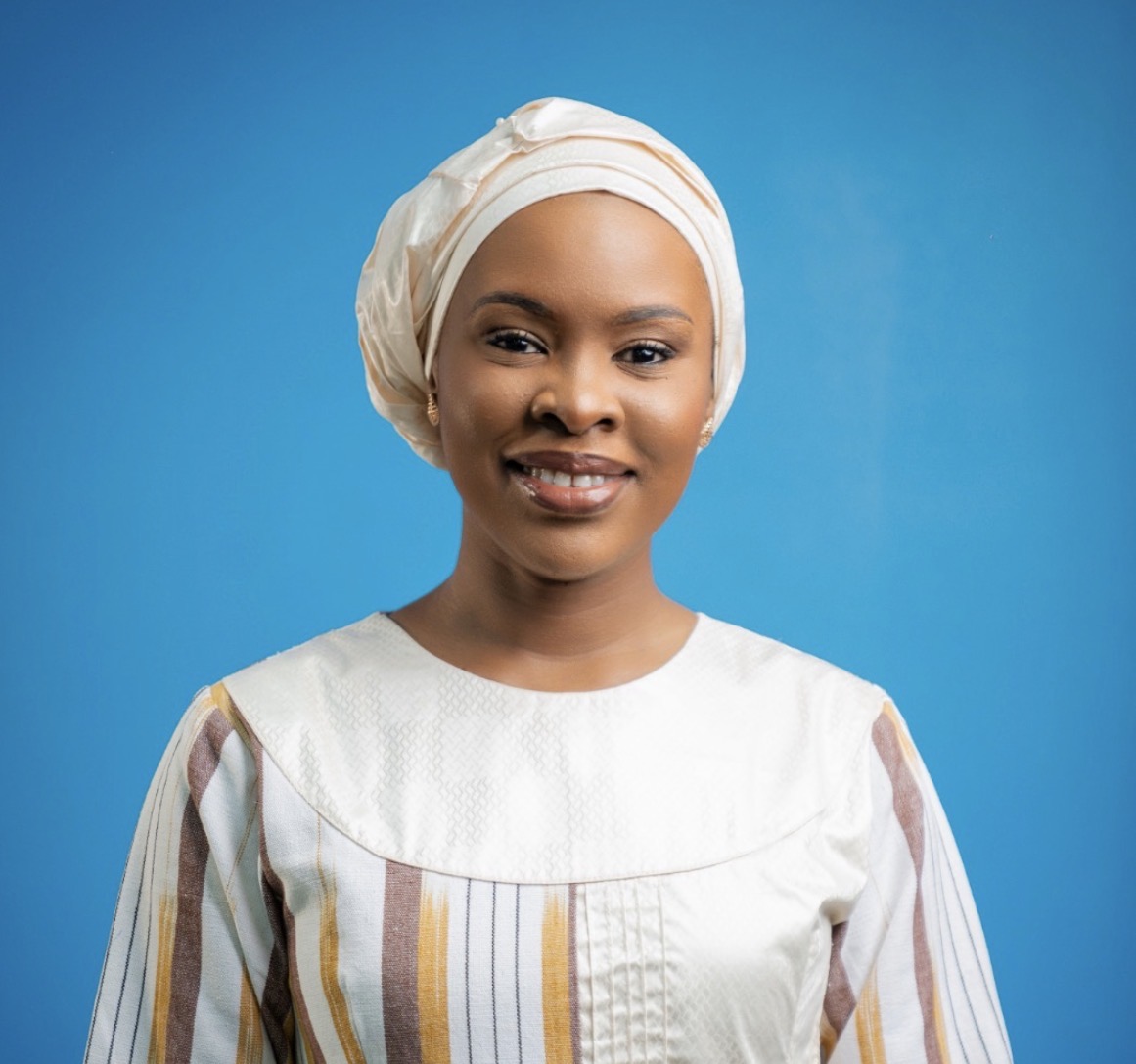
At the head of Wave Mali, Mah Bintou Coulibaly embodies a new generation of African female leaders, both rigorous, close to the field, and deeply committed to financial inclusion. With a decade of experience at HSBC Bank USA in Washington, she now puts this requirement at the service of a clear mission: to make financial services simpler, more accessible, and more useful on a daily basis for Malians. In this interview, she reflects on her journey, her vision of mobile money in Mali, and Wave’s priorities in a rapidly transforming sector.
As General Manager of Wave Mali, what does this responsibility represent for you, and what are your immediate priorities?
First and foremost, it is a responsibility that I approach with great humility. Mobile money has become an essential service for millions of Malians, and leading Wave Mali means living up to this trust every day.
My priority is first and foremost to listen to the field: understand the expectations of our users, those of our agent network, but also those of the authorities and the entire financial ecosystem. In a country like Mali, where the phone is often the first point of access to financial services, every improvement we make can have a very concrete impact on daily life.
Our goal is therefore clear: to continue to offer a reliable, simple, and accessible service, while consolidating a constructive dialogue with all the actors in the development of the country’s digital economy.
Your journey has taken you from the United States to Mali, and now to the head of Wave Mali. What common thread connects all these stages?
The common thread of my journey is undoubtedly the search for impact. My experience in the United States allowed me to evolve in very structured financial systems, where risk management, compliance, and customer protection are constant requirements. This school of rigor has been extremely formative.
But coming back to work in West Africa, I also understood how financial innovation could have an even more direct impact on people’s lives. In Mali, we see concretely how a simple solution can streamline exchanges, facilitate daily life, and support economic activity. Being able to contribute to this transformation gives a lot of meaning to my work.
What convinced you to join Wave, and what motivates you daily in this mission?
What convinced me to join Wave is the clarity of its mission: to make financial services accessible to as many people as possible.
In many contexts, sending money, paying for a service, or simply making a transaction can still be complicated, expensive, or even discouraging. Wave has shown that it is possible to rethink this model to make it much simpler and more affordable.
What motivates me daily are the very concrete uses. Behind each transaction, there is a human reality: a merchant who cashes in sales more easily, a parent who supports a loved one from a distance, an agent who develops an activity that supports an entire household. It is this immediate and tangible utility that gives meaning to our mission.
How does your experience in banking help you today in leading a fintech in Mali?
Banking and fintech are often opposed, when in reality both approaches are deeply complementary. My background in the banking sector has given me a solid culture of risk, compliance, and customer protection. In financial services, trust is fundamental. It is not decreed, it is built methodically, rigorously, and consistently.
Fintechs, on the other hand, bring agility, innovation capacity, and greater proximity to daily uses. My role is precisely to bridge these two worlds: maintaining the essential requirement in the financial sector, while fostering innovation that truly simplifies users’ lives.
Wave operates in a highly regulated sector. How do you work with authorities and financial institutions?
The development of mobile money necessarily relies on close cooperation between sector operators, financial institutions, and regulatory authorities.
At Wave, our approach is based on dialogue, transparency, and a sense of responsibility. Mobile money is evolving rapidly, and it is essential that this evolution takes place within a clear, responsible, and sustainable framework.
We share a common goal with the authorities: to promote financial inclusion, secure transactions, and support the modernization of payment methods. In a country like Mali, where the digital economy continues to structure itself, this collaboration is essential.
In a sector as strategic as financial services, expectations are naturally high, and this is a reality that we fully understand. Our responsibility, as a mobile money actor, is to listen, dialogue, and evolve our practices when necessary. This is how the ecosystem is durably strengthened.
Wave is often associated with more accessible fees. What is your philosophy?
Our conviction is simple: access to financial services should not depend on income level.
For a long time, transaction fees have been a real barrier for many users. Wave’s ambition is precisely to reduce these obstacles so that everyone can send, receive, or pay money in a simple and affordable way.
But accessibility should never come at the expense of quality. This requires investment in technology, user experience, service reliability, and training for our agent network. Our goal is to build a service that is both accessible, solid, and sustainable.
How does Wave approach the protection of its users and transaction security?
User security and protection are at the heart of our approach. Digital financial services can only develop sustainably if users trust the security of their transactions.
This is why we continuously invest in fraud detection, strengthen our security systems, and raise awareness among our users. Technological tools are essential, but they are not sufficient on their own: education and support are equally important, especially in an environment where scam attempts also evolve rapidly.
We also work with authorities and other sector actors to collectively strengthen consumer protection mechanisms. Trust remains the foundation of mobile money development.
Concretely, how does Wave transform payment habits in Mali?
We observe a gradual but real evolution of payment habits. More and more transactions, previously carried out only in cash, now go through the phone: sending money, paying a merchant, settling a service, or supporting a loved one from a distance.
But beyond payments, we also see a change in the relationship with money itself. With the Vault feature available in the Wave application, some users are starting, for example, to set aside small amounts regularly. These are simple uses, but they gradually contribute to the development of new financial habits.
In a context like Mali, where the needs for simplicity, security, and accessibility are very concrete, these tools can have a very real transformative effect.
Beyond payments, what role can Wave play in local economic development?
Mobile money is much more than just a payment tool. It directly supports economic activity at several levels. Our network of agents, for example, represents a real local entrepreneurial dynamic in many cities and villages.
Merchants, too, can benefit more from the digitization of payments: accepting digital payment means gaining security, fluidity, and traceability. More broadly, mobile money contributes to streamlining economic exchanges and gradually strengthening financial inclusion.
More broadly, the digitization of payments contributes to streamlining economic exchanges and gradually strengthening financial inclusion.
What are the next innovations for Malian users?
Mobile money continues to evolve rapidly, and our ambition is to gradually expand the services available to users.
We are working on developing merchant payments to allow more merchants to accept payments via Wave. We also continue to enrich the application’s features to meet daily needs.
The goal remains the same: to simplify access to financial services while offering users more possibilities.
How do you see the evolution of mobile money in Mali and the sub-region?
We are still at the beginning of this transformation. In the coming years, several important developments will shape the sector: the development of interoperability between services, the rise of merchant payments, and the progressive digitization of many services.
Mobile money will continue to play a central role in modernizing payment systems in West Africa. Mali has its place in this dynamic, with evolving uses, real needs on the ground, and significant potential for financial innovation.
And to young women who want to lead in tech and finance: what advice would you give?
I would tell them first and foremost never to doubt their legitimacy. Tech and finance need their skills, rigor, and ideas. Do not wait to feel “perfectly ready”: we build ourselves by taking on challenges, not by waiting for the ideal moment.
Stay curious, educate yourself relentlessly, surround yourself with demanding and caring people, and dare to speak up.
Your place is not asked for: it is earned, with constancy, work, and confidence. Leadership is built by moving forward.
Interview by A. Keita, Bamako

