



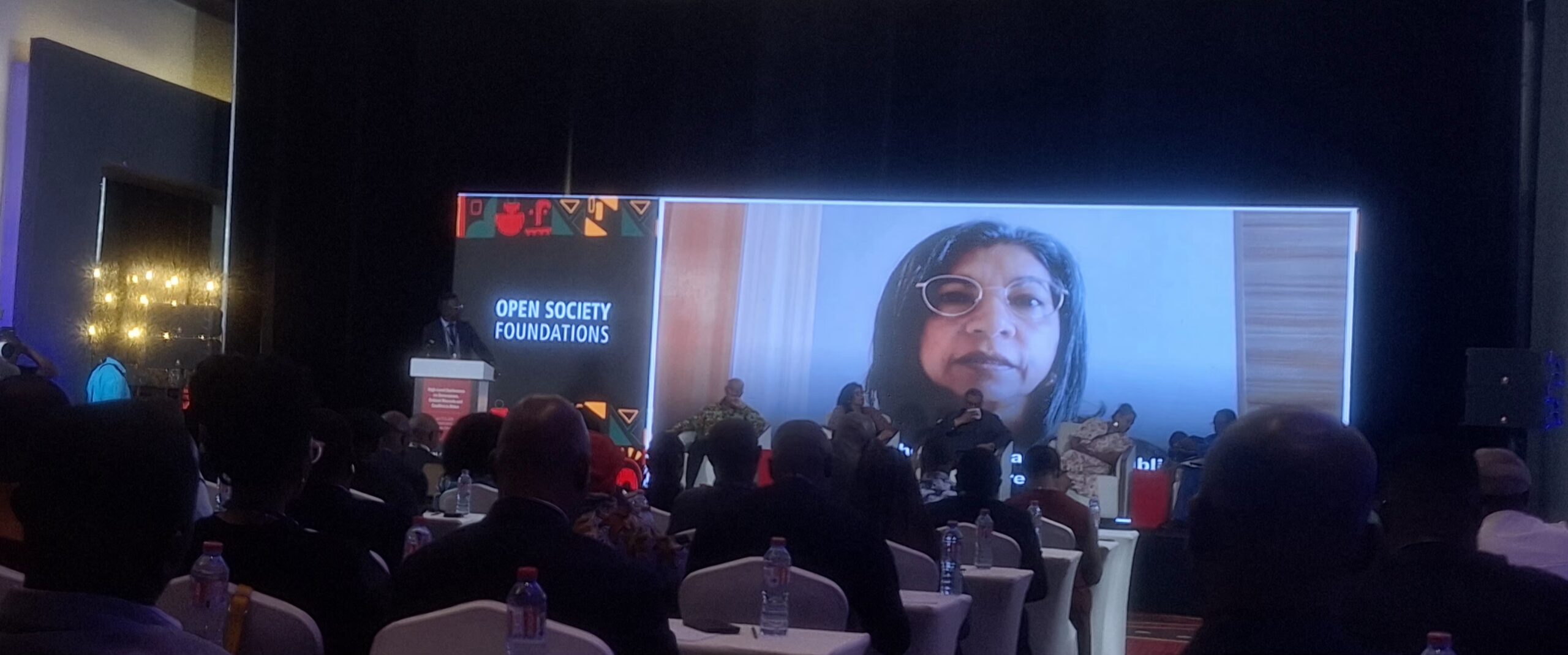
From our special correspondent in Accra, Nephthali Messanh Ledy
The works of the “high-level conference” dedicated to governance, critical minerals, and conflicts in Africa were launched on Monday, July 27 in Accra, Ghana, with a central question: can the mineral resources of the continent become a lever for shared development, or do they risk fueling new tensions? Several speakers have converged their analyses towards the same observation: the main issue is not the resource itself, but the conditions of its governance.
Local transformation and regional integration
Officially launching the works on behalf of Ghanaian President John Mahama, Augustus Tanoh, special advisor to the head of state, placed the debate on an industrial and geopolitical ground. For him, the question is not only whether the world will use African minerals, but “whether Africa will be able to use them to develop its own transformation capacities, create jobs, and consolidate peace.”
Mr. Tanoh criticized a model in which the continent exports raw materials and then imports the processed products, leaving others with the segments of higher added value. “This dependency weakens African economies and perpetuates structural fragilities,” he said.
Governance as a dividing line
Alexander Mould, CEO of the Ghana Millennium Development Authority (MiDA), summed up the issue in a formula: “the difference has never simply resided in the resources. It resides in governance.” In other words, minerals do not automatically produce stability or conflict; it all depends on the rules governing their exploitation, revenue distribution, and the institutions’ ability to inspire confidence.
In this perspective, the former CEO of the Ghana National Petroleum Corporation emphasized that Africa’s new role in the global energy transition will only have positive effects if the populations concerned concretely benefit from this wealth. Otherwise, economic and social exclusion can fuel “frustration and instability,” he added.
Binaifer Nowrojee places the question in a democratic framework
The Director General of Open Society Foundations, Binaifer Nowrojee, broadened the discussion by directly linking the mining issue to democratic governance. In her intervention, she argued that the real issue was not whether Africa has critical minerals, but whether these resources will be “managed in a way that strengthens democracy, builds public trust, and ensures shared prosperity.”
Binaifer Nowrojee reminded the audience that natural wealth alone does not guarantee human development, democratic progress, or lasting peace. She emphasized that the areas closest to extraction sites in many resource-rich countries are also those bearing the heaviest costs, without always benefiting from the expected economic returns.
The Director General of Open Society Foundations also stressed several essential conditions: transparency of institutions, public accountability, effective citizen participation in decisions, as well as the inclusion of local communities, women, youth, artisanal miners, and indigenous peoples.
Among the proposals put forward by the various speakers are the development of refining, industrial transformation, battery chemistry, and maintenance, as well as better regional integration of value chains, notably within the framework of the AfCFTA. The stated objective is to avoid fragmentation of national strategies and promote the emergence of more coherent African sectors.
A common underlying theme
The interventions also highlighted several governance mechanisms: transparency in licensing, contract disclosure, fairer taxation, identification of beneficial owners, traceability of flows, environmental assessments, and site restoration.
Augustus Tanoh also advocated for community involvement in decision-making and better legal and financial support for artisanal miners. In the same spirit, Binaifer Nowrojee argued that limited participation in mere late consultations was not enough, and real influence of the affected populations on decisions should be sought.
At the end of the three speeches, a common thread emerges, well before the start of the panel discussions scheduled until Wednesday, July 29: critical minerals can be a major economic opportunity for Africa, but this opportunity remains conditioned by the quality of public governance.

