



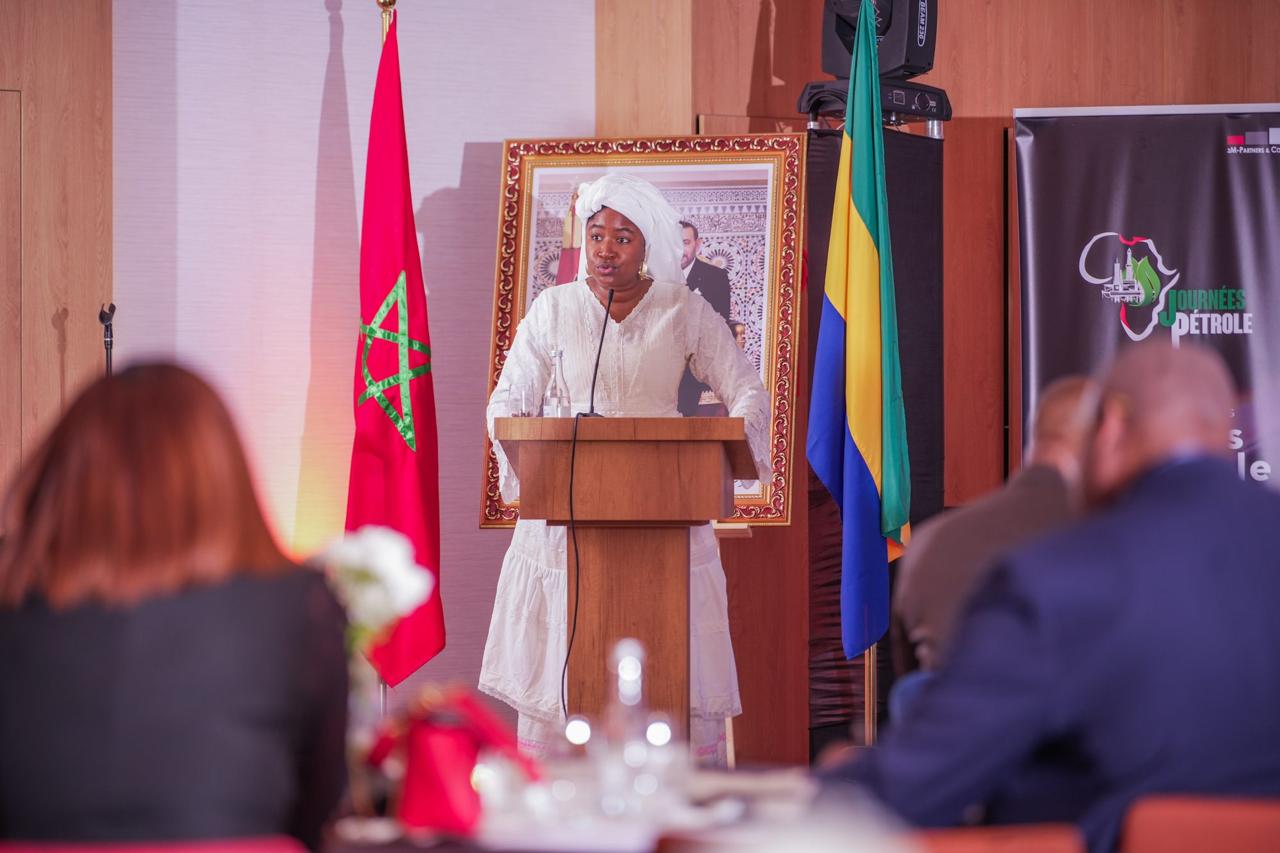
Present at the 4th edition of the Oil Days organized in Casablanca (May 20-23, 2026), Seynabou Dia Sall, CEO of Global Mind Consulting and Organizer of the Forum, reflects on the issues of attractiveness, governance and economic sovereignty in the oil sector in Africa. In this interview with Financial Afrik, she urges African countries to move beyond dependency logics and to invest heavily in training, data mastery, and the creation of continental champions capable of carrying a true African energy strategy.
Interview by Ismael Sy, Casablanca
Can you introduce Global Mind Consulting and discuss the issues of this 4th edition of the Oil Days?
I am Seynabou Dia Sall, CEO of Global Mind Consulting, a strategy and public relations consulting firm that has been supporting economic and institutional actors across the African continent for fifteen years. This fourth edition of the Oil Days was particularly important, especially through the choice of the theme dedicated to strategies to create and strengthen the attractiveness of our countries. Today, we operate in an increasingly competitive environment, also marked by multiple crises. This raises an essential question: what position do African countries want to occupy and how can they structure an approach capable not only of attracting the right partners, but also of retaining them? It has never been more necessary for African countries to collectively reflect on the best way to conceive and structure a true attractiveness strategy.
Previous editions were more focused on Dubai. Why did you choose Casablanca this year?
Casablanca naturally emerged in view of the chosen theme. Morocco is now a particularly interesting example in terms of attractiveness. The country goes beyond an aspirational vision: it implements a concrete strategy with great efforts to attract investors. We found it relevant to closely observe this African model. Certainly, Morocco is not a major oil producer, but it represents an interesting case to reflect on economic attractiveness mechanisms on the continent. Choosing Casablanca for this fourth edition also allowed for a stronger anchoring of debates in Africa around a country that has heavily invested in its international economic positioning.
What were the main topics addressed this year?
We discussed several major topics, including the issue of data, digitalization, and governance. Today, it is essential to strengthen the entire technological system related to data collection and exploitation, particularly through the creation of specialized national centers. But beyond technological tools, this raises a fundamental question for African countries: are we ready to be transparent?
Transparency is above all an institutional and political decision. Yet, data is at the heart of everything. When a country perfectly masters its sedimentary basins, precisely knows the resources in its subsoil, and has reliable information, it becomes much more capable of setting the rules of the game and valuing its resources.
In a global context marked by debates on decarbonization and energy transition, how can Africa benefit from its hydrocarbon resources?
This question relates to a fundamental issue: how can African countries create the conditions for their future autonomy? Today, it is clear that African states still need international partners, especially due to the considerable technological and financial needs of the sector. But the real question is how we can organize ourselves, as Africans, to gradually reduce this dependency.
We must think about creating national, regional, and continental champions capable of exploring, producing, collecting, and processing strategic data themselves. Why not imagine African regional or continental data centers? Why not further pool our resources and expertise? If we overcome ego logics and personal agendas, Africa is capable of building strong and sustainable economies for future generations.
How can Africa meet the challenge of developing a true hydrocarbon economy?
The first question to ask is simple: do we have sufficient local expertise? Are there African operators capable of gradually establishing themselves in this industry? The development of local content is essential. African companies must be allowed to learn alongside major international groups, gradually improve their skills, and above all reinvest locally the wealth produced.
But this requires an unavoidable prerequisite: massive investment in education and training. It is necessary to raise awareness among young Africans about the diversity of jobs related to oil and gas. Too often, the sector is perceived only through multinational companies that exploit resources and then leave. However, behind hydrocarbons, there is a whole value chain: specialized lawyers, engineers, experts in contractual negotiation, governance specialists, and field technicians. The more we train local skills, the more we will be able to control our contracts, resources, and strategic interests.
You emphasize a lot on the legal question. What mindset should African elites adopt in contractual negotiations?
I believe that above all, we must be uncomplexed. Our resources belong first and foremost to African populations. Decision-makers must fully integrate this responsibility. We can no longer continue to negotiate contracts in an improvised manner or without preparation. This requires leadership, vision, and above all a clear willingness to defend more balanced agreements, more aligned with the strategic interests of our countries.
What role can the AfCFTA play in this continental dynamic?
The AfCFTA must be a real accelerator. Some regions of the continent already have a good level of economic integration, such as the UEMOA or some East African communities. The challenge now is to accelerate African synergies, knowledge sharing, and trade exchanges between African countries. The Covid crisis has shown the limits of our external dependence. Many states faced significant difficulties when borders closed. We must learn from this period by strengthening intra-African dynamics, both in terms of trade, logistics, and industry. For me, the AfCFTA is a strategic lever to build a sustainable economic transformation and strengthen the economic and political independence of the continent.
What assessment do you make of these two days of exchanges?
Even though the debates are not yet fully completed, several strong ideas are already emerging. We talked a lot about independence, sovereignty, data mastery, training, and governance. The issue of contractual management and transparency also played an important role. But what I especially remember is the quality of exchanges among African actors. There is a real willingness to share experiences, to value best practices, but also to explain mistakes so that other countries can avoid them. Many bridges and synergies are being created among the continent’s actors. I hope that these discussions will lead to concrete resolutions and real transformations in the different represented countries.

