



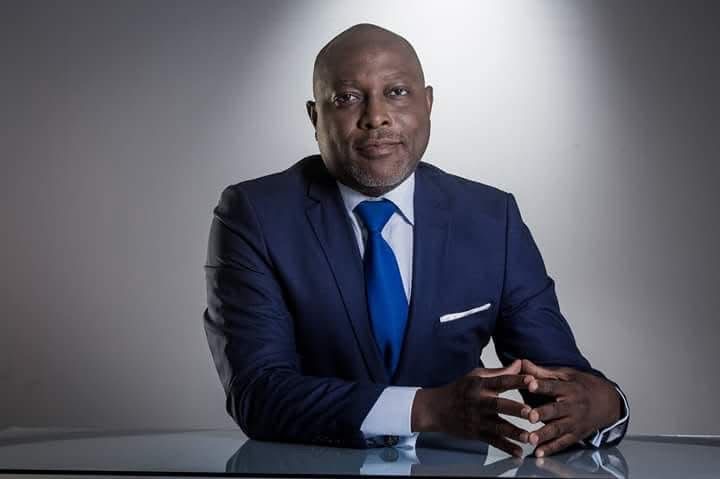
Launched recently by the African Development Bank, NAFA aims to redirect capital and mobilize African savings. But its main challenge remains the crisis of trust between citizens and institutions, fueled by persistent governance weaknesses, analyzes Samuel Mathey. In this interview with Financial Afrik, the economist argues for the emergence of “showcase countries” capable of demonstrating, by example, that another model is possible – based on trust, economic freedom, and institutional credibility. According to him, this is essential to trigger a virtuous circle on a continental scale.
You state that Africa’s problem is not so much a lack of resources as a lack of trust and governance. Can NAFA led by the AfDB really correct such deep structural failures, or does it risk becoming trapped itself?
The African Development Bank is putting back on the table a reality widely shared by populations: Africa is not lacking in resources, but in mobilization, governance, and, above all, trust. From this perspective, NAFA – conceived as a new architecture intended to better direct capital and risk in the African financial ecosystem – is based on a sound intuition. Indeed, the continent has significant internal resources: diaspora savings, financial masses circulating outside the banking system, losses related to corruption, capital flight, or inefficiency of public spending. These are levers that could finance a much larger part of its development.
The challenge is not to solve all problems upstream, but to demonstrate a clear willingness to address them and send a strong signal about their priority. It is precisely on this point that NAFA could encounter its limits.
Three major obstacles stand in the way.
First, a deep crisis of trust. In many countries, citizens doubt their institutions. When public discourse weakens, rules seem variable, and future prospects appear uncertain, individuals prefer to keep their savings outside formal channels. In these conditions, mobilizing resources becomes extremely difficult.
Next, corruption and impunity affect the quality of decisions. They not only divert funds but also distort project selection and weaken meritocracy. Financing no longer benefits the most relevant initiatives but rather the best-connected actors. This results in poorly designed projects, unfinished infrastructure, ineffective debt, and a general discouragement of talents. Finally, political divisions, regional tensions, and insecurity weaken any continental ambition. NAFA assumes an Africa capable of cooperating and pooling its strengths. However, short-term competition logics, combined with security challenges, limit this dynamic. In such a context, citizens often prefer individual solutions, perceived as safer than uncertain institutional mechanisms.
You propose conditioning financing on strict governance criteria. Isn’t there a risk of increased politicization of NAFA, or even tensions between state sovereignty and supranational requirements?
Three conditions are essential to accelerate NAFA’s results without politicization. These requirements are indeed in line with the logic adopted by some international institutions.
The analogy is simple: a banker cannot grant a loan without ensuring the client’s repayment capacity. Similarly, financing must be conditioned on a credible governance framework. The deep crisis of trust between citizens and leaders remains profound, fueled by practices such as nepotism or non-compliance with commitments. In this context, NAFA can only succeed by going beyond its financial role to become also a lever for institutional and moral transformation.
First, conditioning financing on clear governance criteria: budget transparency, anti-corruption efforts, independence of the judiciary, respect for public freedoms, and accountability in resource use. The goal is to differentiate countries that enhance public trust from those that erode it.
Second, showcasing countries. Leading by example remains the most effective lever. Some states can embody models in terms of alternation, respect for public discourse, and freedoms. Populations are more sensitive to concrete results than speeches.
Finally, deeply transforming economic mindsets. Development does not rely solely on financial instruments but on the ability to train a new generation of entrepreneurs capable of producing, innovating, and cooperating on a continental scale. Initiatives like PZD – AFRICA are in line with this logic of rebuilding trust and promoting economic autonomy.
The distrust of citizens towards institutions is at the heart of your analysis. What innovative mechanisms could capture informal savings and diaspora savings?
The priority remains to restore trust, particularly through private initiatives. The many scams related to promises of quick returns have left a lasting mark, reinforcing investor caution.
In this context, the establishment of strict standards – at the national, regional, and continental levels – appears essential. Operators must be certified and subject to transparency requirements.
The main challenge lies in transforming individual flows, often intended for immediate needs, into structuring investments in the medium and long term. To date, no solution has fully solved this equation. It is in this perspective that FAFEDE launched the PZD – AFRICA program, with the ambition to train thousands of young people over ten years and provide concrete answers to this issue.
You emphasize the need to showcase exemplary states. Which countries could play this role today?
Africa can produce positive influence dynamics, just as negative influences.
Some countries have already initiated inspiring transformations. Togo, for example, has experimented with a specific institutional model that has inspired other states like Zimbabwe. Similarly, countries like Rwanda have shown that it is possible to impose high standards in urban management, inspiring similar initiatives elsewhere, notably in Ghana.
Policies of openness, such as the abolition of visas for African nationals, initiated by countries like Benin or Rwanda, also illustrate this ripple effect.
The goal is clear: to create showcase countries capable of concretely demonstrating the benefits of governance based on accountability, transparency, and respect for freedoms. Supported by institutions like the African Union and the AfDB, these states could serve as models. Experience shows that when these countries achieve tangible economic results, others follow. Nigeria, with its national champions strategy, offers an example, with some states now seeking to be inspired by it.
You mention a profound reform of mindsets. Can this change keep pace with current economic urgencies?
In our view, no national or continental ambition will produce significant results without a prior transformation of mindsets and promotion of values. For the past five years, FAFEDE has been implementing the AFRICA 5.0 program – “the new African,” focused on mindset change. The observed feedback, both in the public and private sectors, confirms the impact of this approach.
Other initiatives have been launched, such as the Reine Pokou program, which calls for guaranteeing a minimum income to young girls and women in difficulty, or Africa Zero Cocaine 2030, aiming to combat the destructive effects of drugs on youth. The gap between societal long-term and economic urgencies exists but cannot be bypassed. The sustainable transformation of the continent necessarily involves this deep reform of mindsets.
About Samuel Mathey
Samuel Mathey is a professor of economics and management specializing in debt, financing, and entrepreneurship issues. Samuel holds a Ph.D. in economics from an American state university, an MBA from the University of Delaware and Ohio State University, a master’s degree in monetary economics and econometrics, and a diploma in accounting studies. Samuel started his career as a computer engineer specializing in program development and information systems optimization. As a committed economist, Samuel “shares his knowledge by putting his knowledge at the service of others.” Thus, Samuel teaches in France (HEC Paris…), the United States, and Africa. Samuel has led several studies on the private sector in Côte d’Ivoire and several African countries. He is also the founding president of the Foundation for Entrepreneurship in Africa (FAFEDE), which promotes the concept of his latest work on Entrepreneurship at Zero Franc (or how to start a business without prior external financing). Through his foundation, Samuel has trained over 50,000 young people and women across Africa between 2014 and 2018, with a goal of +1 million initiated in the EZF technique.

