



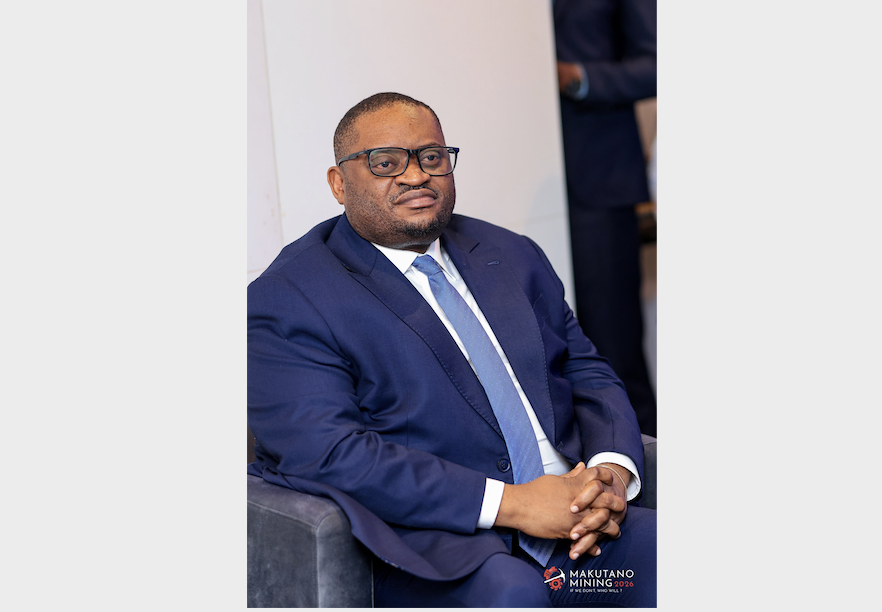
On the sidelines of the Makutano Mining conference, where he spoke on the theme “Taxation, Para-taxation, and Attractiveness: How to Find the Balance?”, Doudou Roussel Fwamba Likunde Li-Botayi, Minister of Finance of the DRC, discusses in this interview with Financial Afrik the tax reforms, the diversification of financing sources for the economy, and the challenges of local transformation of mineral resources. He also announces the launch of a Stock Exchange in 2027.
Beyond its mining potential, the DRC aims to become a major destination for international capital. What levers does the government intend to activate to improve the financial attractiveness of the country and strengthen investor confidence?
Yes, exactly. Since 2021, we have been working with our partners from the International Monetary Fund to implement a number of reforms aimed at better resource mobilization and improving the economic environment, with the goal of attracting more foreign direct investment to the Democratic Republic of the Congo.
Among the various measures we are deploying in the Democratic Republic of the Congo is the simplification of our tax system. We are currently developing a General Tax Code for central government taxes and duties. This code will allow us to eliminate redundancies in our tax system, remove multiple levies, streamline a number of taxes, and, in some cases, merge them. The goal is to achieve a better business climate and, consequently, attract more foreign direct investment to our country.
These are fundamental measures we are implementing to improve the economic environment and promote foreign direct investment. Additionally, we are also working on administrative simplification, which should allow businesses to reduce waiting times in their processes, particularly in obtaining public services.
The DRC has strategic mineral resources, but the financing of their exploitation and transformation remains largely dependent on foreign capital. What strategy does the government envision to promote the emergence of Congolese and African capital in this value chain?
Yes, among the measures we are implementing, we have initiated a transformation of our financial architecture. We have validated this reform, and the President of the Republic, His Excellency Mr. Félix Antoine Tshisekedi Tshilombo, has just promulgated the law on the financial market in the Democratic Republic of the Congo. Through this law, we have established a Stock Exchange that will allow us to mobilize capital as well as available savings at the national level to meet the medium- and long-term financing needs of our economy.
Because, as you know, the financing of our economy is currently dominated by the banking system. The government wants to diversify the sources of financing for the Congolese economy, but also to allow Congolese people to have a say in the direction of ongoing economic policies.
We will therefore have a Stock Exchange that will be operational next year. This Stock Exchange will allow us to mobilize national savings and put this savings to work in financing our economy.
How does the Ministry of Finance intend to reconcile the optimization of tax revenues from the mining sector, the competitiveness of companies, and the financing of the diversification of the Congolese economy?
It is important to remember today that the mining sector is the engine of our economic growth. We have a contribution of about 39% of mining rents to our gross domestic product and about 40% of the mining sector to our internal revenues.
To achieve this, we have established a strategy aimed at diversifying the financing of these sectors, but also prioritizing the development of the value chain, particularly by financing sectors such as energy. Today, we have an energy deficit of about 2 gigawatts across the country. The mining sector alone has an energy deficit of about 1.5 gigawatts. Therefore, we have implemented a strategy to address these various energy deficits to allow for better transformation of our mineral products.
Because, as we speak, we are still exporting concentrates and cobalt hydroxides. What we want is to achieve a much deeper transformation of our mineral products, which can create more added value, generate jobs, and distribute additional income, in order to ensure sustained and inclusive economic growth for our populations. Because, as you can see today, there is a real paradox between the importance of the mining rents that the Democratic Republic of the Congo possesses and the levels of poverty we observe among our populations.
And to address this issue, we need to develop a genuine value chain within the mining industry that can help us achieve this goal of sustained and inclusive growth for the benefit of our populations.

