



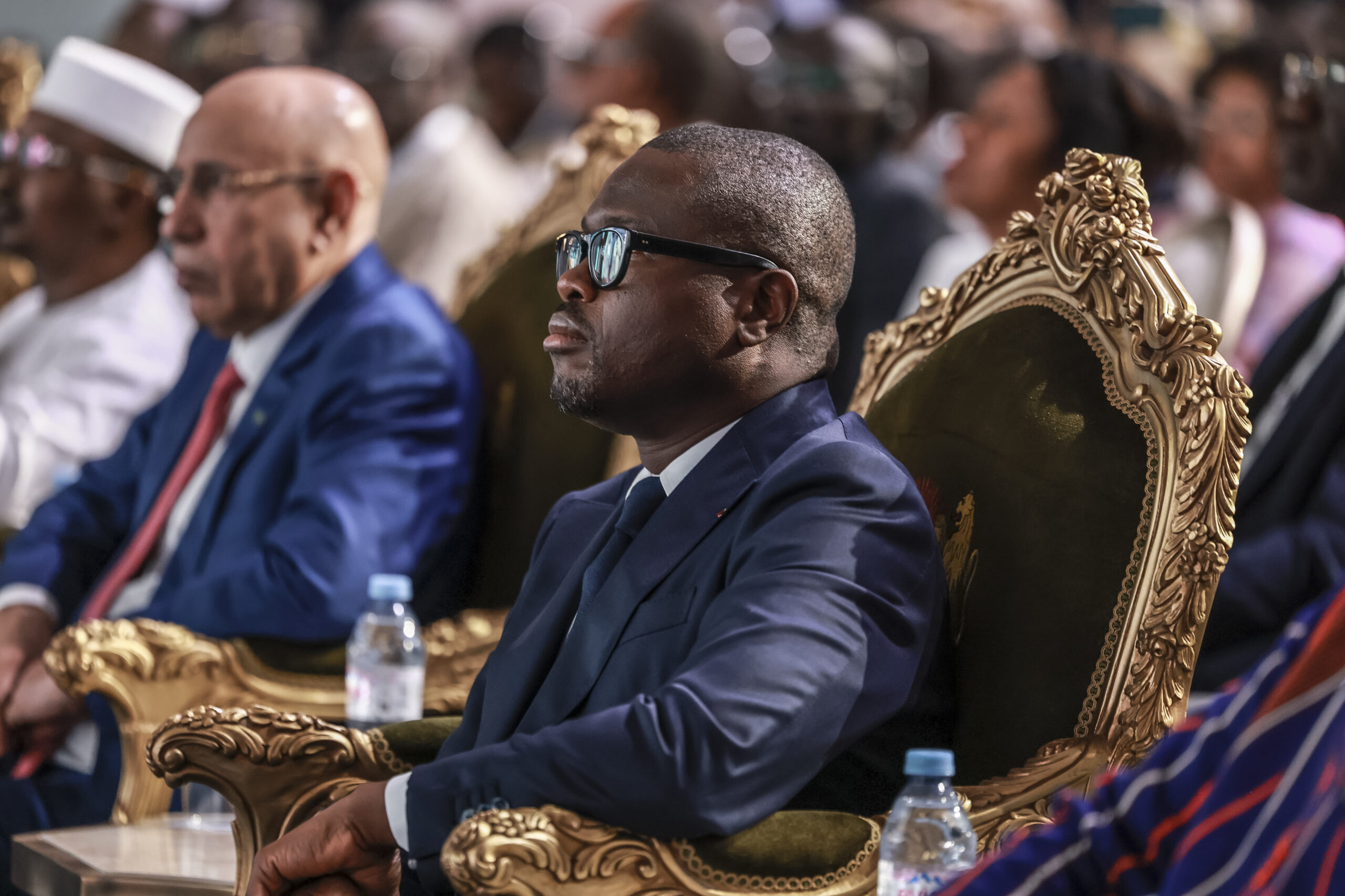
For his first participation in a major continental event since his inauguration on May 24th, Beninese President Romuald Wadagni took part, on Tuesday, July 15th in N’Djamena, in the opening ceremony of the African Water Forum, alongside several African heads of state, including Mahamat Idriss Déby Itno (Chad), Félix Tshisekedi (Democratic Republic of Congo), Brice Clotaire Oligui Nguema (Gabon), and Mohamed Ould Cheikh El Ghazouani (Mauritania). This first appearance on the continental stage comes within the framework of a forum jointly organized by the Chadian government and the World Bank Group around the theme “From vision to action”, focusing on the financing of water infrastructure, water security, and climate resilience.
For Romuald Wadagni, this participation goes beyond mere protocol. It constitutes a major diplomatic milestone and offers Benin the opportunity to present the results of a decade of reforms in the water sector, while highlighting the priorities of the new presidential mandate in a field that has become strategic for the continent’s development.
A major diplomatic milestone
For the Beninese president, this participation marks his first presence in a continental forum bringing together African heads of state, international financial institutions, and development partners. After an initial phase of his mandate focused on setting up the government and diplomatic exchanges in the sub-region, Romuald Wadagni takes advantage of this platform to place Benin in the major African debates on infrastructure, development financing, and climate resilience.
The choice of the African Water Forum to inaugurate this continental sequence is not insignificant. As a former Minister of Finance, Romuald Wadagni has built his reputation on his ability to mobilize the resources necessary for financing public policies and to engage with international financial institutions. In N’Djamena, the head of state finds himself on familiar ground: that of the great development challenges, where issues of governance, financing, and investment play a central role.
This first participation also reflects Benin’s desire to consolidate its image as a reforming state. For several years, the country has emphasized an approach based on planning, modernization of infrastructure, and the search for sustainable partnerships with donors and the private sector. The Forum thus offers a platform to showcase this trajectory to key African and international decision-makers.
Beyond symbolism, this presence also responds to a logic of economic diplomacy. Major continental events have become spaces where political partnerships and future funding for structuring projects are built. In a context of increased competition for access to concessional resources and climate financing, Benin’s positioning in these forums takes on strategic importance.
Benin highlights a decade of reforms
This first continental outing is also an opportunity for Cotonou to highlight the results achieved in a sector that has undergone profound transformation over the past decade.
Since 2016, over 630 billion CFA francs have been invested to sustainably improve access to drinking water for the entire national territory.
These investments have increased the urban service coverage rate from 53% to 77%, notably through the strengthening of drinking water supply systems in several cities in the country. The establishment of the Beninese Water Infrastructure Company (SoBIE SA) has complemented this reform by ensuring more integrated infrastructure management.
Progress is equally significant in rural areas, where the service coverage rate now stands at 84%. This evolution is based in particular on the creation of the National Agency for Rural Drinking Water Supply, the deployment of 161 multi-village supply systems, and the connection of over three million new beneficiaries since 2016.
In addition to these achievements, there is a subsidy mechanism facilitating domestic connections, strengthening water quality control, and the continuation of several network extension programs.
Focus on universal access
Building on these achievements, the Beninese government aims to accelerate progress towards universal, permanent, and equitable access to drinking water.
The societal project led by Romuald Wadagni includes the launch of the national program “Water for All”, the systematic provision of drinking water to schools and health centers, the development of new storage capacities, the reduction of losses in networks – with the objective of reducing them from 32% to 15% – as well as the construction of 314 new multi-village supply systems. The program also aims to enhance the participation of Beninese companies in the sector’s public procurement.
Beyond improving access to drinking water, these investments aim to support agricultural development, strengthen territorial resilience to the effects of climate change, and accompany the country’s economic growth.
Benin aims to influence African debates
Romuald Wadagni’s participation in the African Water Forum reflects Benin’s desire to actively contribute to reflections on the continent’s major challenges. While financing needs remain significant, exchanges in N’Djamena are expected to strengthen partnerships between states, development banks, the private sector, and international donors to accelerate the realization of hydraulic infrastructure.
For the Beninese president, this first continental meeting marks the opening of a new diplomatic sequence. By choosing the African Water Forum as the first major African platform of his mandate, Romuald Wadagni aligns his action with a vision where infrastructure financing, climate resilience, and sustainable development are now pillars of Benin’s international projection.

