



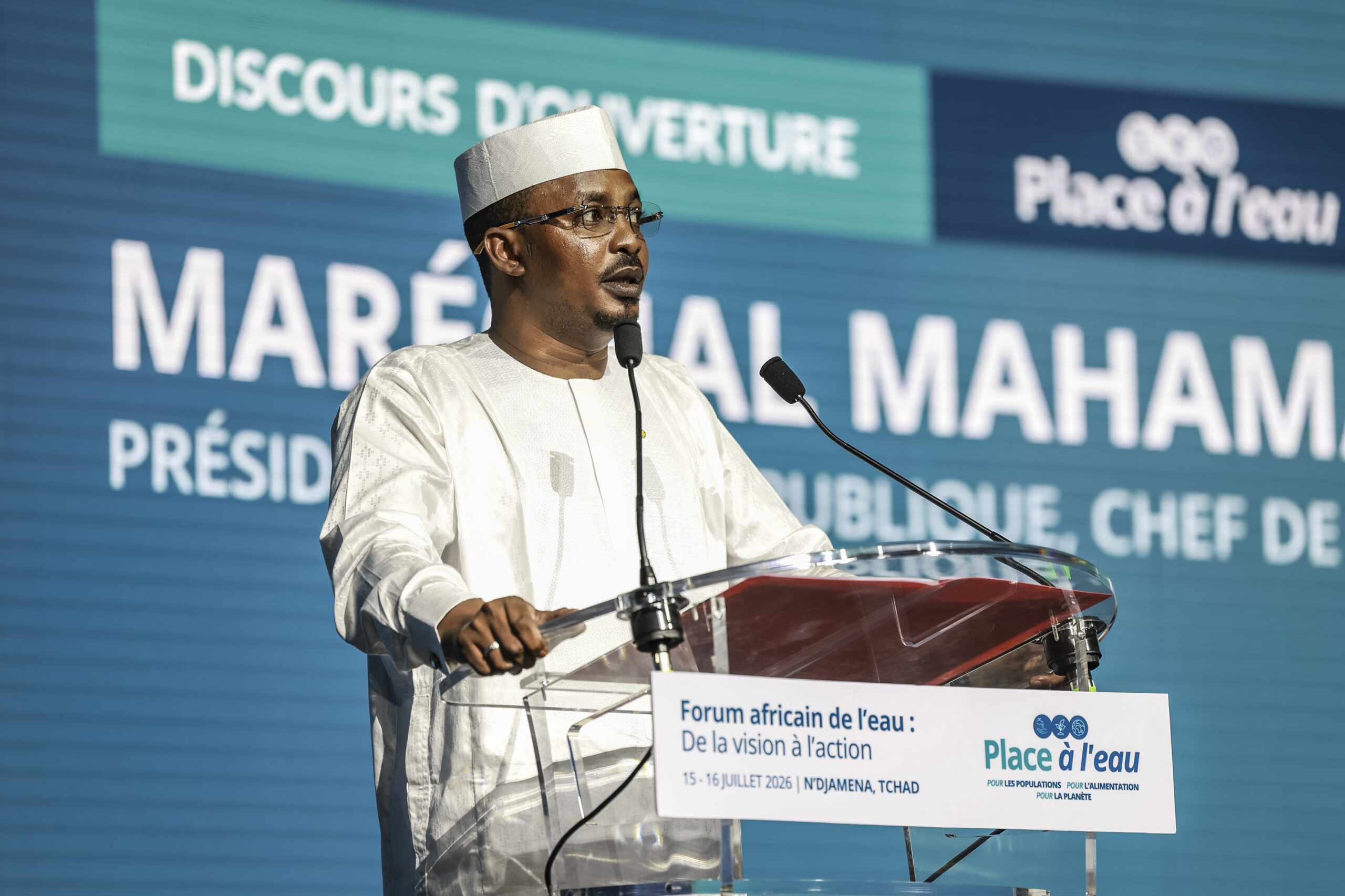
The African Water Forum, organized by the Chadian government and the World Bank, was the scene of a major political announcement that went beyond just water issues. At the official opening of the Forum, Chadian President Mahamat Idriss Déby Itno announced the abolition of entry visas for all African nationals starting from January 1, 2027, making this continental meeting a platform for a strong commitment to African integration.
In front of several African heads of state, representatives of international institutions, and delegations from across the continent, the head of state first recalled the historical vocation of his country. “We are, in Chad, the crossroads of Africa, of human encounters, of links between the West and the East, the North and the South of the continent – a land of welcome and integration, a center of African unity,” he declared.
It is in this context that he unveiled a measure aimed at facilitating mobility on the continent. “Faithful to this ideal in favor of African integration and the free movement of goods and people, I would like, from this platform, on this historic day, to announce to you that Chad, the land of Toumaï, the cradle of humanity, is opening its borders and abolishing entry visas for all Africans, starting from January 1, 2027,” announced Mahamat Idriss Déby Itno, prompting applause from the audience.
Beyond its diplomatic significance, this decision places Chad within a continental dynamic already undertaken by several states. Benin led the way by lifting visas for all African nationals. Rwanda, The Gambia, and Seychelles also have very open access policies, while Ghana recently announced the abolition of visas for all African citizens. More recently, South Africa announced visa exemption for nationals of 32 African countries, aiming to boost tourism, investments, and trade on the continent. Kenya, on its part, has also embarked on a profound reform of its entry regime to facilitate intra-African mobility.
This direction aligns with the ambitions of the African Union and the African Continental Free Trade Area (AfCFTA), which consider the free movement of people as a pillar of the continent’s economic integration. By choosing the African Water Forum to announce this reform, the Chadian president has given an additional political dimension to a meeting dedicated to sustainable development challenges, making N’Djamena, for the duration of the forum, the stage for a plea for a more open, integrated, and mobile Africa.

