



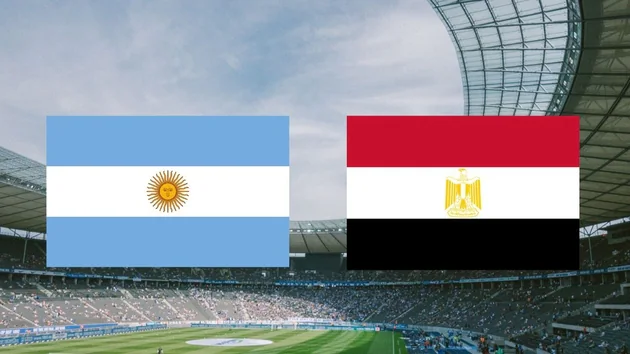
On Tuesday, July 7, the sports match between Argentina and Egypt has its counterpart in numbers. On paper, Buenos Aires plays in the top economic division: Argentina’s GDP reaches 683.1 billion dollars in 2025, compared to 365.25 billion for Egypt. But Cairo presents another argument, that of mass: 118.4 million inhabitants against 45.9 million for Argentina. In other words, a much larger domestic market, even though wealth per capita remains significantly in favor of the Argentines, with 14,898 dollars per person compared to 3,086 dollars on the Egyptian side.
Argentina advances with assets of raw power: large-scale agriculture, livestock, gas, lithium, potential in renewables. After a violent inflationary shock, the country has regained some momentum: the World Bank indicates a growth of 4.4% in 2025 and projects a further 3.6% in 2026. Above all, the stabilization program initiated at the end of 2023 has brought inflation down from over 20% per month to around 2.5%-3% monthly, with a return to budget balance and the support of a $20 billion IMF program.
On the other hand, Egypt presents a profile that is more dense than spectacular. Its economy is based on agriculture, industry, and services, driven by its strategic position and gradual stabilization. Growth reached 4.4% in 2025 and is still expected to be 4.3% in FY26. Inflation, which peaked at 38% at the end of 2023, has fallen to 13.4% in February 2026; foreign exchange reserves have risen to $67.5 billion, while central public debt has fallen to 82.5% of GDP.
At the kick-off of this “economic match”, Argentina seems to have the most decisive individuals: more wealth, more resources, a spectacular disinflation. But Egypt retains the depth of its squad: a massive demography, a diversified productive base, and a stabilization trajectory that is gaining credibility.
In this field, the verdict is not a clear score, but a duel of styles between a rapidly recovering power and a regional giant in search of lasting solidity.

