



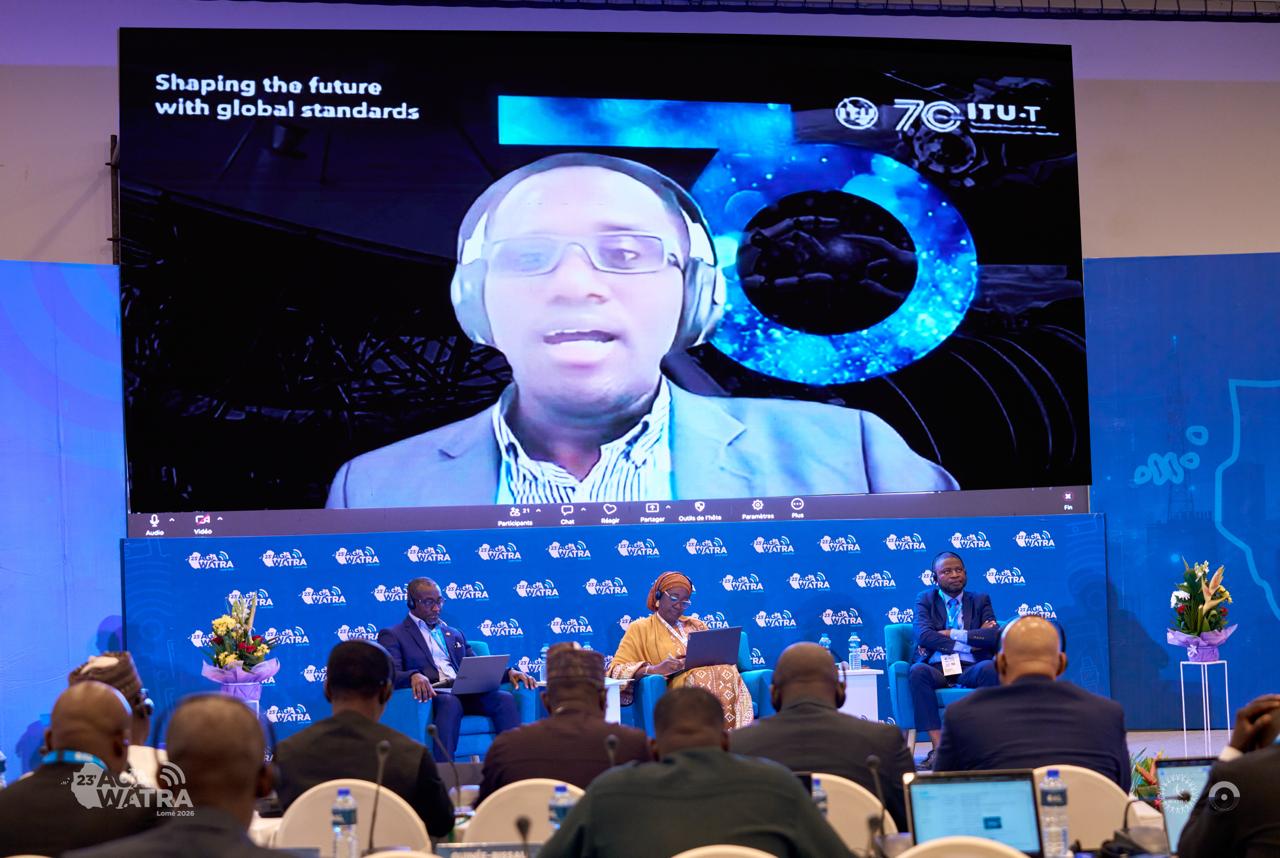
Gathered around a roundtable discussion on “collaborative regulation in the era of convergence,” regulators, operators, technical partners, and consumer representatives came to a shared conclusion on Monday, April 20 in Lomé: the growth of digital financial services in West Africa cannot continue without much closer cooperation between telecom authorities, central banks, operators, fintech companies, and consumer protection organizations.
Convergence Requires New Regulation
This roundtable was organized on the sidelines of the 23rd General Assembly of the Association of Telecommunications Regulators of West Africa (ARTAO), which includes the 12 ECOWAS countries, the three from the AES, and Mauritania.
At the opening of the discussions, the moderator, Salamata Rouambaïli, highlighted the extent of the ongoing transformation: digital financial services no longer belong to a single sector, but now involve “telecom operators, fintech companies, banks, sector regulators, data protection authorities, and sometimes international payment actors.” The central question, she emphasized, is now how to effectively regulate a convergent ecosystem to stimulate innovation, financial inclusion, and trust.
Ghana as an Example of Operational Cooperation
Ghana was presented as one of the most advanced examples of this approach. Its representative highlighted the strong growth of mobile money and a cooperative framework between the national communications authority and the Bank of Ghana. The stated goal is clear: to secure an infrastructure that has become critical for the economy.
“The ultimate goal is to protect consumers and the platform’s security,” explained their representative, detailing the establishment of a national laboratory for the security of digital financial services, aimed at testing platforms, identifying vulnerabilities, and strengthening the capacity of regulators and operators to act.
Digital Trust at the Heart of Concerns
In support of this vision, participants emphasized the fragility of digital trust. One intervention pointed out that each mobile money transaction relies on two interdependent layers – the telecom infrastructure and the financial platform – and that a flaw in either one can destabilize the entire structure.
They called for coordinated adoption of technical recommendations against vulnerabilities, including mobile app flaws, as well as for the formalization of cooperation memorandums between telecom regulators and central banks. The message was clear: “No individual administration can solve this alone.”
From the industry side, emphasis was placed on the need for stronger regulatory visibility. One operator highlighted that sector development depends on stable, consistent, and harmonized rules at the regional level, especially on KYC, cybersecurity, and mutual recognition of compliance frameworks. Implicitly, the industry urges regulators to reduce friction between jurisdictions to allow innovations to circulate more quickly and investments to deploy more smoothly.
In the UEMOA space, the limits of unfinished co-regulation
However, it was in the UEMOA space that the discussions revealed the strongest institutional tensions. Several delegations, including from Senegal, Togo, Benin, and Côte d’Ivoire, lamented the difficulty of building effective co-regulation when the competent monetary authority is communal and not national.
An intervenor from Senegal summarized the issue by stating that “no authority can operate in isolation,” before calling for a community approach involving the BCEAO. Michel Yaovi Galley, Director General of the Togo Regulatory Authority for Electronic Communications and Posts, echoed this sentiment, stating that innovations, particularly in interoperability, are hindered by the lack of a truly shared working framework with the common monetary institution.
Benin, however, provided a more operational note by sharing a promising experience: the interconnection of electronic money issuer platforms, allowing a user, with a simple number, to open an account with several issuers, without being captive to a single operator. This advancement is seen as a first step towards interoperability. On complaint management, the observation is equally instructive: in practice, as explained by the Beninese representative, the consumer’s first instinct is to approach the telecom regulator, even when the dispute concerns a financial service.
Towards a Common Regional Roadmap
The voice of consumers played a significant role in the discussion. Their representative, Emmanuel Sogdadji from Togo, reminded that the primary mission of any regulator is to protect users but pointed out the still numerous shortcomings: excessive fees, slow complaint processing, ambiguity on the jurisdictional boundary between sector regulators and central banks. His diagnosis was straightforward: “the main obstacle is regulatory fragmentation.” For consumer representatives, as long as responsibilities remain diffuse, complaints will continue to stagnate, and distrust towards digital financial services will persist.
At the end of the roundtable, a consensus emerged: the challenges are multiple – regulatory fragmentation, incomplete interoperability, cybersecurity, complaint handling, user trust – but they require a multi-stakeholder response. “All relevant actors need to communicate so that we can outline a roadmap,” summarized a participant. The main recommendation made in conclusion is the implementation of strengthened institutional collaboration, at both national and regional levels, with a strong demand for more structured engagement of central banks in consultation frameworks led by telecom regulators.
Another roundtable was dedicated to strengthening public-private collaboration for sustainable financing of high-speed infrastructure and digital connectivity.

