



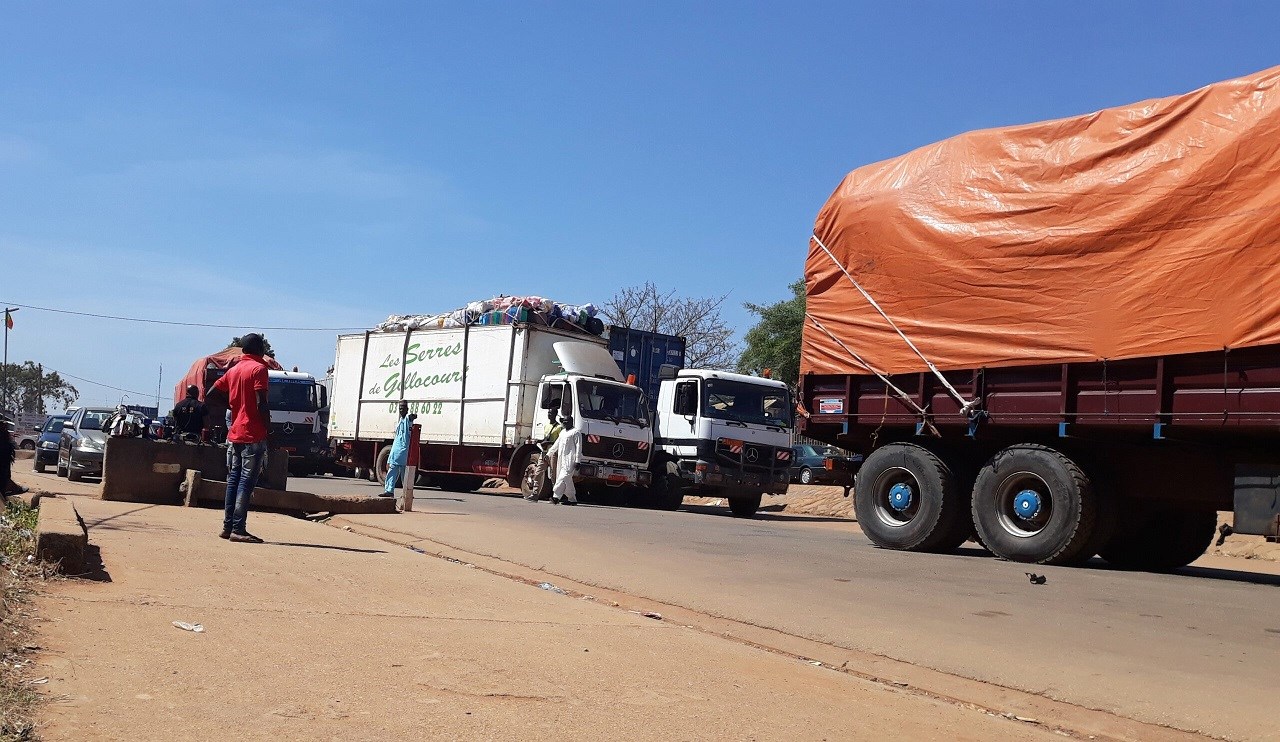
Cameroon is embarking on a major project to modernize the Douala-Bangui road corridor, a strategic axis of nearly 800 kilometers on its territory, essential for trade with the Central African Republic and, more broadly, for the economic integration of Central Africa. According to the Cameroonian Ministry of Public Works, the state is seeking nearly 890 billion CFA francs (approximately $1.6 billion USD) to finance the complete rehabilitation of this infrastructure.
Designed as a structuring program, the project aims to reduce operating costs for transporters, shorten travel times, and improve road safety. It also aims to open up the localities it passes through, improve the living conditions of the local populations, and stimulate local economic activity.
The first phase, scheduled to start in 2027, is the foundation of the program. Estimated at 425 billion CFA francs (approximately $762 million USD), it includes the reconstruction of the Yaoundé-Douala axis, focusing on the most degraded and busiest sections, the construction of a second bridge over the Dibamba, and the upgrading of the Yaoundé-Ayos-Bonis-Bertoua-Garoua-Boulaï section. This phase also includes reforms related to road maintenance and axle load control, as well as preparatory studies for the next phase. For its financing, the government is counting on partners such as the World Bank, the French Development Agency (AFD), the European Union (EU), and the European Investment Bank (EIB).
The second phase, expected to start in 2028, will focus on the logistical organization of the corridor. It aims to facilitate trade, streamline border crossings, reduce transport costs, strengthen the institutional framework, and prepare for increased private sector participation. Its financing is still partially to be finalized, although around 301 billion CFA francs (approximately $540 million USD) could be mobilized from the World Bank, with the potential support of the Islamic Development Bank.
Finally, the third phase, scheduled for 2031 and estimated at 164 billion CFA francs (nearly $295 million USD), aims to complete the upgrading of the corridor and turn it into a true lever for local development. It will target agricultural and logistical value chains, the emergence of economic hubs, and the attraction of private investments, thus consolidating the role of the Douala-Bangui corridor as a vital artery of the regional economy.

