



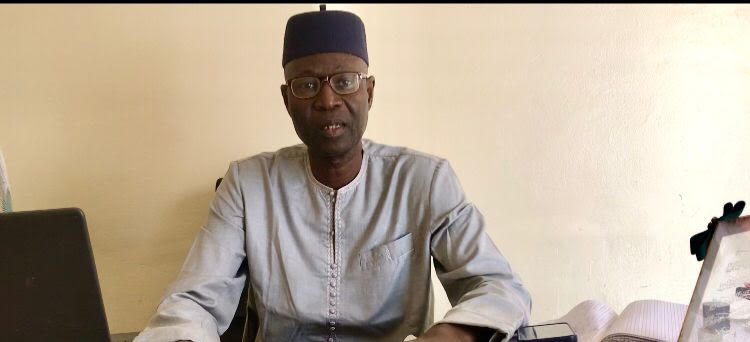
By Amath Ndiaye, Economics Professor at Cheikh Anta Diop University – Dakar.
According to the latest quarterly budget execution report, in 2025, Senegal shows an improvement in public finances, with a decreasing deficit and dynamic revenues. However, behind these encouraging results, a major constraint is evident: the growing burden of debt, with debt servicing absorbing a considerable portion of public resources. Between budget adjustments, economic growth slowdown, and the need for external financing, the country is facing a delicate equation to sustainably revive its economy.
Overall satisfactory budget execution in 2025
In 2025, Senegal can boast of a tangible improvement in the management of its public finances. Budget revenues reached 4,477 billion CFA francs, representing 98.8% of projections, a year-on-year increase of 11.8%. At the same time, expenses were relatively contained, leading to a reduction in the budget deficit to 6.44% of GDP, compared to an initial target of 7.82%. The primary deficit, on the other hand, significantly decreased to around -1.4% of GDP, reflecting a real consolidation effort. At first glance, this trajectory seems to bring the country closer to its medium-term deficit target of 3%.
Budget adjustment hindering non-hydrocarbon growth
However, this improvement is based on a budget adjustment that is not without collateral effects. The increase in levies and the compression of expenses have contributed to weakening domestic demand, weighing on consumption and investment. But more importantly, this adjustment directly affects non-hydrocarbon growth, which is the real foundation for job creation.
In a context where expectations were based on the rise of oil and gas, the situation becomes even more complicated: the stagnation of oil exports from 2026 onwards will deprive the economy of an essential growth engine. Consequently, the overall dynamic is weakened, with growth potentially dropping to between 2.2% and 2.5%, an insufficient level to meet economic and social challenges. It becomes particularly difficult to reconcile budget discipline and economic recovery.
The weight of debt: main budgetary constraint
Beyond the deficit, the real issue for Senegalese public finances now lies in the debt burden. In 2025, interest payments reached 1,088 billion CFA francs, approximately 5 to 6% of GDP. Even more worrying is their evolution: between 2024 and 2025, interest payments increased by around 32%, compared to only 11.8% for public revenues.
In other words, the debt burden is increasing nearly three times faster than the state’s resources. It now exceeds the combined budgets of health, higher education, research, innovation, and agriculture. Under these conditions, even a return to primary balance would not be enough to restore budgetary equilibrium.
The country is caught in a debt spiral marked by more costly financing and shorter maturities, a dynamic that international geopolitical tensions, especially in the Middle East, could exacerbate through inflation and rising interest rates.
A trajectory to rebuild: towards IMF support and restructuring?
Facing these constraints, achieving a deficit of 3% of GDP appears extremely difficult without a major shift. Senegal now needs a credible and transparent economic trajectory, supported by the International Monetary Fund, to restore partners’ confidence and attract external financing essential for economic recovery and structural transformation.
But beyond this anchoring, one conclusion is clear: without action on the debt itself, budget adjustment will remain insufficient. Debt suspension or restructuring could provide budgetary relief, free up resources for investment, and reignite growth.
Prof. Amath Ndiaye
FASEG-UCAD

