



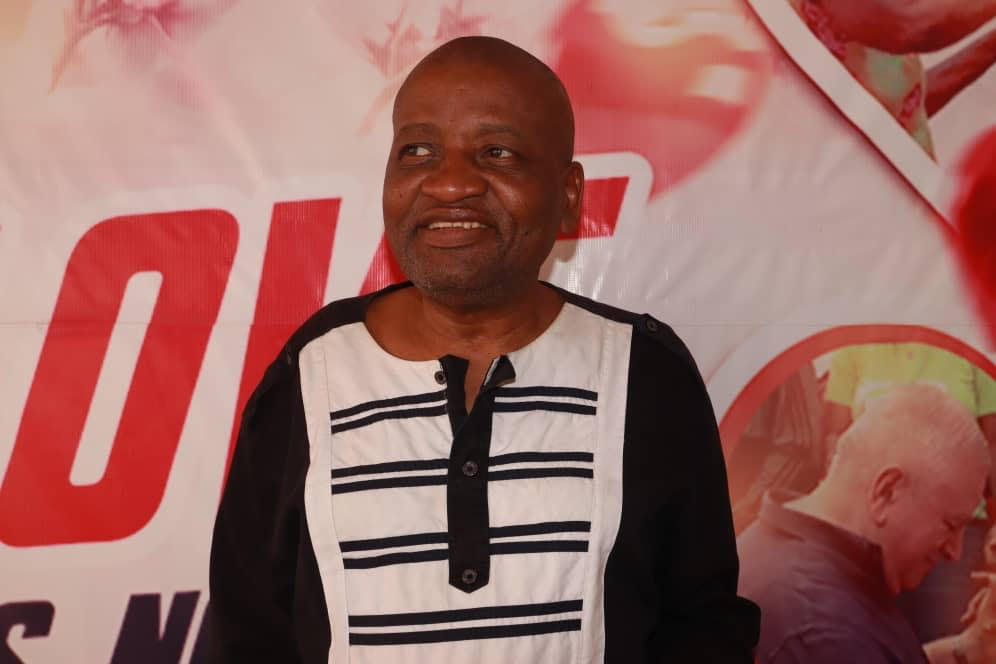
By Jos Blaise Mbanga Kack
There are moments when one would be tempted to smile. But the subject is too serious to be left to the bursts of the podium. Through repeated slogans to exhaustion, Africa ends up confusing incantation and strategy. The consecrated expression – “local transformation of products” – has become a totem. Yet it deserves to be dissected, supported by figures and structures. Transforming on the spot, very well. But transforming for whom? With what capital? Under what strategic governance? And above all, in what value architecture?
Let’s imagine pressing a button: industrial chains are established in Douala, Abidjan, Dakar, Lagos, Conakry, Libreville, Brazzaville, Kinshasa, Cotonou or Lomé. Ribbons are cut, cameras film, press releases celebrate “industrialization in progress”. But the machines come from Europe or Asia. Financing is structured externally. Patents, software, cutting-edge engineering are imported. And decision-making centers remain elsewhere. The “nationality” of a company is no longer measured by the flag flying on its site. It is read in the composition of its capital, in the location of its board of directors, in the origin of its credit lines, in the control of its intellectual property. In other words, in the power to decide.
Let’s take cocoa, the ultimate symbol. West and Central Africa produce most of it. In recent years, processing units have emerged: Chocosen in Senegal, Chococam in Cameroon, Chocogab in Gabon, Chococi in Ivory Coast. Powdered chocolate, bars, semi-finished products for export are manufactured there. The political signal is strong: the bean no longer systematically leaves the continent in its raw state.
But behind several of these industrial installations, we find the Barry Callebaut group. World leader in the manufacture of chocolate and cocoa-based products, born in 1996 from the merger of the Belgian company Callebaut and the French company Cacao Barry, the group is headquartered in Switzerland and deploys its activities on all continents. It supplies major agri-food brands, controls cocoa sourcing, transformation, formulation, and a large part of global logistics.
When such a player invests in Abidjan or Douala, it does so according to a rational industrial logic: proximity to raw materials, cost optimization, access to competitive labor, tax incentives negotiated with States. Nothing illegitimate. But nothing that ipso facto translates African economic sovereignty either.
So we transform on site. Certainly. But where are the strategic decisions made? Where are major investments arbitrated? Where are product innovations decided, market choices, price policies? For a long time, general and financial management positions were entrusted to expatriates. Then, under pressure from public opinion and in the name of “Africanization” of positions, African executives were promoted to head certain subsidiaries.
On the surface, the face changes. In structure, the center of gravity remains. Frantz Fanon would have spoken, without mincing words, of “black skin, white mask”. The image is severe, but it underlines a persistent tension: can one speak of autonomy when the bulk of economic power remains exogenous?
The public debate heats up. “We have imposed local transformation!” proclaim some neo-Pan-Africanists. Fine. But transform for what capital? For what local accumulation? For what reinvestment in research, innovation, capacity expansion? In the absence of a detailed analysis of financial flows and value chains, victory looks like a staged scene. A smoke screen – and, ironically, a cocoa powder.
Let’s add a dimension often overlooked: demand. Who predominantly consumes these processed products? The main markets for high-end chocolate and coffee remain in Europe, North America, and Asia. The young European schoolboy slips his chocolate paste into his schoolbag; Western households absorb most of the high-value volumes. In Africa, consumption of powdered chocolate or espresso remains marginal compared to Western standards, for reasons of income, dietary habits, and economic priorities.
Does this mean that we should give up local transformation? Absolutely not. But believing that merely establishing factories is enough to trigger a dynamic of economic power is a form of wishful thinking.
The real question is structural: how to create national champions capable of competing, innovating, and exporting under their own brand? How to structure solid guarantee funds to secure local investment? How to provide countries with effective, transparent development banks strategically oriented towards industrialization? How to strengthen regional financial markets so that they irrigate industrial SMEs?
Without patient capital, demanding governance, high-level technical training, “made in Africa” will remain dependent. It will be a link in a global chain controlled elsewhere. The issue is not isolation, much less autarky. Africa is not called to retreat into itself. It must trade, cooperate, attract foreign investments, integrate global value chains. But it must do so with strategic clarity. The danger would be to replace external dependence with internal monopolies, protected by administrative barriers and producing without real competition. Monopoly has never been synonymous with excellence. It often generates expensive, average-quality products, and a lack of innovation. Industrialization cannot thrive in a closed and excessively administered economy.
Behind the rhetoric of local transformation hides a broader dilemma: does Africa need revolutionaries or managers?
Revolutionaries have their usefulness. They awaken, denounce, mobilize. They remind us of the structural injustices of international trade. But building an industry, structuring a financial system, developing a solid technological base require rigorous managers, patient planners, competent technicians, leaders capable of articulating vision and execution.
Economic populism seduces the masses. Management, on the other hand, requires dashboards, performance indicators, audits, sometimes unpopular budget arbitrations. It also requires a culture of responsibility and transparency.
Economic sovereignty is not decreed at an inauguration. It is built through the ability to finance one’s own businesses, to intelligently protect one’s interests, to negotiate on an equal footing, to train engineers and financiers capable of standing up to the best.
Local transformation is a step. Mastering capital, technology, and markets is another. Until these dimensions converge, African industrialization will remain incomplete.
Hello Africa.
That of engineers, not tribunes. That of balance sheets, not banners. It has an appointment with itself. May it not arrive late.
About Josué Blaise Mbanga Kack
Josué Blaise Mbanga Kack is a seasoned media professional with 28 years of experience in high-level journalism. A former deputy editor-in-chief in several leading newsrooms in Cameroon and across Africa, he is also a founding member of the magazine Le Quorum, launched alongside Cherif Elvalide Seye and Moriba Magasssouba. His career, marked by collaborations with numerous French-speaking newsrooms, also extends to communication and marketing, notably with renowned agencies alongside André Monteauban. Trained at ESSTIC in Yaoundé and supported by the Friedrich Ebert Foundation, he embodies a profile at the crossroads of journalism, editorial strategy, and communication.

