



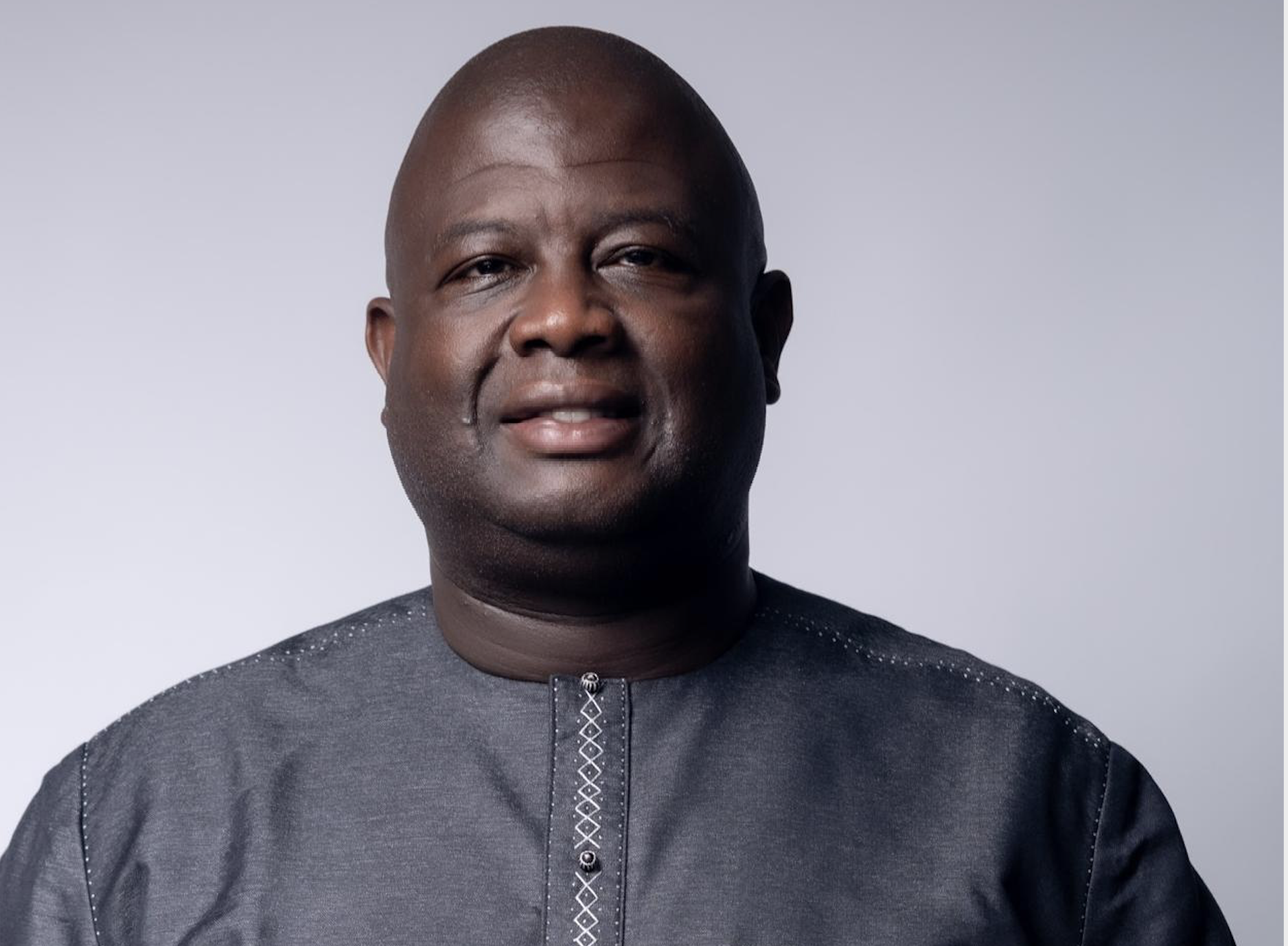
In this interview granted to Financial Afrik on March 16th, Abdou Diop, Country Leader of Forvis Mazars in Morocco and member of the Group Governing Board, provides a clear analysis of the changes affecting the consulting industry and decrypts the ambitions of the firm in Africa.
Interview conducted in Casablanca by Ismael Sy.
In recent years, several major audit and consulting firms have reduced their presence or withdrawn from certain African markets, sometimes in the context of scandals or regulatory tensions. How do you analyze this withdrawal movement, and what does it say about the maturity – or vulnerabilities – of the African consulting market?
In reality, the situation is more complex than it seems. Each firm operates with its own strategy and positioning on the continent. The common denominator for all firms lies in the intensification of regulatory complexity observed in recent years. This evolution generates more risks and significantly increases compliance costs, especially in regulated activities, with audit at the forefront.
For some international firms, the contribution of West and Central Francophone Africa to the overall revenue remains low. When we put this reality into perspective with the increasing regulatory requirements and the costs associated with compliance, the economic equation sometimes becomes difficult to justify. This is why some have chosen to withdraw their brand from these markets to limit the risks of contagion on an international network scale. Other players have opted for a different approach by reorganizing their activities around regional centers of expertise and refocusing their development on consulting. A less regulated profession, but especially highly promising on the continent.
This evolution does not challenge the maturity and potential of the consulting market in Africa, on the contrary. While we observe a slowdown, even a decline, in consulting activity in several regions of the world, Africa stands out: the demand is growing strongly, driven by transforming economies, ambitious reforms, and increasing needs for local and international expertise. At Forvis Mazars, we strongly believe in this potential and continue to invest in our development on the continent.
The consulting profession is deeply disrupted by artificial intelligence: audit automation, predictive consulting, real-time data. What will a firm like Forvis Mazars look like in a few years, according to you? In your opinion, which consulting professions could be threatened?
Today, no consulting profession is called to disappear in the strict sense of the term. However, many are exposed to a form of functional depreciation if they do not evolve. The most vulnerable activities are those whose value relies mainly on the compilation, structuring, or first-level data analysis. This evolution should not be perceived as a threat. Technology gradually captures technical production to push us to move up the value chain, where judgment, ethics, fine understanding of organizations, and the ability to support change are exercised.
The role of the consultant is not to be the one who knows or produces, but the one who interprets, puts into perspective, and helps make decisions in an increasingly complex and uncertain environment. The integration of technological developments and augmented intelligence in our professions is a major strategic axis of Forvis Mazars’ development for several years. We invest significantly in it, convinced that it is a key lever for creating value for our clients. This conviction has translated into a clear acceleration of our initiatives as part of our Stellar 2024 2028 strategy, which places innovation, skills transformation, and high-value expertise at the heart of our trajectory.
Recent scandals that have shaken the consulting industry globally have undermined trust in these actors. How does Forvis Mazars position itself today on issues of ethics, independence, and governance, especially in African markets sometimes perceived as more sensitive?
Forvis Mazars has always shown a particular requirement on these subjects. The firm has been at the forefront on independence issues by investing early in technological tools to anticipate and manage these challenges on a global scale, in a structured and consistent manner. Beyond the tools, the real challenge lies in the ability to produce a solid doctrine capable of framing the rule, the spirit of the rule, and professional judgment. Because, despite automation and control devices, the professional’s discernment remains at the heart of these professions.
This is precisely where one of the great challenges of the profession lies today, in a context where regulators are tightening their positions and increasing their expectations. In all our presence geographies, we organize ourselves to maintain a permanent dialogue with regulators. The goal is to ensure that our practices are fully aligned not only with the spirit of the texts but also with the interpretation that supervisory authorities are likely to make. Naturally, these requirements and rules apply uniformly across all countries and territories where we operate, in Africa as elsewhere, guaranteeing a high level of coherence, integrity, and trust on a group-wide scale.
Africa remains a market with high potential but also high complexity: political risks, local requirements, pressure on margins. What is Forvis Mazars’ strategy in Africa today: consolidation, upscale, sector specialization… or stricter market selection?
Africa remains a strategically important region for us. We hold strong and lasting positions there, and in many presence countries, Forvis Mazars is among the top three firms in the market, even in a leading position. This presence is part of a long-term development strategy. It is based on a balanced approach that combines the contribution of expertise in line with the best international standards with a strong local anchoring. This dual dimension is essential: it allows us to support local economies with methodologies proven on a global scale, while integrating a fine understanding of the realities, regulatory frameworks, and specificities of each territory.
It is precisely this local decryption capability, backed by an integrated international platform, that is now one of the main factors differentiating our development on the continent. Our organization is based on a clear and assumed logic. On one hand, for rare and high-value-added skills, we rely on regional and continental hubs. This approach allows us to concentrate expertise, achieve a critical mass of talents, and ensure a homogeneous level of excellence across all our missions. On the other hand, we maintain a strong local anchoring in each of our presence countries.
This anchoring is essential to finely understand the legal, tax, social, and regulatory specificities of each country and territory, but also, and this is often decisive, the political and relational links between actors. This is a key element in building a true strategy of independence and integrity. More broadly, our firm is part of a strategy that we call “One Team, One Africa”. It allows our 7000 employees and 150 Partners on the continent to work concretely as a single team, beyond borders, by sharing expertise, standards, and responsibilities. In this regard, we are probably one of the few firms on the continent where all Partners know each other personally. This human proximity is a determining factor for coherence, trust, and efficiency in conducting our missions on a pan-African scale.
Are you optimistic or cautious about the future of the sector? As one of the Partners directly involved in steering this ambitious development project of Forvis Mazars in Africa, alongside my peers gathered within our Africa Regional Committee, we are deeply confident in the future of audit and consulting professions on the continent. Africa offers considerable potential, still largely unexplored, to support the transformation of economies, institutions, and companies. The needs are growing, driven by dynamics of reform, investment, and unprecedented development. We have an essential role to play in anticipating the evolutions and future needs of African economic and institutional actors, and providing them with the most relevant support expertise at the right time.
To achieve this, we firmly rely on several complementary levers: valuing African talents, synergy within the Group, as well as continuous investments in technology, training, and development of new expertise. This combination is at the heart of our ability to create sustainable value for our clients. In fact, the way we practice our professions today has little to do with what we were doing ten years ago. Our service offerings have evolved, and this transformation is far from over. In five years, they will have changed again to adapt to new challenges, risks, and expectations. It is precisely in this constant regeneration of our professions, skills, and intervention models that we manage to anticipate the future needs of our clients and continue to offer the level of excellence that defines us.

