



Starting from March 1, 2026, Liberia introduces a carbon contribution on air and maritime transport
As of March 1, 2026, airlines and maritime operators serving Liberia will have to pay a carbon contribution of 25 dollars per tonne of CO₂ equivalent (tCO₂e). This measure is part of the official launch of the Sovereign Carbon Initiative of the Republic of Liberia, announced on January 27, 2026 in Monrovia. Led by the Carbon Markets Authority, established by presidential decree in October 2025, this initiative establishes a national compliance mechanism inspired by the European emissions trading system. It requires the companies involved to measure, report, and reduce their carbon footprint.
Specifically, the 25 USD/tCO₂e contribution will cover 50% of the emissions generated by each flight or ship movement to or from Liberia. The scheme primarily targets the aviation and maritime sectors, seen as strategic levers for emissions reduction. Aligned with the Kyoto Protocol and the Paris Agreement, the initiative is based on a central principle: emissions must be offset in the country where the economic activity is carried out, thereby reinforcing national climate sovereignty.
Although Africa accounts for only about 4% of global emissions, it receives less than 3% of climate finance. For Liberia, whose forests are a major biodiversity reservoir in West Africa, financing needs remain substantial. Coastal erosion, increasing floods, rising temperatures, and erratic rainfall undermine development gains. In this context, the Sovereign Carbon Initiative aims to mobilize predictable, domestic, and sustainable resources.
The revenues collected will be managed through the Liberia Carbon Investment Fund (LCIF) and directed towards:
- climate adaptation,
- ecological restoration,
- energy transition,
- decarbonization of port and airport infrastructure.
An integrated strategy with African carbon markets
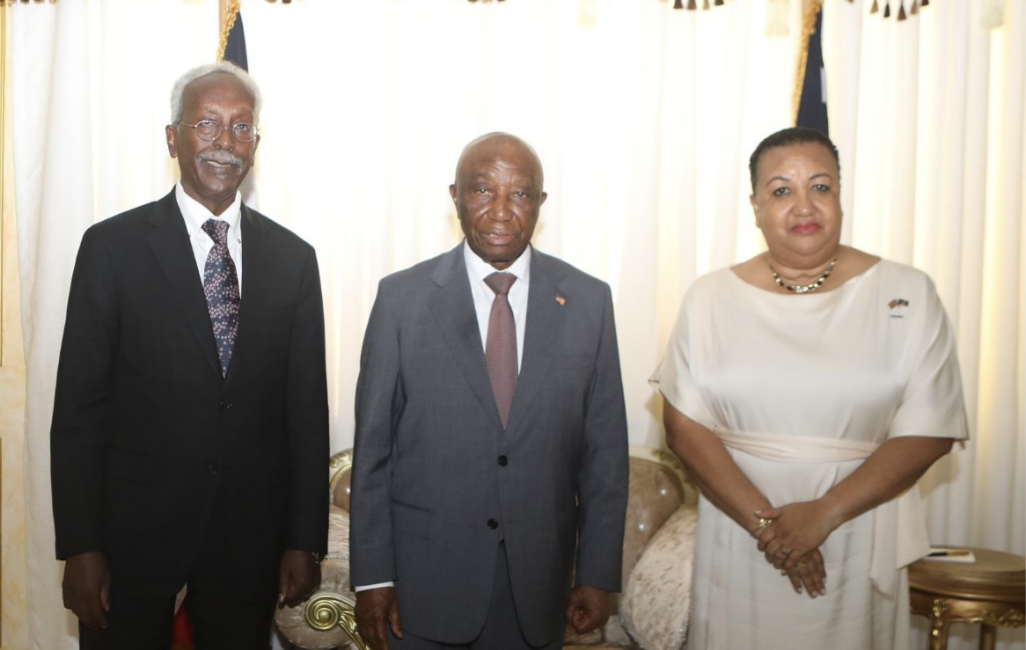
According to Jeanine Cooper, Presidential Envoy for Climate Action and CEO of the Authority:
“Through its Carbon Initiative, Liberia expands its emerging carbon markets framework to channel resources towards local priorities and urgent climate challenges.”
The country thus joins a still limited circle of African pioneers, following Djibouti (2023) and Gabon (2025). This dynamic is in line with President Joseph Nyumah Boakai‘s vision, committed to promoting sustainable prosperity based on innovative mechanisms.
These initiatives are overseen by the African Sovereign Carbon Registry Foundation, supported by the African Union, which works towards harmonizing standards and ensuring the credibility of mechanisms.
International transparency standards
The Liberia National Carbon Emissions Registry is designed to comply with international standards, including those of the International Maritime Organization and the International Civil Aviation Organization. It will rely on independent verification and certification processes. According to Mahmoud Ali Youssouf, Chair of the African Union Commission: “The African Union is fully committed to supporting Sovereign Carbon Initiatives to advance concrete and sovereign climate solutions.”
As a reminder, African pioneers in this field such as Djibouti (since 2023) and Gabon (in 2025) have already demonstrated the feasibility of these sovereign mechanisms by structuring credible national registries, attracting international technical partners, and mobilizing funding for forest protection, clean energy, and sustainable infrastructure.
Their experience has garnered a generally positive international response, marked by growing interest from donors, multilateral institutions, and climate investors, who see these African mechanisms as an emerging model of credible, sovereign climate financing aligned with global standards.

