



By Jean Charles Biyo’o Ella
In the East of Cameroon, classrooms are emptying while rivers are filling up with children in search of gold. Between the hope of quick wealth and poverty, the future is sacrificed on the altar of gold mining.
“We did not receive any students this year in CM2. They have all deserted to go look for gold in the mines,” testifies Adamou Oumarou Théophile. With a heavy heart, the teacher and director of the public school in Zamboi, 45 km from Garoua-Boulaï, recounts the reality of his students in this village surrounded by several gold mining sites.
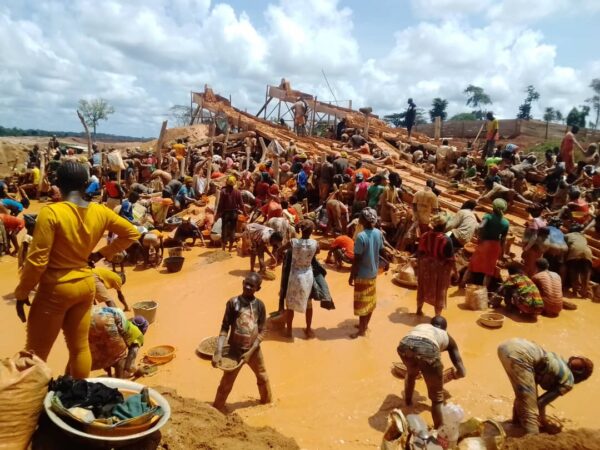
“Look for yourself how empty the classrooms are. There is no one,” he laments. “If you go to the mine on the other side of the village, you will find them there. With their parents, digging in the mud.” At the start of the 2025 school year, the school had an enrollment of about 200 students. One trimester later, it had emptied of almost all of them.
Civil-military actions of the BIR
Bordering the Central African Republic (CAR) via the Kadey River, the locality of Zamboi experienced incursions related to the conflict between the Séléka and Anti-Balaka groups between 2013 and 2015. To curb kidnappings with ransom demands, the BIR (Rapid Intervention Battalion) established a base on the border line and carried out social actions. The primary school in the village was renovated and equipped with materials. But this social curtain was quickly caught up by another reality: the silence of the playground.
Every morning, Adamou Oumarou Théophile opens the school doors, hoping that children will finally cross the classroom threshold. But the courtyard remains empty. The benches are cold and silent.
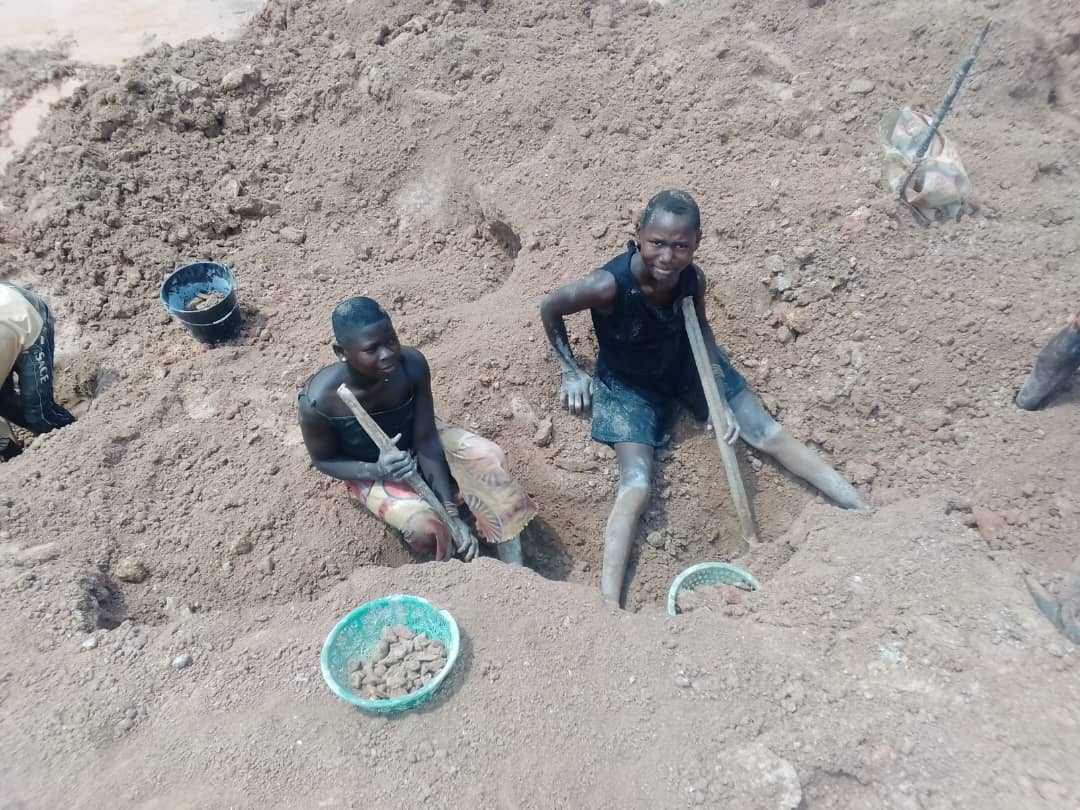
The children, either forced or seduced by the illusion of easy wealth, abandon their books for picks and buckets of muddy earth.
“I sometimes see them passing by here on their way with their parents to the gold mine. When they see me, they look away. For nearly ten years, I have been educating them on the importance of school. But at some point, you get a little tired. Especially when you are faced with deaf interlocutors, people who refuse to listen or face the truth, blinded by the crumbs they get from the mine.”
Poor families trapped in poverty
In the mining localities of Cameroon, some poor families consider sacrificing education as necessary. But at what cost? wonders a son from the East region and an elite of the locality of Garoua-Boulaï.
He points out that every speck of gold collected by a miner is indeed a victory, but a bitter victory in the face of stolen education.
“Teachers in our localities often find themselves powerless against innocent children and parents who don’t understand much,” he analyzes.
“When I see their notebooks abandoned in the dust, I feel a deep despair… These children are selling their future for a few scraps of metal. Gold mining is not just a theft of education, it is also a permanent danger,” sighs our interlocutor.
This reality is not limited to Zamboi. In several mining localities in the East region, schools are gradually losing their students. At the mining site of Kambele in the Batouri district, statistics reported by Sonamines show that out of 580 students enrolled in 2023 at the start of the school year, only 263 remained until the end of the year. 317 learners dropped out. For some parents met at the Kambele site, “the future of the school is uncertain while gold mining is tangible.” In other words, explains Olivier, met in an artisanal pool with a miner under 15 years old, “a child miner is assured of earning an average of 5,000 CFA francs per day when at the site. If he doesn’t have the strength to dig, he can help an adult wash the mud in the pool. He can also wash the carpet or do other small tasks. Which he wouldn’t have had if he had spent a day at school.” However, this statement is nuanced by the testimony of Fifi, a 13-year-old girl. “My mother came to leave me with my aunt to go to school. But since my aunt is pregnant, I left school to accompany her here to wash the mud to look for money,” confesses the girl. But faced with the gaze of her parent, she falls silent and bursts into tears.
If environmental NGOs, notably the Center for the Environment and Development (CED) and Forests and Rural Development (FODER), denounce this cruel cycle of children deprived of education, exploited by poverty and the thirst for gold, the responses are slow to take effect.
“Zero child in the mine”
One of these responses came from the National Mining Company (Sonamines). In 2021, this operational arm of the state in the mining sector launched the “Zero child in the mine” operation. The initiative aims to remove children from mining sites and reintegrate them into the school system.
But in the field, the results remain mixed. According to Sonamines, one of the important steps is still the fight against poverty, but also the irresponsibility, even the resignation of some parents.
Despite awareness campaigns and alerts from authorities, the rivers and abandoned pits continue to call. “The fight is daily, exhausting and sometimes despairing,” explains a source within Sonamines. While praising “the efforts made so far by the institution,” she believes that “the hardest part is yet to come, namely convincing the parents.” Because, explains our source, “every new mining site discovered takes away more students from the classrooms.”
READ ALSO. Cameroon: Gold mining causes a climate crisis in the East of the country

