



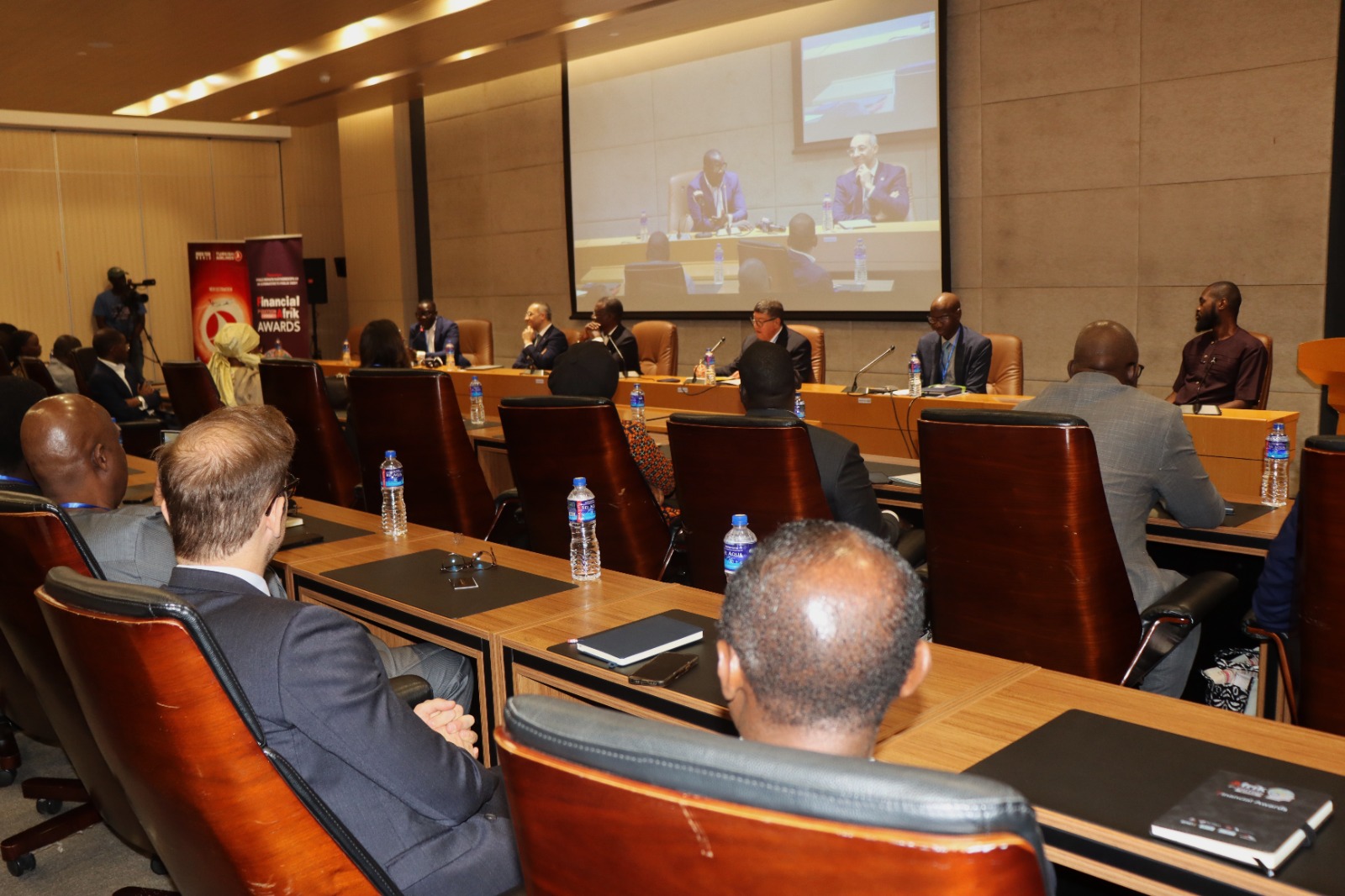
Facing the rapid increase in public debt and the tightening of international financing conditions, public-private partnerships (PPPs) are increasingly emerging as a strategic solution for African states in search of sustainable financing, if well structured. The topic was at the heart of a panel organized on Thursday, January 22 as part of the 7th edition of the Financial Afrik Awards taking place in Banjul, Gambia.
Bringing together public decision-makers, financial experts, and private sector actors, this meeting explored alternatives to traditional borrowing, in an economic context marked by growing budget constraints for many African countries.
In several African economies, public debt has reached worrying levels. The rise in interest rates, the scarcity of concessional financing, and the volatility of international markets reduce the states’ ability to finance their strategic infrastructure alone. Yet, the needs remain immense in key sectors such as transportation, energy, water, and telecommunications.
Panel participants, including Senegalese Pierre Goudiaby Atepa, emphasized that the systematic use of public debt is no longer sustainable in the medium term. In this context, public-private partnerships appear as a pragmatic alternative, mobilizing private capital while limiting the immediate impact on public finances.
PPP, a risk-sharing mechanism
The principle of PPPs is based on a structured collaboration between the State and the private sector. The public sector defines strategic priorities, ensures the regulatory framework, and safeguards the public interest, while the private sector provides financing, technical expertise, and management capabilities.
According to the panelists gathered at the Financial Afrik Awards, this model promotes better risk allocation and can contribute to more efficient project execution. It also allows for the benefit of private sector innovation and expertise, while accelerating the realization of essential infrastructure for economic development.
However, the discussions warned against an idealized view of PPPs. Their success heavily depends on the quality of governance, contractual transparency, and the existence of strong legal frameworks. Poorly regulated, these partnerships can generate long-term financial commitments comparable to hidden debt.
The strengthening of public administration capacities, particularly in negotiation and contract monitoring, was identified as a key issue to ensure the effectiveness and sustainability of these projects.
In conclusion, panel participants believed that well-structured public-private partnerships constitute a strategic lever to finance development, support growth, and reduce excessive dependence on public debt.
READ ALSO: Banjul hosts the 7th edition of the Financial Afrik Awards on the theme “Public-private partnerships as an alternative to public debt”

