



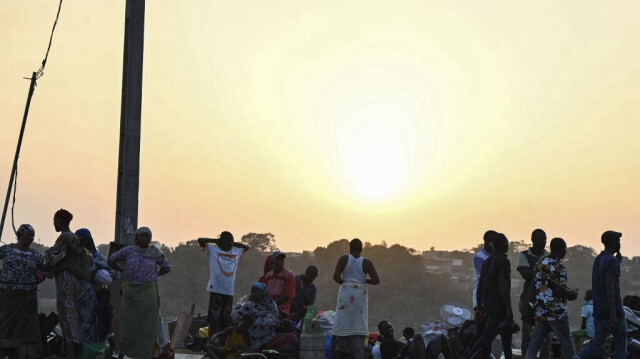
Ivory Coast has been facing an intense heatwave since the end of February 2026, covering the entire national territory. The Airport, Aeronautics and Meteorology Development and Exploitation Company (SODEXAM) officially alerted the press on March 9 about the persistence of this phenomenon, expected to last until the end of March, a period traditionally corresponding to the country’s annual heat peak. Beyond the immediate discomfort for the population, this exceptional weather episode exposes strategic economic sectors to significant operational tensions.
The explanation for this heat peak lies in an early and direct exposure to solar radiation, characteristic of the dry season towards the end of its cycle. This energy flow hits the Ivorian soil with an intensity above normal levels. The phenomenon is amplified in the Northern and Central regions by the presence of the harmattan, a continental dry wind that increases air aridity and worsens living and working conditions on the ground.
The readings recorded in these areas far exceed the climatic norms of the reference period 1991-2020, with temperatures ranging between 35°C and 39°C. This thermal anomaly occurs precisely at the time when the 2026 cashew marketing campaign is opening, with the farmgate price just set at 400 CFA francs per kilogram. As the world’s leading exporter of raw cashew nuts with a record production of 1.55 million tons during the 2025 campaign, Ivory Coast cannot afford a deterioration of collection and drying conditions in a sector that generates 15% of the country’s agricultural export revenues and directly supports around 800,000 families. The current water and heat stress affecting cashew orchards in the North of the country – the epicenter of production – is likely to affect the quality of nuts for export, at a time when global prices remain under pressure.
Beyond agriculture, the high heat mechanically stimulates the demand for electrical energy related to cooling, further straining a national grid already under pressure. The decrease in river flow, induced by accelerated evaporation and concomitant rainfall deficit, impacts the Ivorian dams’ hydroelectric production, which provides a significant portion of the national energy mix. This double effect represents a risk factor for the stability of electricity supply, with direct repercussions on industry, commerce, and households.
Faced with these cumulative risks, SODEXAM calls for rigorous management of water resources and adaptation of outdoor work schedules. For economic operators in the agricultural and energy sectors, the current episode illustrates the need to integrate climate resilience as a structural variable in business plans, at a time when West Africa is facing a documented intensification of extreme heat events.

