



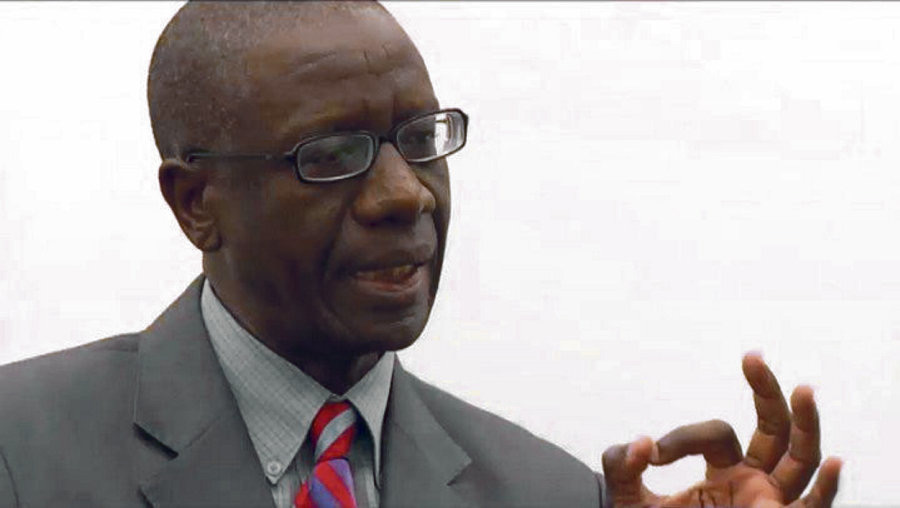
By Demba Moussa Dembélé
Since the discovery of the hidden debt left by the regime of Macky Sall, Senegal has been caught between the International Monetary Fund (IMF) and major Western rating agencies. This has resulted in the suspension of disbursements from the IMF and the downgrading of the country’s sovereign rating. To loosen the grip, some “experts” claim that the regime has no choice but to sign an agreement with the IMF, which calls for the restructuring of the country’s external debt.
Negotiating with the IMF: At What Cost?
But it’s not just the “experts” who think this way. Some members of the government also believe so. This is notably the case of the Minister of Finance and Budget, Mr. Cheikh Diba, who emphasized in Le Soleil of June 30, 2025 (page 5) that “the most important thing is to normalize our relations with the IMF.” And he adds, “there are principles in financial and budgetary governance, and the Fund ensures that these principles are not violated by States… There is a very serious, very difficult, and very rigorous work being done with the International Monetary Fund.“
This statement raises several questions. What have these “principles” served in the past? Is Mr. Diba suggesting that these “principles” were not correctly applied by the regime of Macky Sall, given his disastrous management of public finances? And why would the current government need the IMF to apply the principles of “good governance” in financial and budgetary matters?
On August 27, 2025, at the end of its visit, the IMF mission had issued a statement proposing to negotiate with Senegal for an “ambitious reform program.” Does this mean that past programs were not “ambitious”? Apparently, this proposal did not impress the Senegalese government, which continues to refuse an agreement with the IMF that would challenge its economic and social recovery agenda unveiled in August 2025.
Evaluating the IMF’s Interventions in Senegal
“Ambitious” or not, IMF programs have always plunged the country into crisis and reinforced its external dependency. It is worth recalling that the Structural Adjustment Programs (SAPs), imposed on Senegal in the early 1980s by the IMF and the World Bank, had finished dismantling most of the gains made by the country during its first two decades of independence. Senegal, it was said, was among the “best students” in implementing policies dictated by these two institutions. After 20 years in their “class,” it ended up joining the group of “Least Developed Countries” (LDCs), i.e., the “poorest” countries, according to the United Nations.
After the destruction caused by SAPs, the era of “Poverty Reduction Strategy Papers” (PRSPs) was inaugurated. With these papers, the World Bank and the IMF replaced “poverty reduction” with development. And African governments were once again caught up in this neoliberal bandwagon that led them into a dead end. The more they talked about “poverty reduction,” the more poverty spread and worsened.
It was in this context that the Economic Policy Support Instrument (EPSI) was introduced in 2005. It is an economic program dictated by the IMF to a country, with or without financing. Once approved, this program signals to donors and financial markets the “credibility” of the economic policies of the country in question. Senegal was one of the first “Francophone” countries to sign an EPSI with the IMF.
As part of the “Emerging Senegal Plan” (PSE), Senegal signed an EPSI in June 2015. This served as a reference in the relations between the regime and its “partners” for almost the entire duration of Macky Sall’s first term. But obviously, neither the EPSI nor the other agreements signed with the IMF contributed to the “emergence” of the country.
However, supporters of collaboration with the IMF find these agreements useful because they allow for obtaining financing either from the IMF itself or from other donors. But this financing is a respite, sometimes temporary, which reinforces the IMF’s tutelage, before the next crisis and the negotiation of a new program! This creates a vicious circle that allows the IMF and creditors to control Senegal’s economic policies and further plunge it into debt. One then wonders why those urging the government to sign with the IMF do not question the track record of 45 years of its intervention.
Reassuring Markets or Senegalese People?
In their view, an agreement with the IMF is necessary to “reassure the markets” and the technical and financial “partners” in order to allow Senegal to borrow again. This is the language of people conditioned to repeat, like parrots, the agreed neoliberal discourse. Here again, one wonders if the “experts” question the track record of such policies. For decades, Senegal has continued to “reassure” both public and private donors. But with what results? An increasingly unsustainable external debt, but also the reinforcement of an export-oriented growth model based on raw material exports. It was precisely in trying to “reassure” financial markets to preserve “the quality of its signature” that Macky Sall’s regime embarked on a path that led to hidden debt, with the complicity of the IMF!
The debt restructuring advocated by the IMF and “experts” is a long and complex process that costs the indebted country dearly. An illustration is provided by Ethiopia. According to Financial Afrik, it took 5 years of laborious and difficult negotiations to reach the signing of the first agreement between Ethiopia and France, one of its bilateral creditors within the G20 Common Framework for Debt Negotiation. This example confirms the observation of the Ndiaye-Kessler Report that “The debt restructuring system has proven to be ineffective and complex, resulting in lengthy processes that largely exclude countries from international credit.” Especially since a true restructuring in the case of Senegal should involve private creditors, given that private debt accounts for approximately 40% of the country’s external debt. But the experience of the G20 Debt Service Suspension Initiative, to combat the effects of Covid-19, was a failure, partly due to the refusal of private creditors to participate. In fact, they only participated to the extent of… 0.2%, according to the NGO Debt Justice (UK). Senegal, which had high hopes for this Initiative, only obtained crumbs. In fact, in the press release issued on June 11, 2020, by the Ministry of Finance and Budget, it reads: “Senegal’s participation in the Debt Service Suspension Initiative [DSSI] will materialize by suspending the payment of principal and interest due to all creditors of the official bilateral sector until December 31, 2020, for an amount of 90.5 billion CFA francs (137 million euros) between June 1, 2020, and the end of the year, representing 13.51% of the external debt service due in 2020.“
The examples of Senegal and Ethiopia show that in reality, the “solutions” proposed by creditors, through restructuring or any other means, never meet the demands of indebted countries, which risk falling further into dependence and under the control of their creditors. In the current context of Senegal, restructuring would go against the new government’s desire to break free from the IMF’s and private creditors’ tutelage. This is undoubtedly one of the reasons for the government’s refusal to accept this solution. The current regime was elected to pursue policies different from those of the previous regime. Therefore, it must avoid going down the same path and strive to implement policies aimed at reassuring the Senegalese population rather than financial markets.
It is in this perspective that we should view the Economic and Social Recovery Plan (PRES) presented at the beginning of August 2025 by Prime Minister Ousmane Sonko. According to him, “the objective of the recovery phase of Vision 2050 is to definitively shift from an old model to a new model, a prerequisite for impetus and acceleration.” However, the IMF is one of the pillars of this “old model,” bankrupt and discredited!
Conclusion
The deadlock in discussions between the IMF and the Senegalese government seems to indicate that the latter is seeking to break free from dependence on external creditors. This explains the refusal to succumb to the pressure from “partners” and “experts” urging it to “reassure the markets” by accepting the IMF’s neoliberal prescriptions.
By refusing the restructuring of the country’s external debt, Prime Minister Ousmane Sonko aims to avoid the trap in which the IMF and other creditors seek to ensnare Senegal. This would contradict the financing strategy of the Economic and Social Recovery Plan, based on mobilizing endogenous resources. Indeed, Mr. Sonko has stated repeatedly that Senegal’s development will not be achieved through the IMF or other “partners.” Endogenous resources are the main source of financing the country’s development. This is the path to follow. It is a difficult path, certainly, but it is the path of sovereignty, which entails costs and even sacrifices.

