



The African insurance sector must strengthen its contribution to financing the continent’s economies.
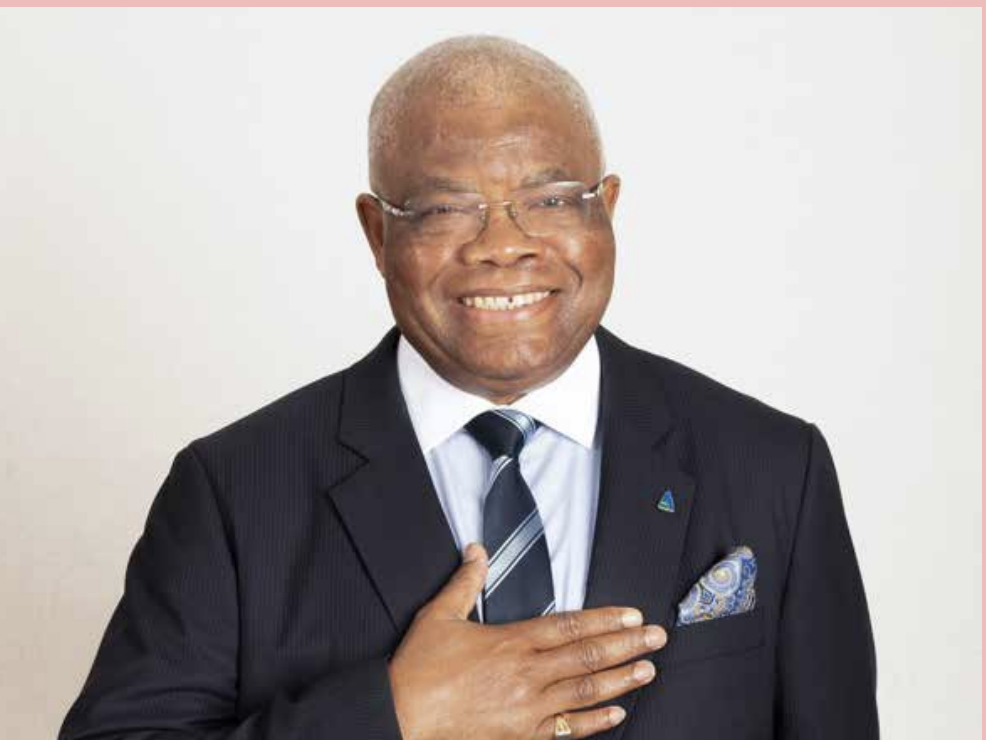
As a key player in the pan-African insurance architecture, the ACTIVA Group has established itself, in just over two decades, as one of the few African champions capable of combining financial strength, strategic discipline, and market intelligence. At the helm, founder and president Richard Lowe embodies this unique trajectory where vision precedes expansion and growth is based on a keen understanding of the continent’s economic dynamics. Present in many countries, ACTIVA has built its footprint on a demanding promise: to sustainably support African economies while providing tailored solutions to businesses and individuals in complex and evolving environments. In this exclusive interview, Richard Lowe reflects on the founding moments of the Group, analyzes the ongoing changes in the African insurance market, identifies blind spots and structural resistances, and presents, without fanfare, his strategic outlook for the next decade. He also outlines the pivotal role that pan-African players are called upon to play in the integration, standardization, and ultimately, the upgrading of insurance markets on the continent.
Interview conducted by Dominique MABIKA
What were the key milestones in the construction and expansion of the ACTIVA Group in Africa?
The ACTIVA Group was founded in 1998 with a clear ambition: to build a pan-African network capable of supporting multinational companies operating in Africa while offering individuals insurance solutions tailored to their specific needs. Our vision is to “make the ACTIVA Group a super-performing company in a borderless Africa, thanks to a customer-oriented organization, the mobilization of staff intelligence, and the efficient use of technology.” A key milestone was, from the early years, our determination to establish the Group’s reputation on strict adherence to our commitments, particularly in claims settlement. We early on placed the customer at the center of our concerns, through our signature “Passionately Clients,” which remains a fundamental pillar of our culture today.
This requirement for rigor and transparency translated, starting in 2009, into our voluntary submission to international financial ratings, and then, from 2011, by obtaining ISO certifications. These initiatives have contributed to strengthening the Group’s credibility with our partners, clients, and regulators. Another structuring milestone was the partnership established in 2013 with the International Finance Corporation (IFC), a World Bank subsidiary dedicated to the private sector. This partnership was a real accelerator of our international development, a dynamic that was reinforced in 2016 by PROPARCO joining us.
Finally, the Group’s structuring continued with the creation of ACTIVA Re, our reinsurance captive, aimed at optimizing and coordinating the reinsurance programs of our subsidiaries, as well as the more recent establishment of ATS – Africa Technologies Services. This technological subsidiary is tasked with supporting the Group’s digital transformation and providing all our entities with modern technological infrastructures to remain at the forefront of innovation sustainably.
How do you assess the evolution of the African insurance market since your early days in the sector?
The African insurance market still remains relatively marginal on a global scale today, representing about 1.5% to 2% of the sector’s global turnover. However, it is worth noting that for nearly fifteen years, it has been one of the regions with the most sustained growth rates in the world. This progress has been made in contexts sometimes marked by socio-political instabilities, without compromising the growth dynamics observed in the majority of our operating countries. More globally, Africa has positioned itself as the second global area in terms of sector growth over this period.
Regulation-wise, we observe an increasing involvement of regulatory authorities, with a strong desire to strengthen the market’s solidity, limit excessive reliance on external reinsurance, and promote a better contribution of the insurance sector to financing African economies. On the actors’ side, the market is experiencing a gradual professionalization, notably marked by the emergence of structured, solid, and ambitious regional African groups capable of carrying a long-term vision for the sector’s development on the continent.
In your opinion, what are the main barriers to insurance penetration in Africa today?
Insurance penetration in Africa remains low today, around 2%. The challenge for the sector is to support an increase in this rate to around 5% by 2030, provided that certain structural barriers are overcome. The first challenge lies in strengthening the professionalism of insurance companies, particularly in terms of commitment, ethics, and service quality. Regulation also plays a key role. An approach more oriented towards synergy with market players would accelerate sector development, notably through the extension of compulsory insurance, the transfer of certain risks currently borne by states to insurance, as well as a thorough reflection on other structuring mechanisms.
Furthermore, fiscal developments are an important lever, especially to stimulate the development of life insurance. Lastly, insurance companies must continue their innovation efforts, fully leveraging the opportunities offered by digitalization, artificial intelligence, and new technologies, while accelerating the deployment of microinsurance and inclusive insurance solutions better suited to African socio-economic realities.
What is your strategic vision for ACTIVA over the next ten years?
Our ambition for the next ten years is to make the ACTIVA Group even more financially solid, capable of enduringly establishing itself among the leading African insurance groups of reference. This ambition is based on several essential pillars. It involves continuing to invest in the quality of our human capital, a true driver of the Group’s performance. It also relies on strengthening our technological infrastructure to support innovation, the digitalization of our processes, and an ever smoother and more efficient customer experience. The customer will remain, more than ever, at the heart of our strategy. Added to this is the reinforcement of our commitment to social responsibility through the ACTIVA Foundation, created over twelve years ago and called upon to play an even more structuring role in our community actions. This entire vision is supported by governance that we aim to make even more robust and in line with the best international standards.
What role can ACTIVA play in the integration and harmonization of African insurance markets?
ACTIVA already contributes concretely to the integration of African insurance markets, notably through the GLOBUS Network, which we created about eighteen years ago and which is now the largest insurance network on the continent, with members present in around fifty countries. Beyond this initiative, we believe that the African insurance sector must strengthen its contribution to financing the continent’s economies. This notably involves better organization of internal reinsurance mechanisms through national, regional, and pan-African pools, allowing a larger portion of premiums collected in Africa to be retained locally. However, this dynamic cannot succeed without close collaboration between market players and public authorities. Authorities have a key role to play, particularly through appropriate fiscal measures and the extension of certain compulsory insurances, to create an environment conducive to the sustainable development of the sector.

