



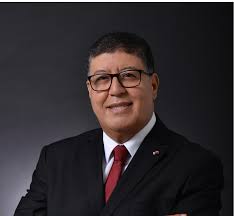
By Dr. Mohamed H’Midouche – International Consultant, former senior executive of the African Development Bank
Long confined to a regional niche, sukuk has become a major instrument for infrastructure financing in Asia and the Gulf. In Africa, despite colossal needs, its use remains marginal. Not because of a lack of projects, but because of insufficient legal structuring. At a time when PPPs are seeking a second wind, sukuk could well become the catalyst for a new discipline in public financing.
For two decades, Africa has financed its infrastructure mainly through sovereign debt, concessional loans, guaranteed bilateral financing, and PPPs backed by bank debt. These mechanisms have delivered visible progress, but they have also revealed their limits: debt accumulation, frequent contract renegotiations, incomplete risk transfer, and weak mobilization of long-term savings. In this context, the question is no longer only to build more, but to finance differently. It is precisely in this space that sukuk, combined with public-private partnerships, finds its full relevance.
As Africa’s infrastructure needs far exceed the fiscal capacities of states, sukuk, combined with PPPs, stands out as a credible alternative to traditional financing. Yet this potential can only be fully exploited if African projects are legally structured to become genuine investable assets.
The African Paradox of Infrastructure Financing
For more than two decades, Africa has financed its infrastructure through a mix of sovereign debt, concessional loans, guaranteed bilateral financing, and PPPs relying mainly on bank debt. These mechanisms have enabled real progress, but they have also generated an accumulation of vulnerabilities: rapid debt growth, contractual renegotiations, dependence on donors, and limited transfer of real economic risk.
In this context, the issue is no longer simply to build, but to finance sustainably. It is precisely on this ground that sukuk, backed by real assets, introduces a conceptual break.
Sukuk: Financing an Asset, Not a Debt
Unlike conventional bonds, sukuk does not represent a simple claim on the issuer. It grants investors an economic right over a real asset, a usufruct, or a cash flow generated by an identifiable project. This distinction is fundamental: it transforms the relationship between investors and projects. In traditional bond financing, investors are exposed to the credit risk of the state or the concessionaire. In sukuk, they are exposed to the economic performance of a legally framed asset. Financing is no longer merely contractual; it becomes structurally anchored in the real economy.
This logic enhances fund traceability, limits undifferentiated budgetary uses, and imposes discipline in project selection, structuring, and monitoring. For African infrastructure, this requirement represents a decisive advantage.
Sukuk does not eliminate risk, but it makes it more readable, more shareable, and more governable.
Underlying Contractual Structures
The main sukuk legal instruments deserve to be clearly defined.
Ijara is a lease contract. Investors hold an economic right over a given asset and receive rental payments. In infrastructure, Ijara is generally used to finance an asset that has already been built or placed in service.
Istisna’a is a construction contract. It allows financing of an asset based on precise contractual specifications. In infrastructure projects, it covers the construction phase before being followed by an Ijara during the operational phase.
Wakala is a management mandate. Investors entrust an agent with the management of assets or economic flows under predefined rules, offering great flexibility in complex structures.
Hybrid structures combine these contracts in order to reflect the real life cycle of a PPP project, from construction to operation, while ensuring legal and financial continuity.
Sukuk is therefore based on several legal contracts that determine the economic nature of investors’ rights.
Ijara relies on leasing an asset or a right of use, generating regular rental income. Istisna’a finances the construction of an asset according to contractual specifications, often followed by an Ijara during the operating phase. Wakala organises a management mandate entrusted to an agent.
Hybrid structures combine these mechanisms to reflect the reality of PPP projects, between construction, commissioning, and operation.
These structures offer great flexibility but require rigorous contractual drafting, compatible with national law, Sharia principles, and international standards.
A Global Market That Has Become Systemic
At the global level, Islamic finance has reached critical mass. Assets exceed USD 4.9 trillion. Outstanding sukuk crossed the symbolic threshold of USD 1 trillion in 2024, while annual issuances exceeded USD 300 billion in 2025.
These figures confirm that sukuk is now a fully integrated instrument in international capital markets.
By contrast, Africa remains marginal, with around USD 3 billion in recent annual issuances. This contrast reflects a deficit in legal and institutional structuring rather than a lack of needs.
This gap does not indicate a lack of opportunity, but a deficit in legal and institutional project preparation.
African Countries Using Sukuk
Contrary to a still widespread belief, sukuk is not foreign to Africa. Several countries have already taken the step, with different approaches and objectives, but with one common observation: sukuk makes it possible to diversify financing sources and broaden the investor base.
Morocco paved the way in North Africa with a domestic sovereign Ijara sukuk in 2018, aimed at structuring the participatory finance ecosystem and creating a benchmark yield curve for the local market.
Egypt marked a major milestone in 2023 with its first international sovereign sukuk issuance of USD 1.5 billion, largely oversubscribed. This operation confirmed the appetite of Gulf and Asian investors for African signatures when the legal framework is secure.
In West Africa, Nigeria has emerged as the most active country, with several successive domestic issuances dedicated to financing federal roads. Sukuk has become an operational infrastructure policy instrument rather than a simple financial product.
Senegal integrated sukuk into its sovereign financing strategy with an issuance of CFAF 330 billion, confirming the compatibility of this instrument with UEMOA markets. Côte d’Ivoire and Togo also used regional sukuk to diversify their financing sources.
South Africa, as early as 2014, had already issued a USD 500 million international sovereign sukuk, mainly to broaden its investor base and assert its presence in Islamic capital markets.
Overall, the projects financed mainly concern roads, administrative buildings, public facilities, social infrastructure, and in some cases energy projects.
These experiences show that sukuk is fully applicable in the African context. They also show that its development remains fragmented, due to a lack of legal harmonisation, contractual standardisation, and dissemination of financial engineering expertise.
The challenge for Africa is therefore no longer to prove that sukuk is possible, but to move from isolated experiences to a genuine continental infrastructure financing strategy.
Why Sukuk Strengthens the PPP Model
Compared with traditional PPP financing schemes, sukuk brings three major improvements. It strengthens asset traceability, diversifies the investor base, and imposes stronger contractual discipline.
A sukuk-financeable project is generally a better-structured, better-governed, and more credible project in the long term.
Legal Structuring: The Invisible Asset
A sukuk PPP rests on three inseparable pillars: the PPP contract, the special purpose vehicle (SPV), and Islamic contracts. Each plays a specific role, but it is their coherence that determines the project’s bankability.
The PPP contract constitutes the project’s matrix. It defines risk allocation, performance obligations, payment mechanisms, termination clauses, and compensation formulas. In a sukuk PPP, this contract becomes an indirect financial asset because it directly conditions the stability of cash flows used to remunerate investors.
The SPV represents the legal enclosure of the project. It isolates assets, contracts, and cash flows from the rest of the public or private balance sheet. It receives economic rights, channels cash flows, and ensures investor protection. Without a robust SPV, there is neither risk isolation nor financial credibility.
Islamic contracts – Ijara, Istisna’a, Wakala, or hybrid structures – ensure Sharia compliance, but above all the legal translation of the economic relationship between the asset and the investor. They define the exact nature of the right held: right of use, right to a cash flow, or management right.
In a sukuk PPP, these three pillars do not operate independently. They form an integrated contractual system. When this alignment is ensured, the project becomes legally bankable. When it is not, even a technically sound project becomes financially unviable.
Ten Legal Reforms to Make African PPPs Sukuk-Compatible
For sukuk to become a structuring instrument of African PPP financing, it is not enough to mobilize financial engineering. What matters most is the legal and institutional architecture of projects.
- Fiscal neutrality of sukuk: ensure the absence of double taxation when transferring assets or rights of use.
- Legal recognition of economic ownership: enable a clear separation between legal title and economic rights.
- A secure framework for SPVs: guarantee their governance, risk ring-fencing, and treatment in insolvency situations.
- Standardisation of PPP contracts: incorporate clauses compatible with sukuk investors’ requirements.
- A modern and enforceable security regime: allow the swift registration and enforcement of guarantees.
- Systematic direct agreements: contractually organize the relationship between the public authority, the concessionaire, and investors.
- Clear termination-compensation mechanisms: define predictable, bankable formulas for compensation in case of termination.
- Explicit recognition of Islamic contracts: legally recognize Ijara, Istisna’a, Wakala and hybrid structures.
- Enforceable international arbitration: ensure effective recognition and enforcement of arbitral awards.
- Credible institutional Sharia governance: establish recognized, independent Sharia oversight arrangements.
Conclusion: Making Law the New Infrastructure
Africa does not lack infrastructure projects; it still lacks projects that are legally and financially prepared for investment. As long as infrastructure is mainly conceived as a technical object rather than as a structured contractual asset, financing will remain fragile and dependent on public guarantees.
Sukuk, integrated into legally robust PPPs, offers a pragmatic response to this weakness. It strengthens contractual discipline, improves asset traceability, and broadens the investor base, while reconnecting finance with the real economy. It does not replace other instruments, but it compels them to greater rigor.
In a global context where sukuk markets have reached critical mass, Africa has a significant catch-up potential. This catch-up will require modernization of legal frameworks, standardisation of PPP contracts, and professionalization of investment structuring.
Ultimately, the question is not whether Africa should resort to sukuk, but whether it is ready to transform its projects into legally investable assets. It is on this discreet yet decisive terrain that the future credibility of African infrastructure financing will be determined.
Sources :
- LSEG–ICD, Islamic Finance Development Indicator 2024–2025;
- Fitch Ratings, Global Sukuk Market Monitor 2026;
- S&P Global Ratings, Africa and Sukuk Market Review 2024;
- Islamic Financial Services Board, Stability Report 2025;
- World Bank / IsDB, Islamic Finance and Infrastructure 2025;
- Nigerian DMO, Sovereign Sukuk Program Reports;
- South African National Treasury, Sukuk Statement;
- IMF, Senegal Selected Issues 2023.

