



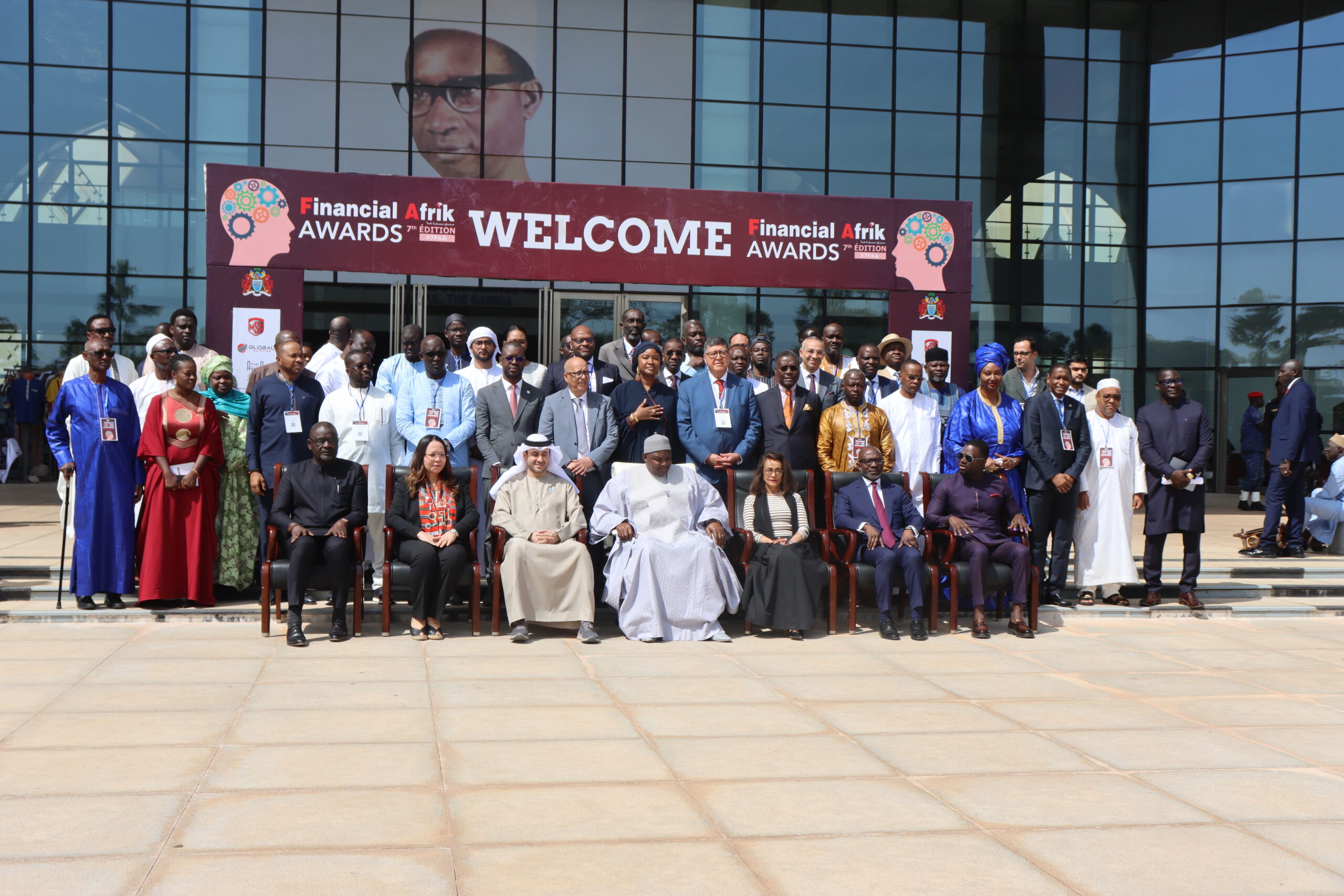
Successful review for public-private partnerships (PPPs). Unanimously, they have just been [once again] recognized as “a development tool for Africa” but also “an instrument to fight hidden public debts”. This impression emerged from the interventions of the panelists who, on January 23, 2026 in Banjul, Gambia, focused on the central theme of the 7th edition of the Financial Afrik Awards (7FAA): “Public Private Partnerships as an alternative to public debt in Africa”.
After setting the stage, the CEO of Global Mind, Seynabou Dia, gave the floor to the Special Advisor to the President of the West African Development Bank (BOAD), Ibrahima Diouf. He discussed “PPPs, a strategic subject that requires significant financing”. For him, “this type of financing has the advantage of combining the needs of States to borrow at low rates and the expertise of the private sector in carrying out large projects”. In this context, the representative of the BOAD president emphasized the important role played by development banks in this partnership.
On the other hand, Ebrima Sawaneh, CFO & COO of ARISE IIP, focused on the financing conditions of a project based on a PPP. “Thus, he indicated, it is important to establish a legal framework that guarantees transparency in the management of funds made available, to emphasize the bankability of the project but especially its impacts on the community hosting it”. To illustrate his point, Ebrima Sawaneh referred to the experience of the Special Economic Zone (ZES) in Libreville, Gabon, supported by ARISE IIP. “The employment provided to 12,000 people on this site demonstrates the project’s impact on the local populations,” he said.
Responding to a question about the best Gambian project funded through a PPP, the Minister of Commerce of the host country of the 7FAA, Mod K. Ceesay, mentioned “the digitalization of the national identity card production, insurance payment, and border control in the country”. He also highlighted the successful experience of managing the Port of Banjul by All Port, a Turkish company specializing in the field.
Amadou Thiam, Senior Regional Head of North, West and Central Africa at Shelter Afrique, focused on qualitative and quantitative data on housing in Africa and related needs, especially by 2050. According to him, “according to data from the Organisation for Economic Co-operation and Development (OECD), by 2050, 700 million Africans will move to cities on the continent. According to UN-Habitat, 60% of housing is in precarious condition”. As a result, he continued, “there is a gap of 50 million housing units requiring financing estimated at USD 1.2 trillion”. This requires “a credible and clear regulatory framework, reliable data, and the guarantee of establishing balanced partnerships between States and the private sector”.
According to Evelyne Denise Khady Ndiaye, Director of the private sector at the West African Economic and Monetary Union (UEMOA), “since 2012, PPPs have been a concern for our Heads of State and Government”. They have finally decided to “make PPPs a development tool”. They have matured over ten years despite difficulties related to project prefinancing. “It was necessary to balance this option with public debt”.
In summary, according to Seynabou Dia, states have made the overall choice to classify PPPs in the public procurement sector. However, she concluded, “for a better achievement of common objectives, these states have taken care to establish a legal arsenal that protects the private sector and promotes budget discipline to avoid hidden public debts”.

