



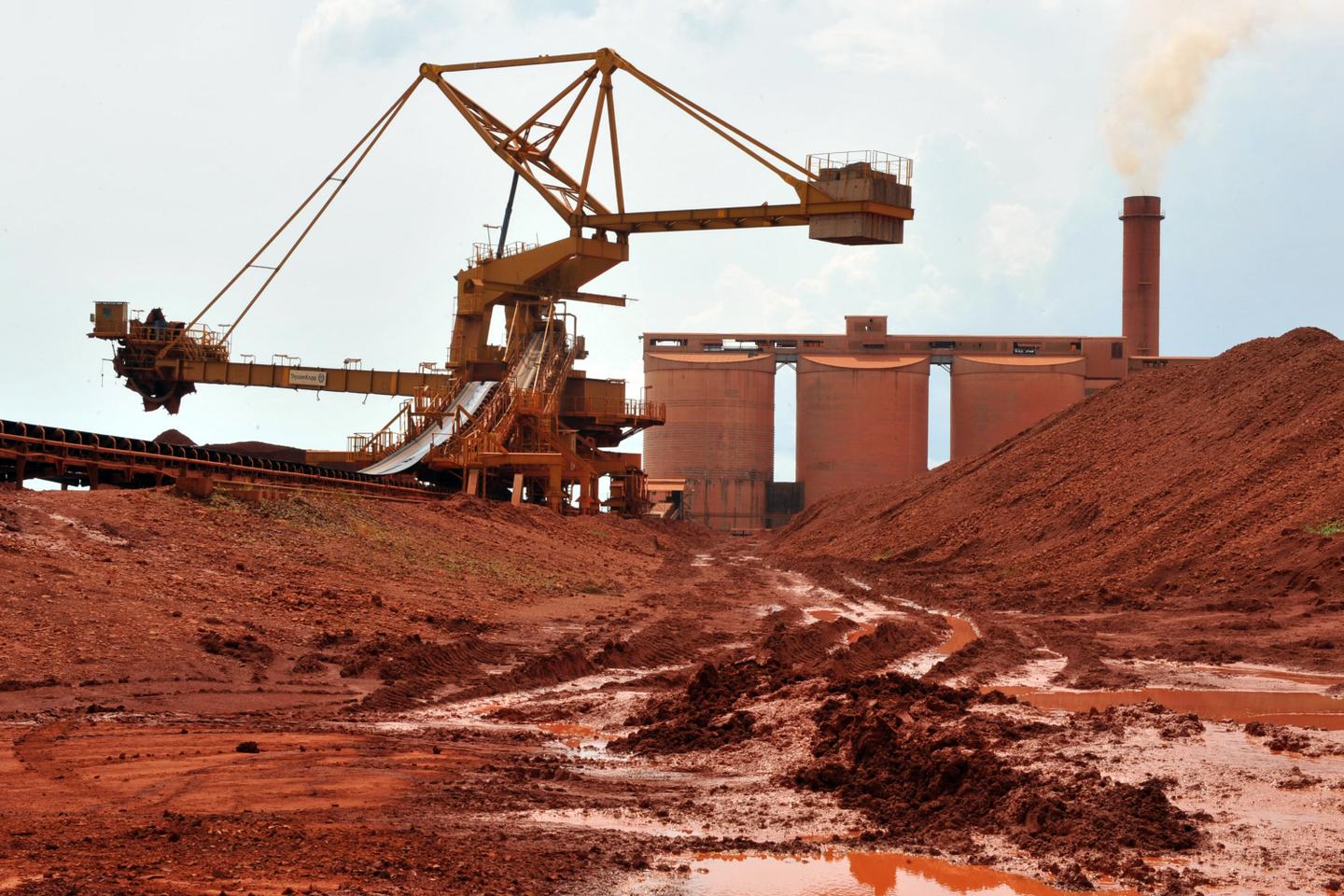
On Monday, December 29, several Guinean media outlets announced the resumption of bauxite activities by the company AGB2A-GIC in Boffa and Fria, on areas previously covered by the mining title held by Axis Mineral. Presented as a happy outcome after several months of suspension, the information was received with relief in the affected areas, to the point of leading to a Quran reading ceremony.
In a country where the revival of mining activity is seen as a crucial lever for employment, public revenues, and economic stability, this enthusiasm is not surprising. However, it does not erase the questions and unspoken issues raised by this resumption. Our colleagues at Africa Intelligence covered part of this last week.
Because the mining title that served as the legal basis for the entire project, the permit originally held by Axis Minerals, was revoked by the Guinean State and returned to the State’s assets. Therefore, on what basis can this resumption really take place today?
This question is all the more sensitive as the Guinean State is already involved in an international arbitration regarding the withdrawal of the initial title, with Axis Mineral’s claims amounting to 28.9 billion dollars.
A resumption announced in a climate of persistent tensions
This resumption comes in a context already marked by tensions among project partners. For several months, some actors have reported disagreements, governance difficulties, and social management fragilities. These elements are perceived by observers as vulnerability factors for the project.
Behind the announcement of a restart, a simple question arises that neither official statements nor media shortcuts can avoid: how to resume mining activity when the title that constituted its foundation has disappeared? How can an administrative authorization qualified as “provisional” be granted in the Guinean mining framework? What does Guinea gain in terms of local transformation? What impact on the ongoing procedure at the CRIEF? What about other ongoing disputes?
Otherwise, there is a risk of establishing an exceptional practice that could create a difficult precedent to regulate.
A still poorly explained provisional authorization
The article announcing the resumption was reassuring, indicating that “the general administrator of AGB2A-GIC, Ahmed Kanté, can finally smile” after obtaining authorization from the Ministry of Mines and Geology, allowing the resumption of extraction and export activities.
At this stage, however, no detailed official communication has clarified the legal basis, duration, or exact conditions of this authorization. Such clarification would reassure all concerned parties.
The period leading up to this resumption was also marked by significant institutional and media mobilization around the project. Without prejudging the intentions of the stakeholders, the timing of this mobilization and the granting of an exceptional authorization raise questions about the transparency of the decision-making process.
Questions about financial arrangements
According to several sources, this provisional authorization was accompanied by the payment of a significant amount, amounting to hundreds of millions of dollars, to the Ministry of Mines and Geology. How did AGB2A-GIC obtain such an amount? Also, the legal nature of this sum remains publicly undocumented to this day. Is it a deposit, an exceptional fee, or a mechanism provided for by current regulations? The lack of official information maintains a long zone of uncertainties.
Some observers also question the financial structuring of the resumption and the potential involvement of industrial partners. For donors and economic partners, the transparency of financial flows is a central element of trust.
A recomposition of strained partnerships
Contrary to some presentations, according to our information, AGB2A-GIC has never been a subsidiary of Axis Mineral but a partner linked to it by a lease contract. Due to insufficient financial resources to single-handedly support the project’s development, AGB2A-GIC called on foreign industrial partners in 2023, namely Sinohidro and Wenfen. Contracts were then concluded, entrusting these partners with the execution of works in exchange for purchase rights on the production.
However, this contractual architecture did not prevent deep disagreements between partners from emerging. What will happen with this resumption?
It is in this context of institutional fragility that the resumption of activities is now announced. For workers, neighboring communities, and local authorities, the issue is not only that of resumption but also that of stability and sustainability.
A test for the Guinean mining framework
Beyond the AGB2A-GIC case, the way this situation is handled could serve as a reference for other projects that may face mining title withdrawals or suspensions in the future. The management of this resumption is therefore seen as a test for the Guinean mining framework.
In a sector as strategic as mining, institutional credibility is built as much on decisions as on the clarity with which they are explained. The question is not whether a resumption is desirable but under what conditions.
Official clarification would reassure partners, protect the State, and strengthen the credibility of the Guinean mining framework. In the extractive sector, clarity and transparency remain the safest foundation for a sustainable resumption. Guinea cannot afford to accumulate mining disputes and arbitrations.

