



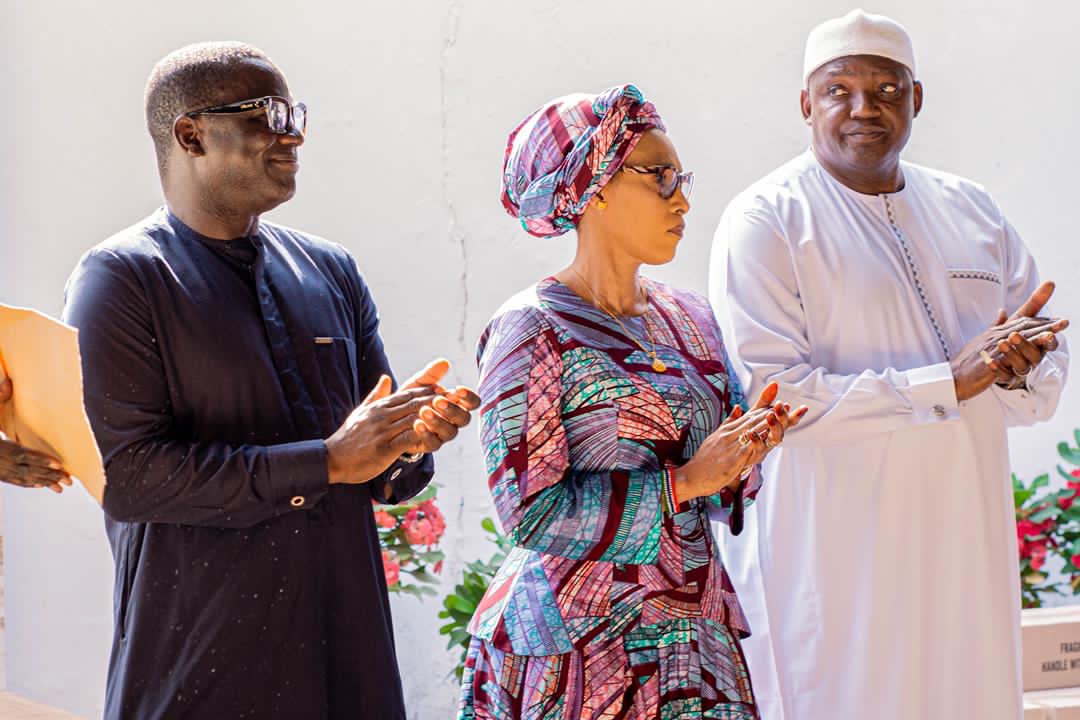
On December 16, 2026, The Gambia witnessed a landmark initiative in support of its healthcare sovereignty. Through its foundation, Cornestone Group officially handed over an exceptional USD 12 million donation in medical equipment and pharmaceuticals to the President of the Republic, Adama Barrow, underscoring a structured, high-impact approach to corporate social responsibility.
During the official ceremony, President Barrow described the initiative as the single largest donation ever made to The Gambia’s healthcare system, hailing it as a transformative contribution at a critical moment for the country’s public health infrastructure.
Led by the Group’s CEO, Alagie Sanyang, the initiative reflects a deliberate strategy to address the most pressing vulnerabilities of the national hospital system. It is built around four strategic pillars.
First, the provision of solar kits designed to secure uninterrupted power supply to operating theatres during outages, ensuring continuity of surgical procedures. Second, the renovation and full تجهیزment of the pediatric department, aimed at sustainably improving child healthcare services. Third, a USD 1 million donation in essential medical equipment. Finally, the cornerstone of the initiative: a pharmaceutical donation valued at USD 12 million, comprising 54 types of U.S.-manufactured medicines covering critical and chronic conditions, including cancer, cardiology, hypertension, neurology, mental health, respiratory, and infectious diseases.
The medicines were supplied by Medicines for All People, a globally recognized organization specialized in humanitarian medical support.
The handover ceremony was attended by Dr. Moustapha Biteye, Chief Executive Officer of Banjul Hospital, his medical teams, senior government officials, and representatives of Cornestone Group.
Through this initiative, Cornestone moves beyond one-off philanthropy to lay the foundations of a structured public-private partnership, aligning economic performance with social utility. It sends a strong signal at a time when African states are increasingly seeking credible, durable, and impact-driven alliances to reinforce their healthcare systems.

