



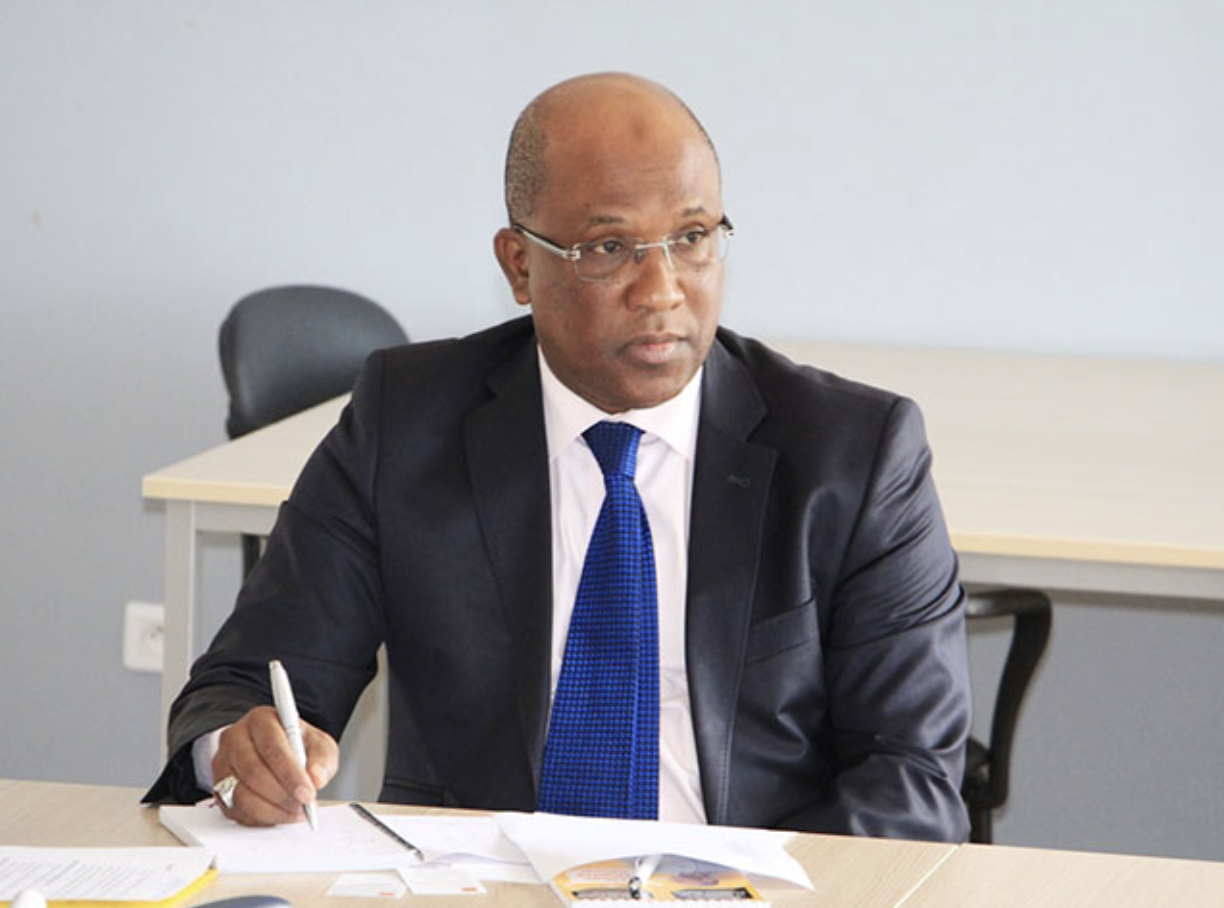
By Thierno Seydou Nourou SY, Banker, Founder of Nourou Financial Consulting (NFC) Dakar- Senegal.
Senegal is going through a complex economic period, characterized by high public debt (nearly 110% of GDP), persistent twin deficits (Budget deficit forecasted at 7.1% of GDP in 2025 and current account deficit between 12% and 14% in 2025), and eroded partner confidence. Yet paradoxically, the country has considerable assets: natural resources (oil, gas, minerals), a young population, a dynamic diaspora, and ambitious vision plans (SND 2025-2029, Vision 2050). The central question is not one of lack of vision, but one of financing and execution means.
In this equation, the national banking system, often perceived as a mere intermediary, can and must play a transformative role. This article proposes avenues for Senegalese banks to become the financial architects of economic sovereignty.
Our economy is trapped in a structural dilemma, a vicious circle that it must break free from. This situation could be characterized by the debt burden that is “suffocating” the State, which is forced to turn towards bank savings solutions through Treasury bond auctions, sidelining the private sector. Banks, due to regulatory and economic prudence, focus their loans on short-term and consumption, or on the State and the productive sector (SMEs, agriculture, industry), severely lacking medium and long-term credit, which stifles investment, innovation, and job creation. This situation limits tax revenues and national savings, perpetuating dependence on debt.
The National Development Strategy (SND) 2025-2029 has precisely identified this problem, but its realization requires a positive financial shock. For this, the banking system must undergo a profound transformation by moving from a logic of debt and consumption financing to a logic of productive transformation and sovereignty financing.
Firstly, by redirecting Credit Massively towards the “Productive”
To do this, I propose the establishment of a “Productive Financing Ratio” (PFR). Each bank would be required to gradually allocate (over 3 years) at least 40% of its new loan portfolio to key sectors identified by the SND: agro-industry, local transformation, renewable energies, digital, health. This is not dirigisme, but a strategic orientation inspired by the Indian model (Priority Sector Lending) which has enabled the development of national champions.
Next, we need to innovate in Risk Sharing, as banks are reluctant to lend to SMEs and innovative projects due to fear of risk. Let’s create a “First-Loss Guarantee Fund” together. The mechanism is simple: on a portfolio of loans dedicated to innovative SMEs, the first tranche of losses (10%) is covered by the banks, the next (30%) by the State, and the rest (60%) by technical partners (AfDB, IFC, etc.). This model, proven in South Korea (KOTEC), drastically reduces banking risk and frees up credit.
Finally, we need to implement a policy to mobilize New and Targeted Savings
The potential is immense but underutilized:
The Diaspora: Issue “Diaspora Investment Bonds”, attractive rate bonds (5-6%) financing specific infrastructure projects (schools, health centers, industrial parks). Ethiopia and Israel have successfully done this.
The Green Transition: Structure “Regional Green Bonds” to finance solar farms, water-efficient irrigation systems, or waste management. Morocco, through Masen, has raised over a billion euros this way.
Local Savings: Develop thematic savings products (Energy Savings, Social Housing Savings) that channel Senegalese money towards national projects.
To enable this transformation, an adapted regulatory framework is essential. I propose a “National Pact for Productive Financing” with:
Nationally:
The creation of a “Credit-Growth Coordination Committee” (Ministry of Finance, BCEAO, APBEF) to set and monitor concrete quarterly objectives.
A radical simplification and digitization of collateral creation procedures (pledge, mortgage).
Regionally (UEMOA):
An active advocacy for a circumstantial and targeted relaxation of BCEAO prudential ratios in favor of productive loans (e.g. solvency ratio, risk division ratio…)
Integration of regulatory incentives (reduction of capital requirements for “green” loans or accredited SMEs).
The creation of a “Senegalese Window” within the UEMOA Mortgage Refinancing Fund to refinance long-term credits for social housing and productive infrastructure.
We are not Starting from Scratch. We can Learn from Successful Practices around the World –
Economic history is full of lessons:
South Korea (1970s) directed its bank credit towards selected chaebols in heavy industry and technology. Lesson: target 3-4 national champions per territorial pole.
Rwanda (post-2000) made financial digitalization (M-Pesa) a vector of inclusion and transparency. Lesson: accelerate the dematerialization of payments and mobile banking by favoring non-excessive taxation of flows generated by mobile banking.
Malaysia (post-1997 crisis) created Danaharta, a public structure to restructure debts of viable companies. Lesson: establish a transparent mechanism for restructuring corporate debts to save the productive sector.
These models obviously need to be intelligently adapted to our context and values.
In conclusion, we can see that the situation is difficult, but not hopeless. It requires courage, innovation, and cohesion. As a banker and citizen, I call for the creation of a “Banking Initiative for Economic Sovereignty” (IBSE).
This voluntary coalition of banks would publicly commit to quantified financing objectives for national priorities, with a transparent annual impact report. This would send a strong signal to the markets, partners, and, most importantly, to the Senegalese people.
The Senegalese banking system has a choice: to remain a bystander in the crisis or to become one of its main saviors. By reinventing itself as the financier of productive transformation, it will not only contribute to economic recovery; it will regain public trust and build, with the State and the private sector, the foundations of a sovereign, just, and prosperous Senegal.
The time is no longer for reflection, but for concerted and bold action.

