



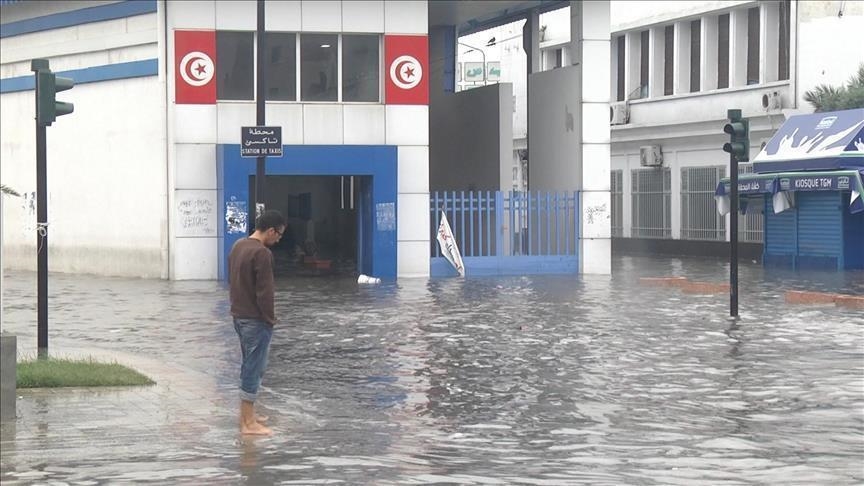
Major natural disasters represent a growing economic risk for Tunisia, with a potential impact estimated at nearly 1.9% of the gross domestic product (GDP). This alert was raised by the Minister of Finance, Mechket Slama Khaldi, on Monday, February 2, on the sidelines of the 18th Carthage Forum on insurance and reinsurance, held in Tunis.
According to the data presented, drought alone accounts for more than half of the natural disasters recorded in the country. Floods, although less frequent, account for nearly 60% of total economic losses. The most exposed sectors remain agriculture, infrastructure, and tourism, essential pillars of the Tunisian economy. The most vulnerable populations are also the hardest hit, accentuating the social risks associated with climate shocks.
Faced with this increasing exposure, Tunisian authorities have made disaster management and climate change a national priority. The strategy is based on strengthening prevention, adapting public policies, and using innovative financial mechanisms capable of absorbing some of the economic shocks.
Recent severe weather events in the country serve as a reminder of the urgent need to consolidate existing protection mechanisms. In this context, the strategic role of insurance and reinsurance appears central to limit the economic and social impact of disasters, improve the resilience of households and businesses, and support the national economy’s recovery capacity.
The 18th Carthage Forum on insurance and reinsurance, held from February 1st to 3rd, 2026 in Tunis, fully aligns with this reflection. Under the theme “Ensuring the future in a changing world: innovate, prevent, and build resilience”, the meeting is jointly organized by Tunis Re, the Tunisian Federation of Insurance Companies (FTUSA), and the General Arab Insurance Federation (GAIF).

