



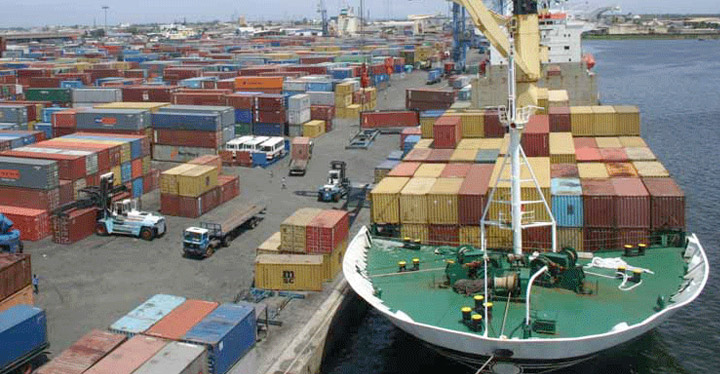
The Autonomous Port of Douala (PAD), the main logistics hub of Cameroon and a strategic crossroads for intra-regional trade, has recently been at the center of a major institutional battle. This includes the overhaul of goods scanning control, and a favorable legal precedent in the dispute with Douala International Terminal (DIT), formerly a subsidiary of the Bolloré group. This has deep implications for the management of port infrastructure, the securing of customs revenues, and national economic sovereignty.
Since late 2025, the issue of goods scanning at the Douala-Bonabéri Port illustrates a power struggle between the PAD and the Ministry of Finance (Minfi) over control of a strategic activity. As of January 1, 2026, non-intrusive scanning of containers and goods, a key lever in the fight against fraud, smuggling, and under-declaration, has been entrusted to Transatlantic D S.A., a concessionaire designated by the PAD, replacing Société Générale de Surveillance (SGS), the historical provider since 2015. The decision, formalized in a letter from Cyrus Ngo’o dated December 9, 2025, marks a strategic shift in port flow control. “Not only is Transatlantic D SA now the exclusive operator, covering all types of cargo, both imports and exports, but the management and payment model of services has been restructured to promote operational efficiency and transparency,” whispers a source within the PAD.
In response to this initiative, the Cameroonian Minister of Finance, Louis Paul Motazé, formally reminded that “scanning operations are governed by a contract in force with SGS” and requested “the maintenance of the existing framework to protect state customs revenues.”
Challenges of a modernization battle
Despite administrative resistance, the PAD, under the leadership of its Director General (DG), Cyrus Ngo’o, has not only succeeded in deploying the new scanning platform but also in ensuring its operational start-up since early January 2026. Initial reports from operators indicate “controlled processing of several thousand containers, with centralized billing terms and a single payment system to Transatlantic D SA.”
For the private sector and shippers, this reform comes with logistical challenges and costs. But it also offers prospects for improved flow security, increased efforts against tax losses, and a reduction in customs porosity that historically penalized state revenues.
The stakes go beyond technical efficiency. It is about regaining control of port inspections, strengthening local governance, and reducing the leeway of external providers who historically captured key activities for private benefits.
The scanning issue is not the first in which the PAD has triumphed over its adversaries. One recalls the dispute with Douala International Terminal (DIT), a former concessionaire linked to the Bolloré group. In June 2024, the French Court of Cassation ruled in favor of the Port of Douala. It overturned a previous decision by the Paris Chamber of Commerce that had condemned the PAD to pay approximately 38.4 billion CFA francs (about 70 million USD) to DIT for contractual breach. This legal decision represents an affirmation of the PAD’s sovereignty against the appeals of multinationals, highlighting the importance of a robust legal framework to manage strategic infrastructure.
The governance choices led by the PAD DG have significant financial implications. Observers of procedures at the PAD first mention “a reduction in the risks of tax losses related to fraud and opaque circuits, as well as a strengthening of logistical security, a confidence vector for investors and regional operators.” Next, these strategic choices “align [the PAD] with international standards, essential for transit corridors in Central Africa.” Finally, they give this instrument “the ability to resist institutional pressures while implementing a major technical and operational reform.” A stance that reinforces the PAD’s position as a key logistics hub for Cameroon and its trading partners in the Central African Economic and Monetary Community (CEMAC) sub-region.
Towards an assumed port governance
In an environment where ports are becoming decisive levers for national competitiveness, Cyrus Ngo’o’s strategy illustrates a new dynamic of public management of critical infrastructure. This strategy is based on innovation, the affirmation of institutional authority, and a long-term vision that places economic sovereignty at the heart of structural reforms.
The battles won against external interests, whether corporate, institutional, or legal, set a precedent for Africa. These various battles have helped strengthen local control of key assets, while creating favorable conditions for investment and regional economic integration.

