



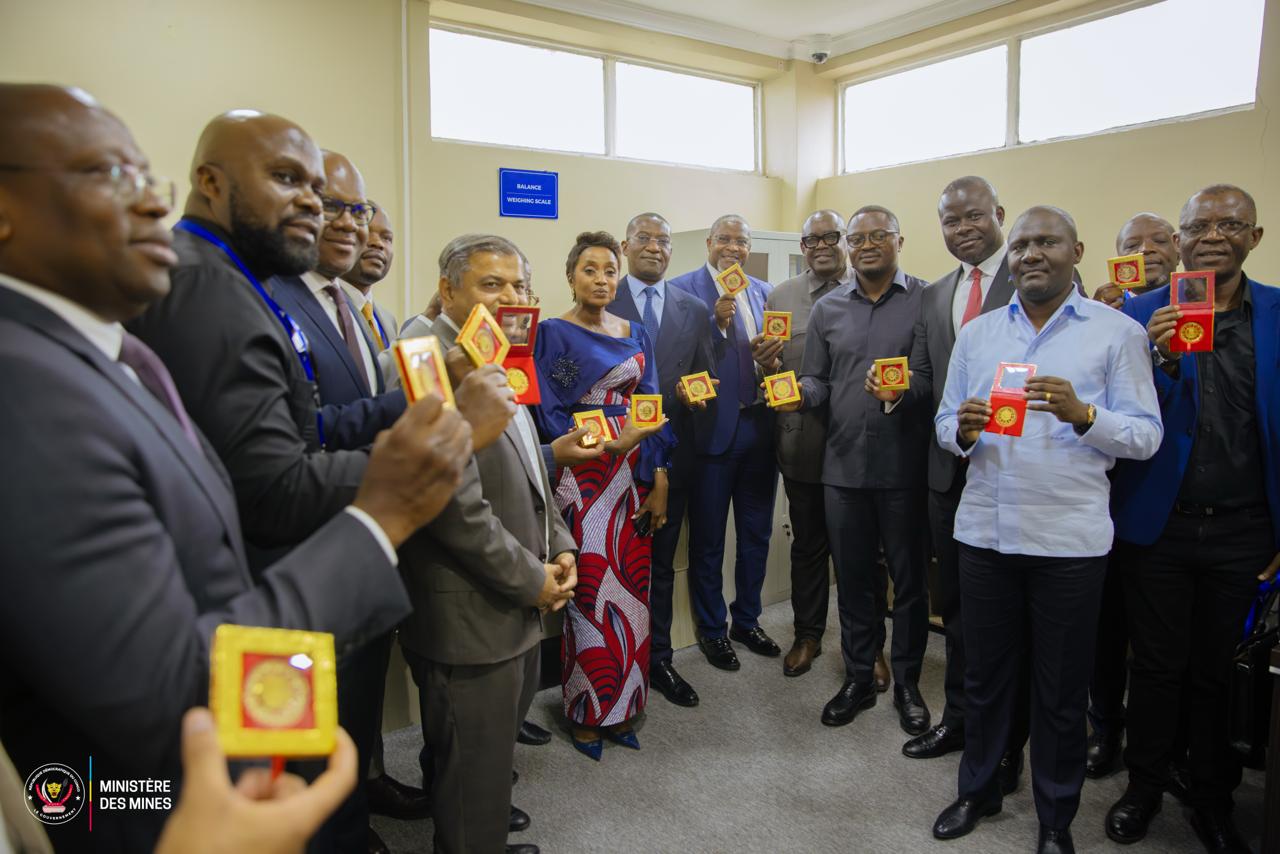
In a context marked by the desire to better regulate the commercialization of gold and fight against fraud in the gold sector, the Democratic Republic of Congo officially launched its first pilot gold refinery in Kalemie, in the east of the country, on March 11, 2026.
Named DRC Gold Refinery S.A., this industrial facility is the result of a partnership between the state-owned company DRC Gold Trading S.A. and the private company Lunga Mining. The infrastructure has a processing capacity estimated between 500 and 600 kilograms of gold per month, covering the entire value chain: from purchasing ore from producers to refining and producing ingots for the international market.
With this new industrial unit, the DRC is taking a significant step in the local valorization of its gold production. The country will now be able to export refined gold reaching a purity of 99.9%, in accordance with international standards, which should strengthen the credibility and competitiveness of Congolese gold on global markets.
Speaking at the launch ceremony, Mines Minister Louis Watum Kabamba emphasized that this initiative marks a turning point for the national mining sector. For the first time, he indicated, the DRC is acquiring an industrial capacity to refine a portion of its strategic resources on its own territory, while offering more transparent conditions and fair prices to industry stakeholders.
According to the minister, this infrastructure also aims to better integrate artisanal miners, buying counters, and small mining operations into a formal circuit capable of ensuring the traceability of gold and limiting losses related to smuggling.
In this perspective, Louis Watum Kabamba called on operators still involved in illicit practices to abandon informal circuits and join the official system established by the state through DRC Gold Trading S.A..
For the Congolese authorities, the commissioning of this refinery is a key link in the new governance strategy of the gold sector, focused on transparency, traceability, and the creation of local value. The objective is to better capture the revenues from gold exploitation so that they contribute more to the country’s economic development.
At the continental level, several African countries have already invested in similar infrastructures to valorize their gold production, including South Africa, Ghana, Uganda, and Zimbabwe. South Africa, with the historic Rand Refinery, is home to one of the largest gold refining units on the continent.

